
Kindergarten Parent Newsletter: Math Support At Home Tips
Kindergarten math is not about memorizing facts. It is about building number sense, the deep intuition that numbers represent real quantities and that those quantities relate to each other in predictable ways. That kind of understanding comes from experience, not drill. And a lot of that experience can happen at home without any special materials.
Count everything, especially in motion
The most fundamental kindergarten math skill is one-to-one correspondence: the understanding that each object gets exactly one count. Children learn this through physical practice, not through watching. Count the stairs on the way up. Count the grapes on the plate. Count the cars in the parking lot. When your child miscounts, have them slow down and touch each object as they say the number.
Counting in motion, like jumping and counting simultaneously, helps children who find still counting difficult. The physical engagement helps the concept stick.
Sorting is math, and children love it
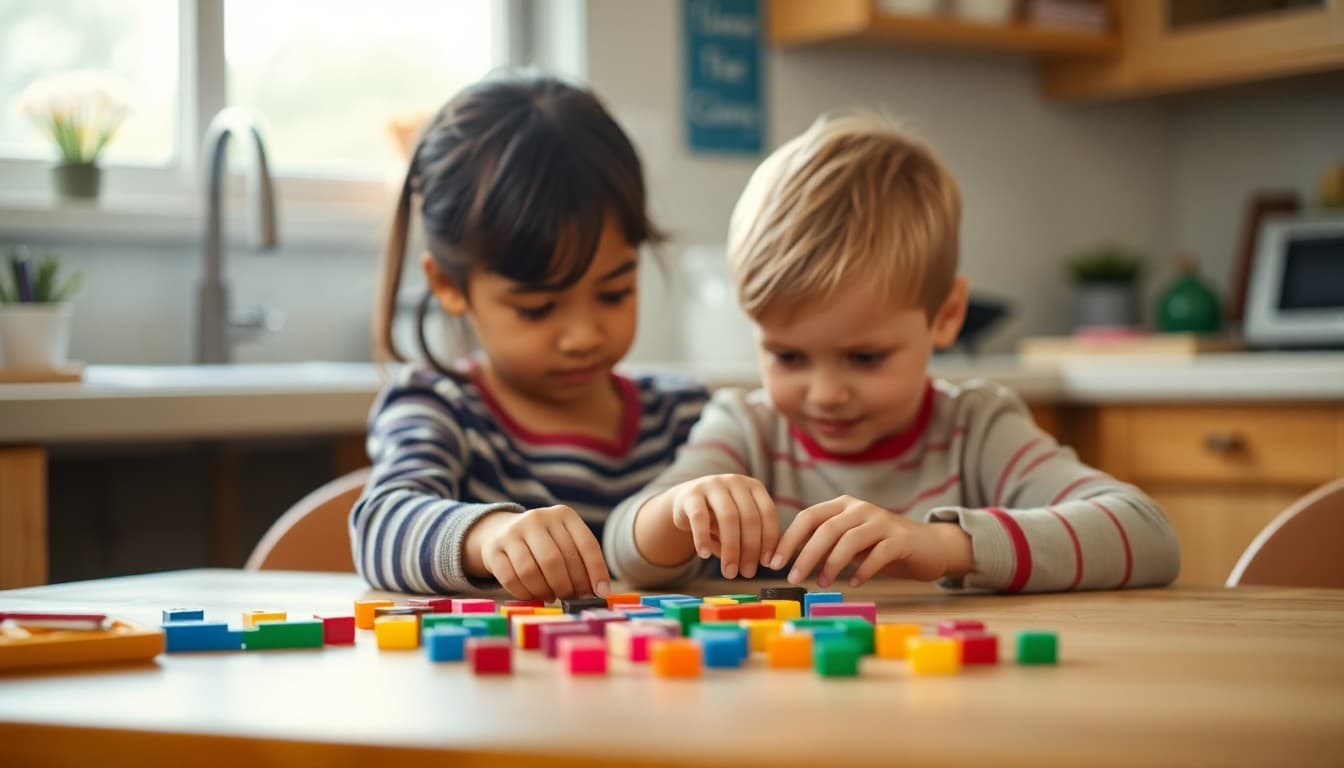
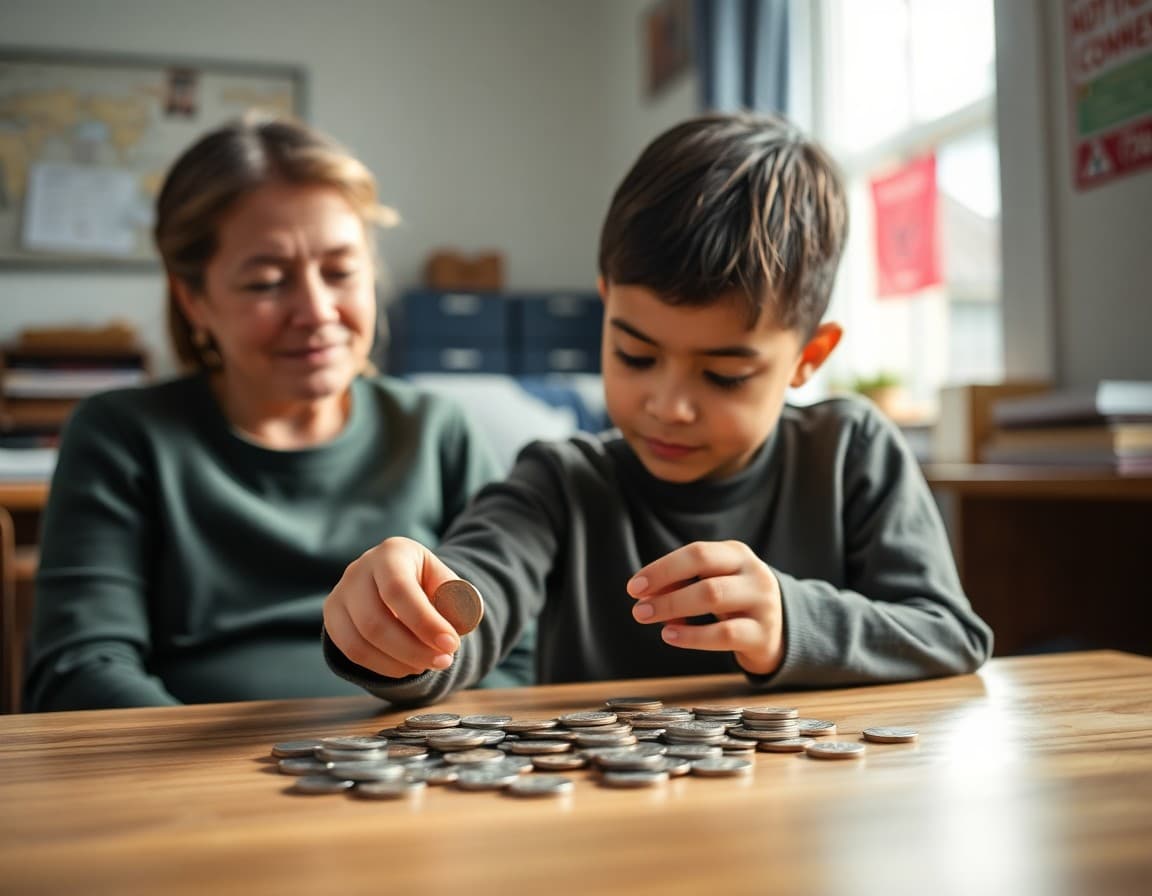
Sorting objects by color, size, shape, or texture is foundational mathematical thinking. It builds classification skills that connect directly to later work in data and geometry. Keep a sorting box near the table with buttons, coins, small toys, or dry pasta shapes. Ask your child to sort the collection and then describe how they sorted it.
The interesting part is asking them to resort the same collection a different way. A child who can sort the same objects by two different attributes is showing flexible mathematical thinking.
Use mealtimes for math
Setting the table is a legitimate math activity. Counting out plates, forks, and cups, one for each person, practices one-to-one correspondence. Comparing quantities at dinner, "I have more rice than you," introduces the language of greater and less. Cutting food into equal pieces introduces fractions in a concrete, meaningful way.
None of this needs to be labeled as math. It just needs to happen, and the conversation around it is what builds the language children bring back to the classroom.

Number recognition through the environment
Numbers are everywhere, and pointing them out builds recognition faster than flashcards. The number on a house, the aisle sign at the grocery store, the timer on the microwave, the score at the end of a game. Ask your child what number they see and whether they know what it means.
The goal is for numbers to feel like part of the world, not just symbols on paper. Children who see numbers as meaningful are more motivated to understand them.
Play games that use numbers
Board games with number lines, dice, and counting spaces are the most efficient math tools available for home use. Games like Chutes and Ladders and Hi Ho Cherry-O build number recognition, counting, and comparison within a context where your child is trying to win, not trying to learn. That motivation is powerful.
A deck of cards is equally useful. Matching games, simple War, and Go Fish all involve number recognition and comparison. Let your child deal the cards and count their own hand.
What not to do
Skip the timed tests and the pressure to memorize. Kindergartners who learn math through fear of getting it wrong develop math anxiety that can follow them for years. Keep home math light, game-based, and embedded in real activities. If your child gets something wrong, let them try again without making a big moment of the error.
Stay in sync with the classroom
Ask your child's teacher what the class is currently working on. When home practice uses the same concepts, your child gets reinforcement without confusion. Many teachers who use Daystage include a "math at home" tip in their weekly newsletter, which makes this connection automatic without anyone needing to send a separate message.
Get one newsletter idea every week.
Free. For teachers. No spam.
Frequently asked questions
What math skills should kindergartners work on at home?
Counting to twenty with one-to-one correspondence, recognizing numbers zero through ten, comparing quantities using more and less, and identifying basic shapes. These are the foundations the classroom is building. At home, the goal is not to race ahead but to make these concepts feel natural through everyday contexts like counting stairs, sorting socks, and noticing shapes on signs.
Should I use math workbooks with my kindergartner at home?
Workbooks are not necessary and can backfire if a child finds them tedious. Kindergarten math is best practiced through hands-on, concrete experiences. Counting physical objects, sorting items by color or size, and playing simple board games that use a number line all build the same skills as worksheets while feeling much less like school. Save the workbooks for children who specifically enjoy them.
How do I know if my kindergartner is behind in math?
Talk to your child's teacher. A brief email or a note in the homework folder is all it takes to get a clearer picture. If your child is consistently unable to count a group of ten objects reliably or does not recognize numbers through five, it is worth checking in. But development varies widely at this age, and many children catch up quickly once a specific gap is identified and addressed.
What are the best games for kindergarten math at home?
Chutes and Ladders, Hi Ho Cherry-O, and War with a regular deck of cards are all excellent because they build number recognition and comparison in a game context. Dice games of any kind are useful for quick number recognition. Even simple games like Go Fish reinforce matching and set building. The key is that the math is embedded in something your child actually wants to do.
How does Daystage help teachers communicate math tips to kindergarten families?
Daystage lets teachers build and send a polished newsletter in minutes, which means weekly math tips can go home consistently rather than only when there is time. A brief section in the weekly newsletter explaining what the class is working on and one specific thing families can try at home creates a real connection between school math and home reinforcement.

Adi Ackerman
Author
Adi Ackerman is a former classroom teacher and curriculum writer with 8 years in K-8 schools. She writes about school communication, parent engagement, and what actually works in real classrooms.
More for Kindergarten Transition
Kindergarten Transition Newsletter: Math Readiness Activities for Families
Kindergarten Transition · 6 min read
Kindergarten Parent Newsletter: Reading Support At Home Tips
Kindergarten Transition · 6 min read
Kindergarten Academic Expectations Newsletter: What Families Need to Know About What Their Child Will Learn
Kindergarten Transition · 5 min read
Ready to send your first newsletter?
3 newsletters free. No credit card. First one ready in under 5 minutes.
Get started free