
Kindergarten Transition Newsletter: Fine Motor Skills for Kindergartners
Fine motor skills are one of the most underinvested readiness areas for kindergarten. Most families prepare for academics and overlook the hand strength and coordination that makes academic tasks physically possible. This newsletter covers why it matters, what skills to build, and the activities that actually develop them.
Why fine motor skills affect learning
Writing requires a combination of fine motor coordination, letter knowledge, and cognitive processing. When the physical part is hard, it consumes cognitive resources that would otherwise go toward forming letters and words. A child who struggles to hold a pencil tires much faster than one for whom the grip is automatic.
Fine motor challenges also affect children's confidence. A child who sees that their writing looks harder than their neighbor's may become reluctant to write, which creates a gap that compounds over the year. Early strength in this area buys a lot of academic confidence.
The skills kindergarten requires
By the start of kindergarten, children benefit from being able to: hold a writing instrument with a functional grip, use child scissors to cut along a line, draw a simple person, dress and undress themselves independently, and handle small objects with reasonable control. These are not advanced skills, but they require development that happens through practice, not age alone.
Playdough and clay: the most versatile tools
Playdough is one of the best fine motor development tools available because it requires squeezing, rolling, pinching, and poking, all of which build hand strength directly. Fifteen minutes of playdough play three or four times a week is a legitimate fine motor workout for a five-year-old.
Add tools: small rolling pins, cookie cutters, plastic knives and scissors, craft sticks. Each tool requires a different grip and movement, which builds coordination more broadly than the same action repeated.

Scissors: practice before school
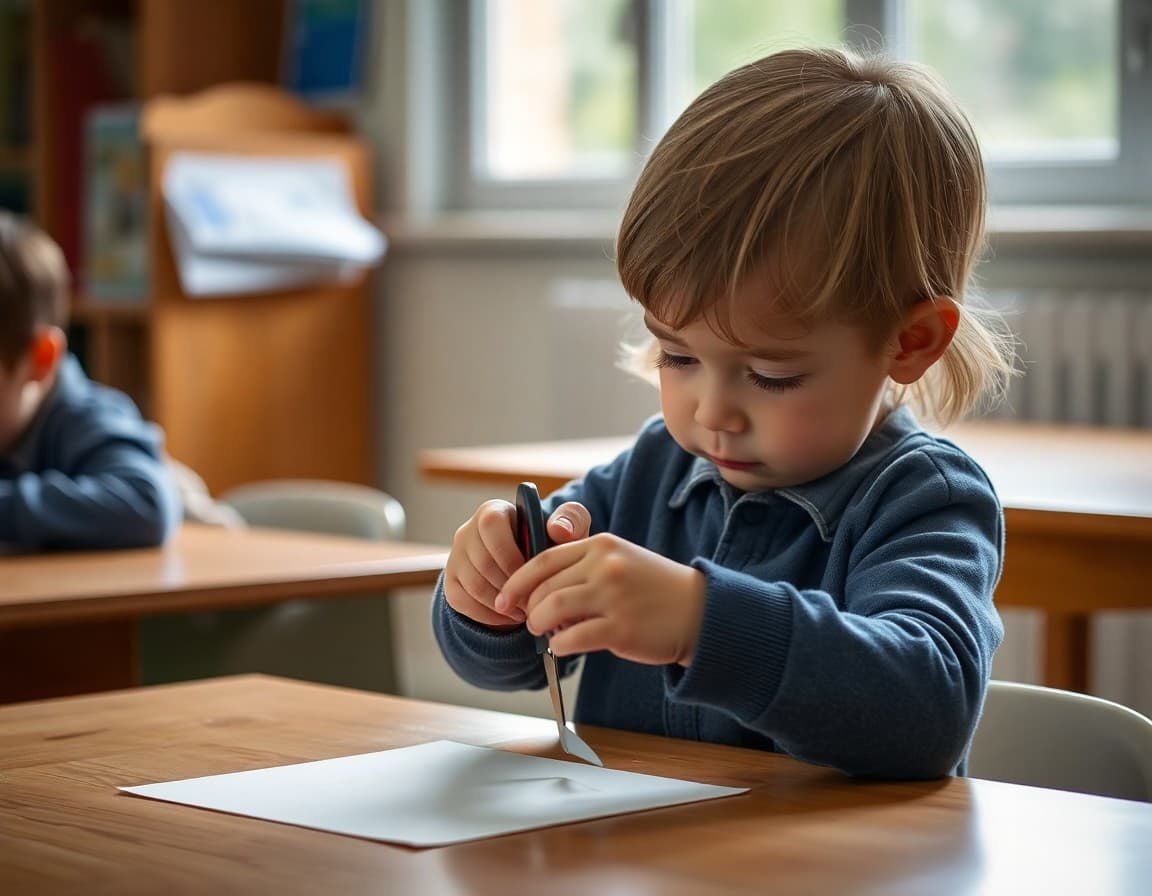
Scissors are a kindergarten staple and a fine motor challenge. Many children enter kindergarten having used scissors very few times and struggle with them significantly. Buy a pair of child scissors for home use in the summer and practice regularly: cut strips of paper, cut along drawn lines, cut out simple shapes.
The goal is functional cutting, not perfection. A child who can cut roughly along a line has enough skill to participate in kindergarten cutting activities without distress.
Drawing and coloring: build the grip
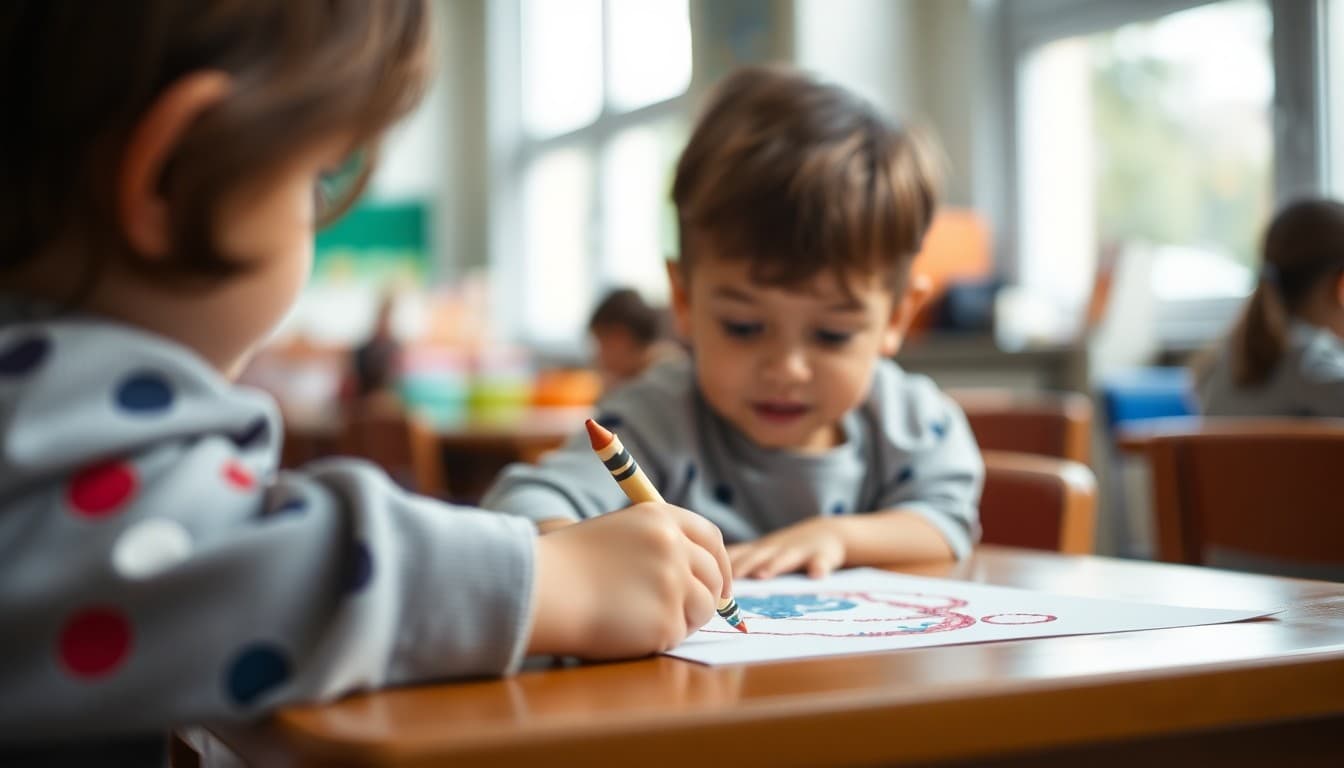
Regular drawing and coloring practice builds grip strength and hand control. Provide a variety of drawing tools: thick and thin crayons, markers, chalk, colored pencils. Using different tools builds different aspects of grip and coordination.
The quality of the drawings does not matter. What matters is the physical practice of holding a tool and controlling it with intention.
Daily life activities count too
Buttoning clothes, zipping zippers, snapping snaps, opening and closing containers, and handling small food items like raisins or peas are all fine motor practice. These daily life activities build the same hand strength and coordination as craft activities and happen naturally in the course of the day if you let your child do them independently rather than helping for efficiency.
Get one newsletter idea every week.
Free. For teachers. No spam.
Frequently asked questions
Why do fine motor skills matter in kindergarten?
Kindergartners are expected to hold pencils, use scissors, draw, cut, and eventually write letters. All of these require hand strength and coordination that develops through physical practice. A child with underdeveloped fine motor skills spends significant cognitive energy on the physical mechanics of writing rather than on the content, which affects both the quality of their work and their fatigue levels.
What fine motor skills should a kindergartner have at school entry?
The ability to hold a pencil or crayon with a functional grip, cut along a straight line with child scissors, string beads on a lace, button and zip their clothing independently, and draw a basic person with a head, body, and limbs. These are the functional skills kindergarten tasks require.
What is the best way to build fine motor skills before kindergarten?
Play with playdough, clay, and putty. Use scissors to cut paper, then cut along lines, then cut out shapes. Draw, paint, and use crayons regularly. Bead stringing, building with small blocks, and doing puzzles all build hand strength and coordination. The key is variety and frequency, not any single perfect activity.
My child holds their pencil wrong. Should I correct it?
A functional grip is the goal, not a perfect one. The classic three-fingered grip is what most occupational therapists recommend, but children can write effectively with slight grip variations. If the grip is causing fatigue, pain, or very poor letter formation, it is worth addressing. If the child can write legibly and without discomfort, the grip may be fine as-is. Ask an occupational therapist or the teacher for guidance.
How does Daystage help teachers communicate fine motor development activities to families?
A brief fine motor tip in a weekly newsletter from a kindergarten teacher gives families specific, easy activities to incorporate at home. Playdough, beading, scissors, and drawing are all inexpensive and accessible. When families know why these activities matter and exactly what to do, they are more likely to make them part of the routine.

Adi Ackerman
Author
Adi Ackerman is a former classroom teacher and curriculum writer with 8 years in K-8 schools. She writes about school communication, parent engagement, and what actually works in real classrooms.
More for Kindergarten Transition
Kindergarten Transition Newsletter: Is My Child Ready? A Real Guide
Kindergarten Transition · 6 min read
Kindergarten Transition Newsletter: Math Readiness Activities for Families
Kindergarten Transition · 6 min read
Kindergarten Transition Newsletter: Building Reading Readiness
Kindergarten Transition · 6 min read
Ready to send your first newsletter?
3 newsletters free. No credit card. First one ready in under 5 minutes.
Get started free