
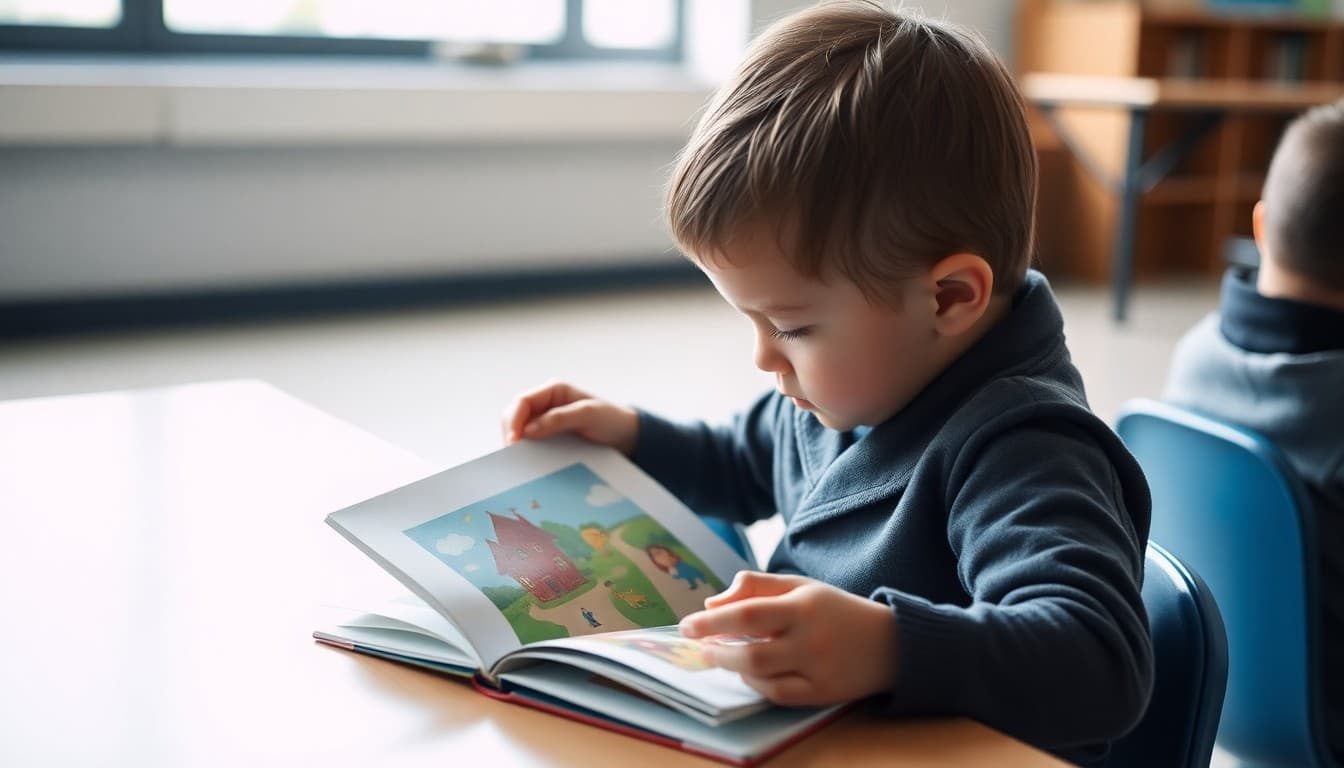
Kindergarten Transition Newsletter: Building Reading Readiness
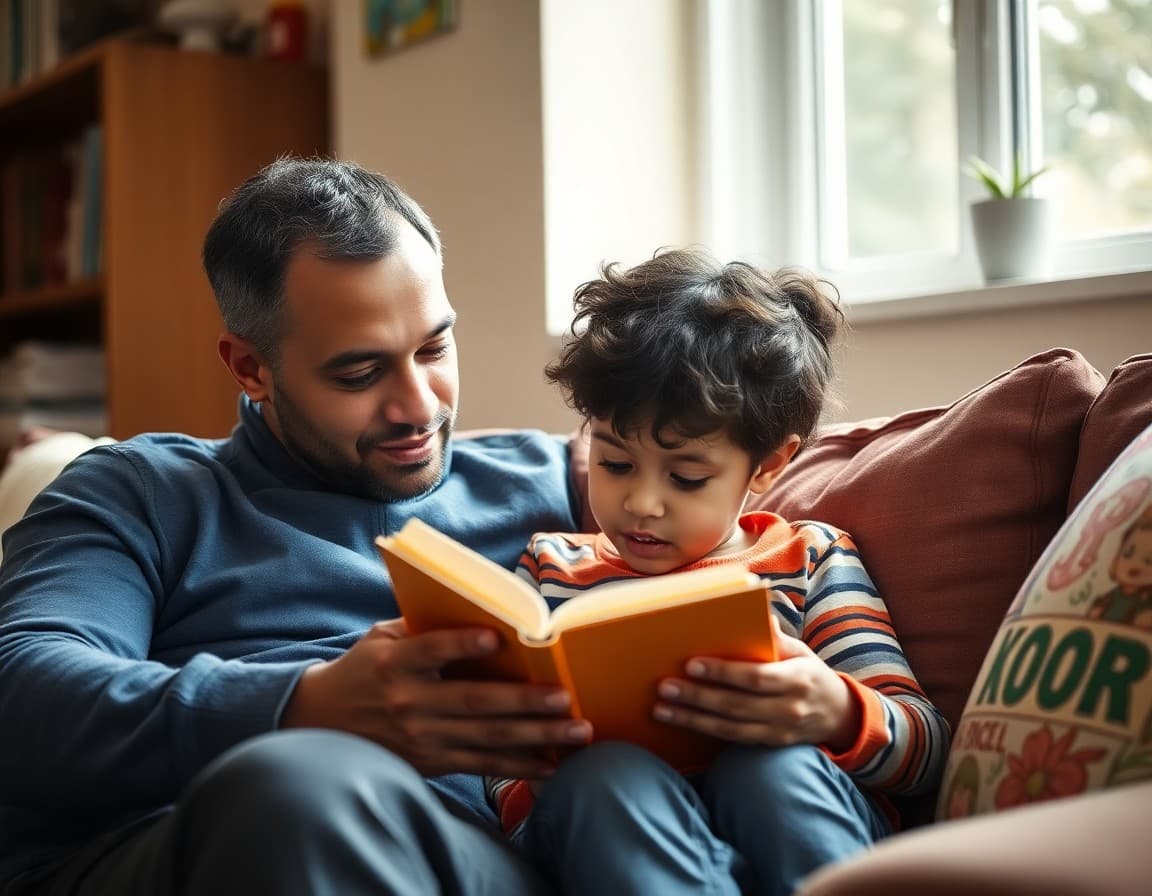
Reading readiness is not about how many letters a child knows before kindergarten. It is about the foundational experiences and skills that make the formal reading instruction of kindergarten accessible. Most of these foundations develop naturally through read-aloud, conversation, and play. This newsletter covers what the research says matters and how to build it in daily life.
Print awareness: understanding what reading is
Before a child can learn to read, they need to understand what reading is. Print awareness includes knowing that the text on a page carries meaning, that English goes left to right and top to bottom, that a book has a front and a back, and that letters are different from pictures.
Build print awareness by reading aloud while pointing to words occasionally, asking your child to point to where you should start reading on a page, and noticing print in the environment: the sign at the grocery store, the label on the cereal box, the bus stop name.
Phonological awareness: the sound layer
Phonological awareness is hearing the sound structure of language and is one of the strongest predictors of early reading success. It includes recognizing rhymes, hearing syllables in words, identifying beginning and ending sounds, and blending separate sounds together.
The good news is that phonological awareness develops almost entirely through oral language. Rhyming books and songs, word games in the car, and simple activities like clapping syllables in names are all effective. No worksheets required.
Vocabulary: the knowledge layer
Reading comprehension depends on vocabulary. A child who has heard many words across many contexts understands more of what they read as they become decoders. This means the conversations you have with your child, the books you read together, and the experiences you narrate all feed directly into their reading ability.
Do not simplify your language around your child. Use specific, precise words when you talk with them and explain what words mean when they ask. Every new word is a future reading advantage.

Letter knowledge: the code layer
Letter recognition and letter-sound knowledge are the entry point into phonics instruction. Children who know most letter names and can match them to their sounds move into formal reading instruction more quickly. But letter knowledge builds naturally through exposure: alphabet books, magnetic letters on the refrigerator, letter puzzles, and noticing your child's name in print.
Love of books: the motivation layer
The child who wants to read learns to read faster than the child who is indifferent to it. A positive emotional relationship with books, built through joyful shared reading experiences, is the most sustainable reading motivation available. Reading with expression, stopping to predict and discuss, and choosing books your child finds genuinely exciting all build the association that books are worth the effort of learning to read.
What not to do
Drilling flashcards, forcing practice on unwilling children, and turning every book into a quiz create negative associations that can persist. Reading readiness is built through pleasure and exposure, not through pressure. A child who loves books and begs to be read to is already more reading-ready than you might realize.
Get one newsletter idea every week.
Free. For teachers. No spam.
Frequently asked questions
What is reading readiness and why does it matter for kindergarten?
Reading readiness refers to the cluster of skills and experiences that prepare a child to learn to read formally. These include phonological awareness, the ability to hear individual sounds in words, print awareness, understanding that text carries meaning and goes left to right, vocabulary, and a positive association with books. Children who arrive at kindergarten with these foundations learn to decode more quickly than those who are starting from scratch.
What is the most important thing families can do to build reading readiness?
Read aloud together every day. Nothing else comes close. Daily read-aloud builds vocabulary, comprehension, an understanding of story structure, and an emotional connection to books that makes learning to read feel worthwhile. The volume and variety of the reading matter too: children who hear many different books hear many different words and sentence structures, which builds language richness.
Should I teach my child the alphabet before kindergarten?
Knowing the alphabet is useful but not required for kindergarten entry. Children who know the alphabet names and can match most letters to their sounds have a head start on phonics instruction. But forcing alphabet practice on a reluctant child before school starts can create negative associations that are harder to undo than the benefit is worth. Low-pressure, environment-based letter exposure through books, puzzles, and daily life is more effective than drills.
What is phonological awareness and how do I build it at home?
Phonological awareness is the ability to hear and manipulate the sound structure of words: recognizing rhymes, identifying beginning sounds, clapping syllables, blending separate sounds into words. You can build it through rhyming books and songs, word games in the car, and simple activities like "I spy something that starts with the /s/ sound." These oral language games require no materials and are genuinely effective.
How does Daystage help kindergarten teachers communicate reading readiness strategies to families?
A reading-focused newsletter from a kindergarten teacher sent through Daystage can include the specific phonics skill the class is working on that week and one specific activity families can try at home. When families reinforce the same skill the classroom is targeting, the learning compounds. Daystage makes it easy for teachers to send this kind of targeted, weekly reading tip without extra formatting effort.

Adi Ackerman
Author
Adi Ackerman is a former classroom teacher and curriculum writer with 8 years in K-8 schools. She writes about school communication, parent engagement, and what actually works in real classrooms.
More for Kindergarten Transition
Kindergarten Parent Newsletter: Reading Support At Home Tips
Kindergarten Transition · 6 min read
Kindergarten Transition Newsletter: Language Skills and Communication
Kindergarten Transition · 6 min read
Kindergarten Transition Newsletter: Is My Child Ready? A Real Guide
Kindergarten Transition · 6 min read
Ready to send your first newsletter?
3 newsletters free. No credit card. First one ready in under 5 minutes.
Get started free