
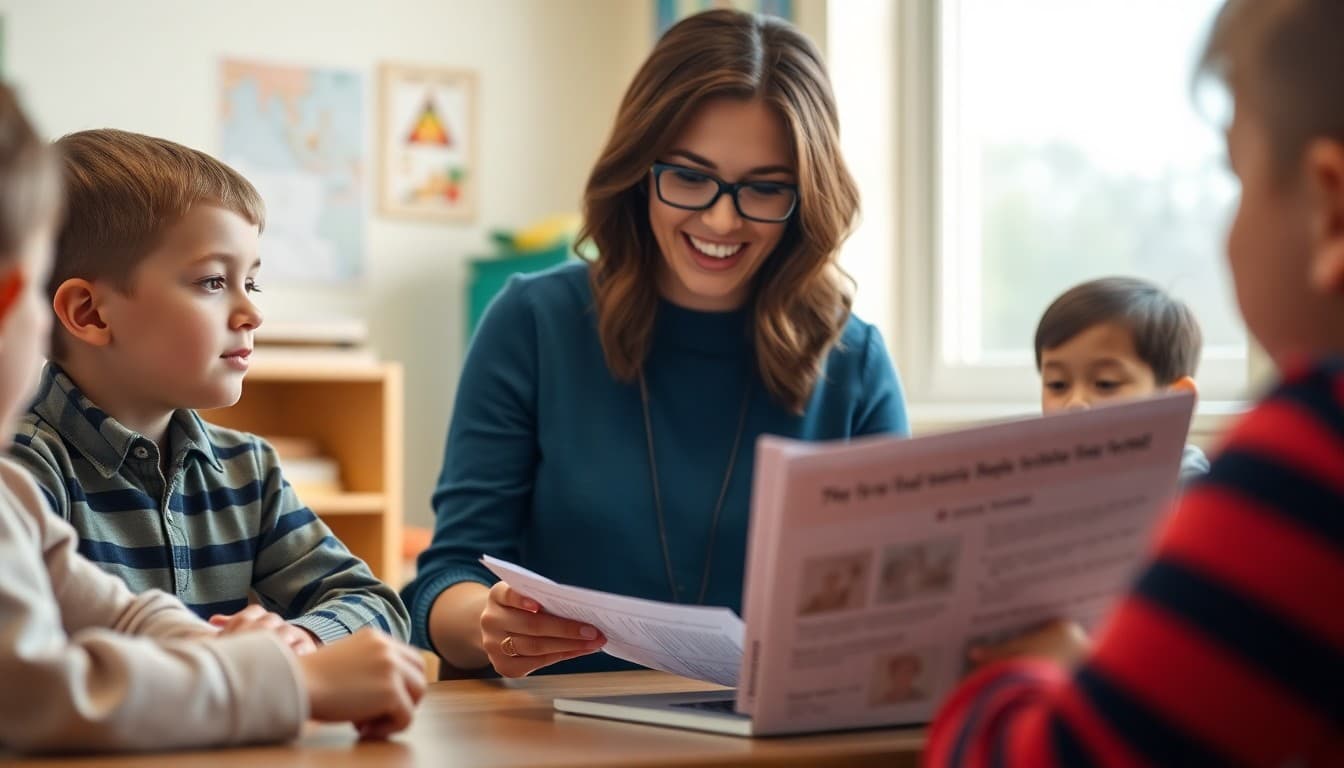
Kindergarten Social Studies Newsletter to Parents
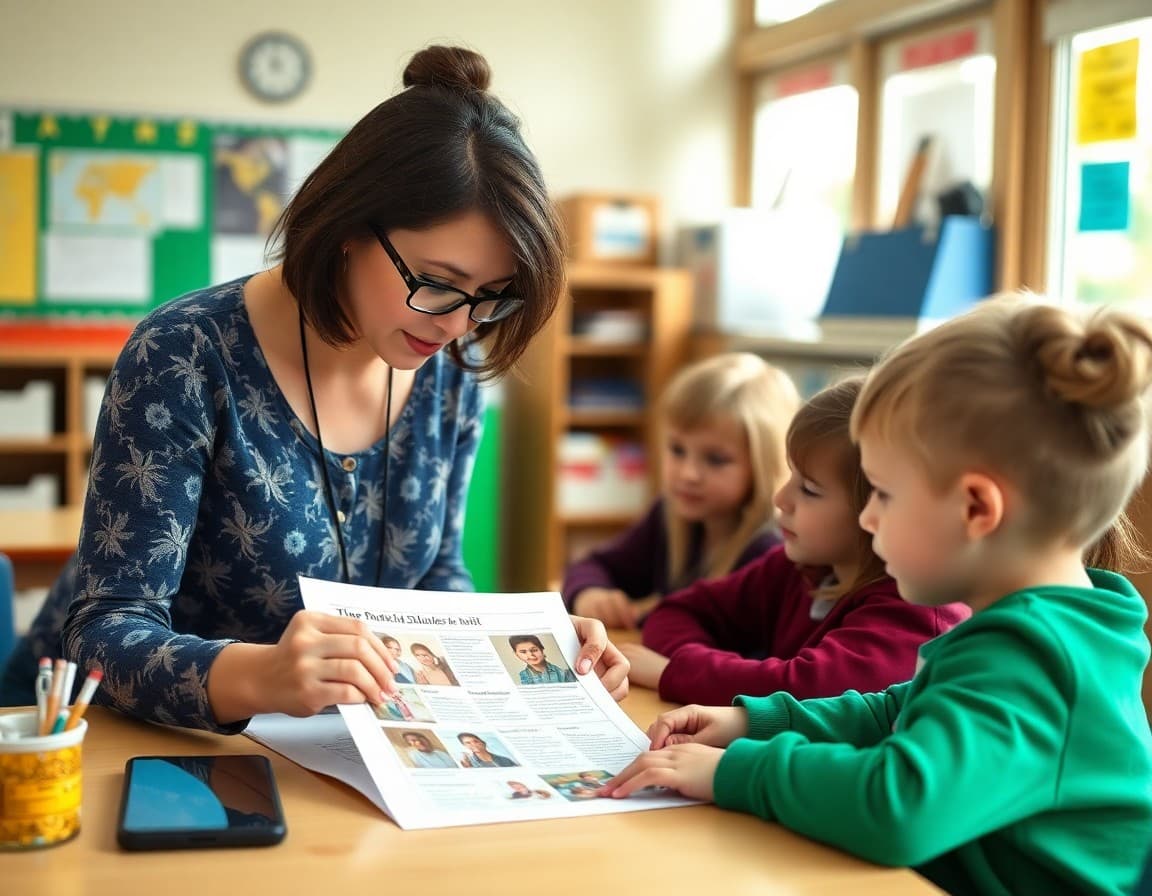
Kindergarten social studies covers the content closest to children's lives: family, community, rules, and how people live together. This makes social studies newsletters particularly valuable because the connection between classroom content and home life is direct and natural. Families who know what unit is underway can extend the learning simply by talking about their own lives in ways that connect to what their child is studying.
This guide covers how to write a kindergarten social studies newsletter that connects curriculum to family conversations, handles diverse family structures inclusively, and gives families concrete ways to participate in their child's learning.
Current Unit Overview
Open with what the class is studying now and the essential question or theme guiding the unit. "This month, we are exploring the question: What is a community and how does everyone in it contribute?" gives families the lens through which their child is learning. It also sets up the at-home conversation topics that follow.
Two to three sentences on the unit overview is enough. Families want to know the topic and why it matters at this developmental stage, not a full curriculum breakdown.
What Students Are Doing in Class
Describe specific activities students are engaging in during the unit. Are they sorting job cards? Making community maps? Writing about their family? Interviewing a family member? The more specific you are, the more children will connect what they describe at home to what families have already heard about in the newsletter.
Sample Newsletter Section Excerpt
Here is how a social studies unit newsletter section might read:
Current social studies unit: Our Community
Our class is exploring the concept of community: the people, places, and rules that help us live and work together. Students are learning about different roles in a community, how communities change over time, and what it means to be a responsible community member.
What we are doing in class:
- Reading books about different types of communities (urban, suburban, rural)
- Drawing maps of our school neighborhood
- Discussing why communities have rules
- Creating a classroom "community mural" showing what our class community looks like
Key vocabulary: community, neighborhood, responsibility, rules, cooperation
Talk about it at home: Ask your child: "What community do we live in? Who are some of the helpers in our community?" Point out community helpers when you see them: mail carriers, crossing guards, librarians, shop owners.
Family Connections Section
Social studies units are uniquely positioned for family connection activities because the content is about families and communities. A brief section inviting families to share something from home as part of the unit creates a natural bridge between classroom and family: "If your family has a photo or object that represents a tradition or place that is important to you, we would love to have it share space in our classroom community display."
Handling Diverse Family Structures
During family units especially, the newsletter should reflect inclusive language. Use "your family" rather than "your mom and dad" or "your parents." Use "the adults in your home" when referencing caregivers. These small language choices signal to all families that the classroom is a space where every family structure belongs.
Connecting to Current Events Carefully
Some social studies units touch on topics that are in the news: community safety, elections, or social justice themes. At the kindergarten level, these topics should be handled at a developmental level, focusing on concepts like fairness, rules, and everyone's right to be treated with respect. The newsletter can briefly note if a topic may come up at home: "Students may come home with questions about rules and why we have them. This is connected to our current unit on community."
The Unit Culminating Project
If the social studies unit ends with a student-created project, mention it in the newsletter so families can ask about it. "Students will create a 'Community Helper' book at the end of the unit to share what they learned" prepares families for the final product and signals that the unit has a real outcome worth celebrating.
Get one newsletter idea every week.
Free. For teachers. No spam.
Frequently asked questions
What social studies topics do kindergarteners typically cover?
Common kindergarten social studies units include self and family, community helpers and rules, maps and geographic concepts, national symbols and holidays, needs and wants, and basic concepts of fairness and citizenship. The specific sequence varies by district. Many kindergarten programs integrate social studies into literacy through read-alouds and project-based learning rather than teaching it as a separate subject block.
How do you make social studies newsletters relevant to families at home?
Connect the unit directly to family conversations and experiences. During a community helpers unit, suggest that families talk about the jobs of people in their neighborhood. During a family unit, share family photos or stories as part of a class project. Social studies at the kindergarten level is built on personal experience, and families have direct access to the content being studied.
How should the newsletter handle family units when families have diverse structures?
Frame family content inclusively from the start. 'Families come in all shapes and sizes. Every family in our class will have a chance to share what makes their family special' acknowledges diversity without making any family structure feel unusual or exceptional. Avoid any language that assumes a two-parent household, a specific cultural background, or a single definition of family.
Should the social studies newsletter include a content warning about topics that might be sensitive?
For most kindergarten social studies content, this is not necessary. However, if a unit touches on history, community events, or civic topics that might have personal resonance for specific families, a brief note acknowledging the context is appropriate. 'As we discuss community helpers, we acknowledge that some families have complicated relationships with these institutions. Feel free to share any concerns with me directly.'
Can Daystage help teachers send social studies unit newsletters with student artwork?
Yes. Daystage supports photo and image blocks within newsletters, so you can include student drawings, maps, or community project artwork alongside the unit overview and at-home connection activities. You can send the newsletter to your class families with one click after building it.

Adi Ackerman
Author
Adi Ackerman is a former classroom teacher and curriculum writer with 8 years in K-8 schools. She writes about school communication, parent engagement, and what actually works in real classrooms.
More for Kindergarten Transition
Kindergarten Academic Expectations Newsletter: What Families Need to Know About What Their Child Will Learn
Kindergarten Transition · 5 min read
Kindergarten Curriculum Overview Newsletter for Families
Kindergarten Transition · 6 min read
Kindergarten Science Unit Newsletter to Parents
Kindergarten Transition · 6 min read
Ready to send your first newsletter?
3 newsletters free. No credit card. First one ready in under 5 minutes.
Get started free