

Kindergarten Science Unit Newsletter to Parents
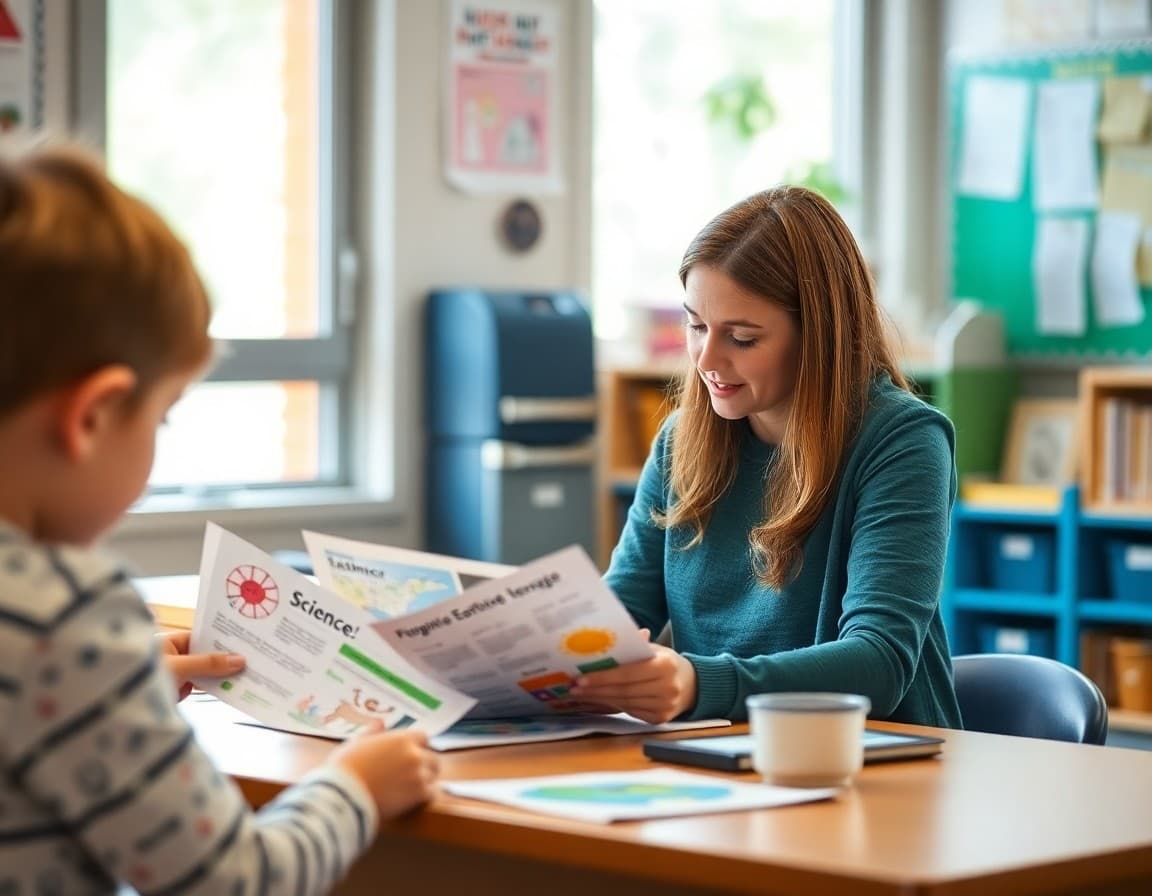
Science unit newsletters do something most classroom newsletters do not: they give families a way to extend genuinely interesting content beyond the school day. When a child comes home excited about what a root does or why the sky looks different at sunset, a family that knows what unit is underway can fuel that curiosity instead of redirecting it.
This guide covers what to include in a kindergarten science unit newsletter, how to share vocabulary in a way families can actually use, and what at-home activities connect naturally to the most common kindergarten science units.
Open with What Students Are Investigating
Start with the specific question or phenomenon students are exploring, not the unit name. "This month, our class is investigating what living things need to grow. Students are observing bean seeds, comparing plant growth in different conditions, and learning the vocabulary of plant parts" is more engaging than "We are starting our plants unit."
The question or phenomenon frame reflects how kindergarten science actually works and primes families to ask their child about the investigation rather than the unit topic.
Key Vocabulary Section
Include four to six vocabulary words from the unit with brief plain-language definitions. The words do not need to be on a list. Weaving them into a short paragraph also works. The goal is for families to hear the words and use them at home so children encounter them in multiple contexts.
Example: "This month, we are learning the words roots (the part of a plant that takes in water from the soil), stem (the part that carries water up to the leaves), and photosynthesis (how plants use sunlight to make food). Try using these words when you water your plants at home or see plants in the grocery store."
Sample Newsletter Section Excerpt
Here is how a science unit section might read:
Current science unit: Plants and Living Things
We are three weeks into our plants and living things unit, and our classroom looks like a small greenhouse. Students are growing bean seeds in plastic bags on the window, comparing plants in light and in dark, and recording observations in their science journals.
What students are learning:
- All living things need water, food, air, and space to survive
- Plants have roots, stems, leaves, and (often) flowers
- Different plants have different characteristics
Key vocabulary: roots, stem, leaves, seedling, characteristics, observation
Try this at home: Plant a bean seed in a plastic zip-lock bag with a wet paper towel. Tape it to a sunny window. Check it daily with your child. Most beans will show a root within 5-7 days. Ask: "What do you notice? What has changed? What do you think will happen next?"
Connecting the Unit to Students' Daily Lives
Kindergarteners learn science best when it connects to the observable world they move through every day. A brief section suggesting how families can extend the unit through everyday experiences is more useful than a formal activity. "Point out different types of clouds on your way to school," or "Notice which plants in your neighborhood are flowering and which are not" requires no preparation and keeps science active outside the classroom.
What Students Will Produce or Present
If the unit culminates in a student project, presentation, or display, mention it in the newsletter so families have context for the final product. "At the end of the unit, students will share one observation from their own plant investigation" prepares families for the kind of question to ask their child at home and signals that the unit has a real, visible outcome.
Photos from the Science Investigation
A photo of students at work in a science investigation is one of the most engaging additions to a unit newsletter. Two or three photos of children recording observations, using magnifying glasses, or watching a bean sprout transform a text-heavy newsletter into something families stop scrolling to read. Always use photos with appropriate permission per your school's policy.
Get one newsletter idea every week.
Free. For teachers. No spam.
Frequently asked questions
What science topics do kindergarteners typically study?
Common kindergarten science units include weather and seasons, plants and living things, animals and their habitats, the five senses, pushes and pulls (forces), day and night patterns, and basic properties of materials. The specific sequence depends on your district's science standards and curriculum. A newsletter written at the start of each unit helps families understand what their child is exploring and how to extend that learning at home.
How do you explain the NGSS framework to kindergarten families without overwhelming them?
You do not need to explain NGSS directly. Instead, translate the practices into plain descriptions: 'In kindergarten science, students observe, ask questions, and investigate before we give them answers.' If families ask about standards specifically, you can mention that your curriculum is aligned to the Next Generation Science Standards, but the newsletter itself should focus on what students are doing rather than the framework behind it.
What at-home science activities work for kindergarteners?
Activities that use everyday materials and produce observable results are best. Growing a bean in a zip-lock bag on a windowsill, watching ice melt in different locations, sorting rocks by properties, recording daily weather for a week, and observing insects in the yard are all within kindergarten developmental range and directly connected to common units. The best activities take 5 to 15 minutes and can be repeated.
Should the science unit newsletter include vocabulary words?
Yes, a brief vocabulary section is one of the highest-value elements of a science unit newsletter. When families know the words the teacher is using, they can reinforce them in conversation: 'You said the ladybug has spots. That's a characteristic. Can you think of another characteristic ladybugs have?' even a two or three word vocabulary list with simple definitions helps families connect home conversations to classroom language.
How does Daystage help teachers connect science unit newsletters to take-home activities?
Daystage lets you build a science unit newsletter with a unit overview, vocabulary section, at-home activity description, and photo blocks showing students at work. You can send it directly to your class family list at the start of each unit.

Adi Ackerman
Author
Adi Ackerman is a former classroom teacher and curriculum writer with 8 years in K-8 schools. She writes about school communication, parent engagement, and what actually works in real classrooms.
More for Kindergarten Transition
Kindergarten Academic Expectations Newsletter: What Families Need to Know About What Their Child Will Learn
Kindergarten Transition · 5 min read
Kindergarten Back to School Newsletter Template (Free Download Guide)
Kindergarten Transition · 7 min read
Kindergarten Curriculum Overview Newsletter for Families
Kindergarten Transition · 6 min read
Ready to send your first newsletter?
3 newsletters free. No credit card. First one ready in under 5 minutes.
Get started free