
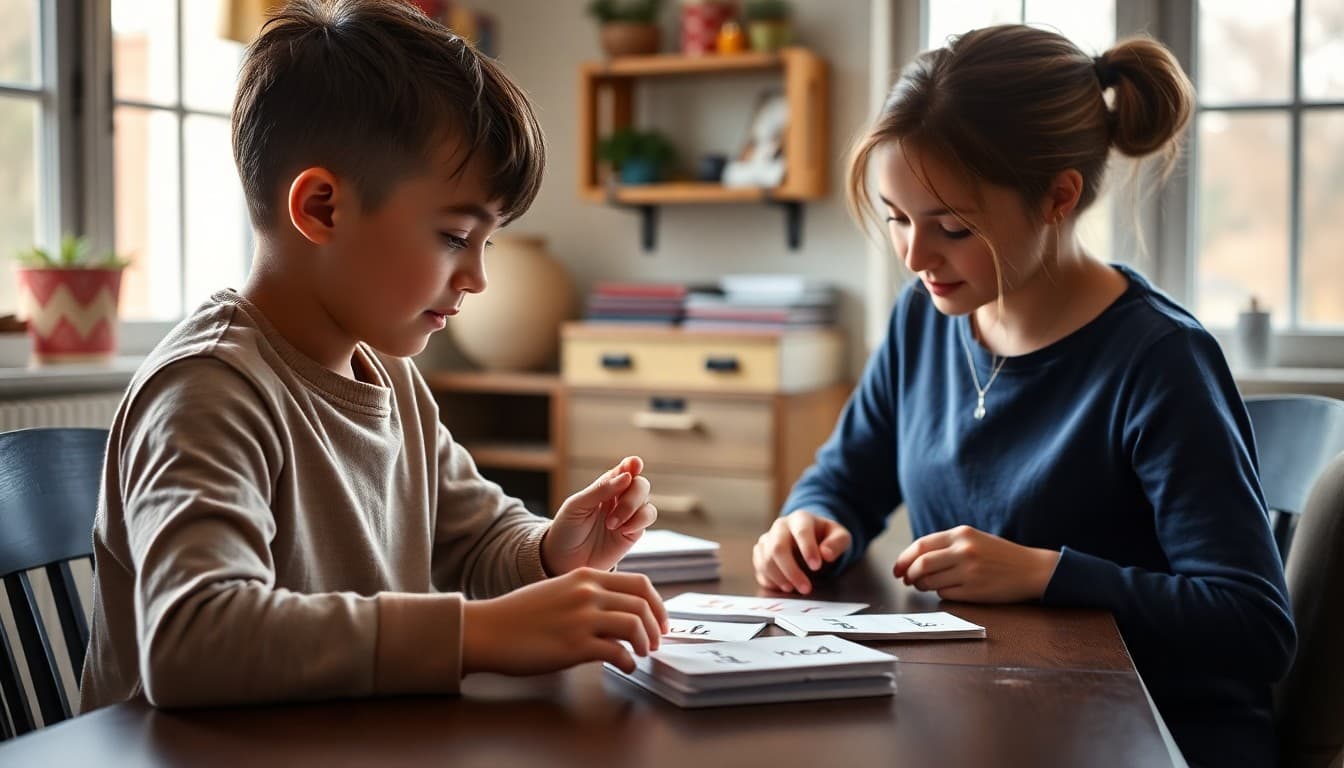
Kindergarten Sight Words Newsletter: Practice at Home

Sight words are one of the most concrete areas where home practice directly translates to reading progress. A child who knows the top 50 high-frequency words by sight can read simple books with significantly more fluency and confidence than one who has to decode every word. The key is making practice feel like a game rather than a test. Here is how to guide families toward the methods that actually build retention.
Explain What Sight Words Are and Why They Matter
Start your newsletter with a brief explanation that gives families context. Not all sight words resist phonics. Some are regular words that appear so frequently they need to be automatic (and, the, a, is, it). Others genuinely have irregular spellings that cannot be decoded (was, said, come, have). Both types benefit from automatic recognition because fluent reading depends on not stopping to decode every word.
An accessible explanation for families: "Sight words are the most common words in written English. When your child can recognize them instantly, reading becomes faster and easier because they are not working out every word. Our goal is that your child sees the word 'the' and immediately thinks 'the,' without sounding it out."
Share the Current Word List Your Class Is Working On
Generic Dolch or Fry word list practice is less effective than practice aligned to what the classroom is currently teaching. In your newsletter, list the specific 5-10 words the class has introduced or is currently mastering. This allows home practice to reinforce exactly what is being taught rather than front-loading words that are not yet in the instructional sequence.
A simple format works: print the words in a large, clear font. Include a note about which words were introduced this week versus which words are review from previous weeks. Families working with a word list that has both current and review words get the best of both targeted practice and spaced repetition.
Flashcard Alternatives That Actually Engage Children
Flashcard drills are low-engagement and build frustration faster than retention for many young children. Offer families 4-5 alternatives that build the same skill with much more engagement:
Word hunt: put sight word cards on surfaces around the house and have the child find and read each one. Slap game: lay cards face up, say a word, and the child slaps it as fast as they can. Writing relay: the parent says a word, the child writes it in a tray of sand or on a whiteboard. Sight word hopscotch: write words in chalk on the sidewalk and hop to the word the parent calls. Rainbow writing: write a sight word in pencil and trace it with three different colored crayons while saying the word each time.
Reading Sight Words in Context
Isolated flashcard practice builds recognition, but recognizing words in running text is a different skill that requires separate practice. Help families understand the connection between flashcard practice and book reading by pointing out sight words during read-aloud.
Suggest a simple routine: when reading together at night, occasionally stop and say "I see a sight word. Can you find it on this page?" For a child who has just learned the word "said," finding it three times in a single page of a picture book builds context recognition and demonstrates that the words they are practicing appear everywhere in real reading.
How to Handle Words a Child Cannot Remember
Every child has words that will not stick no matter how many times they practice. This is normal and not a sign of a reading problem. Specific words are harder for specific children for reasons that range from visual similarity to another word (was/saw, were/here) to the word not yet having enough exposure.
Guide families to a practical strategy: if a child cannot remember a word after 3-4 exposures in a session, put it in a "come back to" pile. Do not spend more than 10 seconds on a missed word. Say the word, have the child repeat it, move on. Revisit the difficult word later in the same session or in the next session. Over time, with varied practice and multiple exposures, the word will stick.
Celebrate Progress Explicitly
Kindergartners need to see their own progress to stay motivated. A simple paper chain where the child adds a link every time they master a new sight word gives them a visible, tangible record of growth. A word wall in their bedroom where mastered words are posted creates a reading environment and a source of pride. Whichever method families choose, explicit recognition of progress matters.
Ask families to share when their child reads a sight word correctly in a book or on a sign in the world. "I saw 'stop' on the sign and I can read it" is a meaningful literacy moment. Acknowledging these real-world reading successes in your classroom newsletter creates a feedback loop that motivates continued practice at home.
Get one newsletter idea every week.
Free. For teachers. No spam.
Frequently asked questions
What are sight words and why do kindergartners learn them?
Sight words are high-frequency words that appear most often in written English, many of which do not follow standard phonics patterns (the, was, said, come). Because these words cannot be decoded letter by letter in the way regular phonics words can, they are memorized by sight. Knowing the top 50-100 sight words allows early readers to read simple books with much less decoding effort, freeing cognitive resources for comprehension.
How many sight words should a kindergartner know by end of year?
Most kindergarten programs target 20-50 sight words by end of year, with the exact number varying by curriculum. Dolch Pre-Primer words (the most frequent 40) are common targets. Some programs use Fry words or school-specific lists. Ask your child's teacher for the specific list your class is working from so home practice matches classroom instruction.
What is the most effective way to practice sight words at home?
Short, varied, and game-based practice is more effective than long repetitive drill. 5-10 minutes of sight word activities 4-5 days per week is more efficient than 30 minutes twice a week. Vary the format: flashcards one day, a word hunt in a book the next, writing in sand the day after. Repetition across multiple contexts and modalities builds faster retention than any single method.
What should families do when a child cannot remember a sight word?
Stay calm, say the word, have the child repeat it, and move on. Drilling a forgotten word repeatedly in one session creates frustration without building retention. Instead, mark the card as one to revisit, put it back in the deck, and let it come up again in future sessions. Spaced repetition, seeing the word again after a delay, is more effective for long-term memory than massed practice in one sitting.
Can Daystage help teachers send sight word practice newsletters to families?
Yes. Daystage lets teachers send a sight word update newsletter each month with the current word list the class is learning, a few game ideas to try at home, and a printable word card template. Families who know exactly which words to focus on are far more effective at home practice than those working from a generic Dolch list that may not match classroom instruction.

Adi Ackerman
Author
Adi Ackerman is a former classroom teacher and curriculum writer with 8 years in K-8 schools. She writes about school communication, parent engagement, and what actually works in real classrooms.
More for Kindergarten Transition
Ready to send your first newsletter?
3 newsletters free. No credit card. First one ready in under 5 minutes.
Get started free