
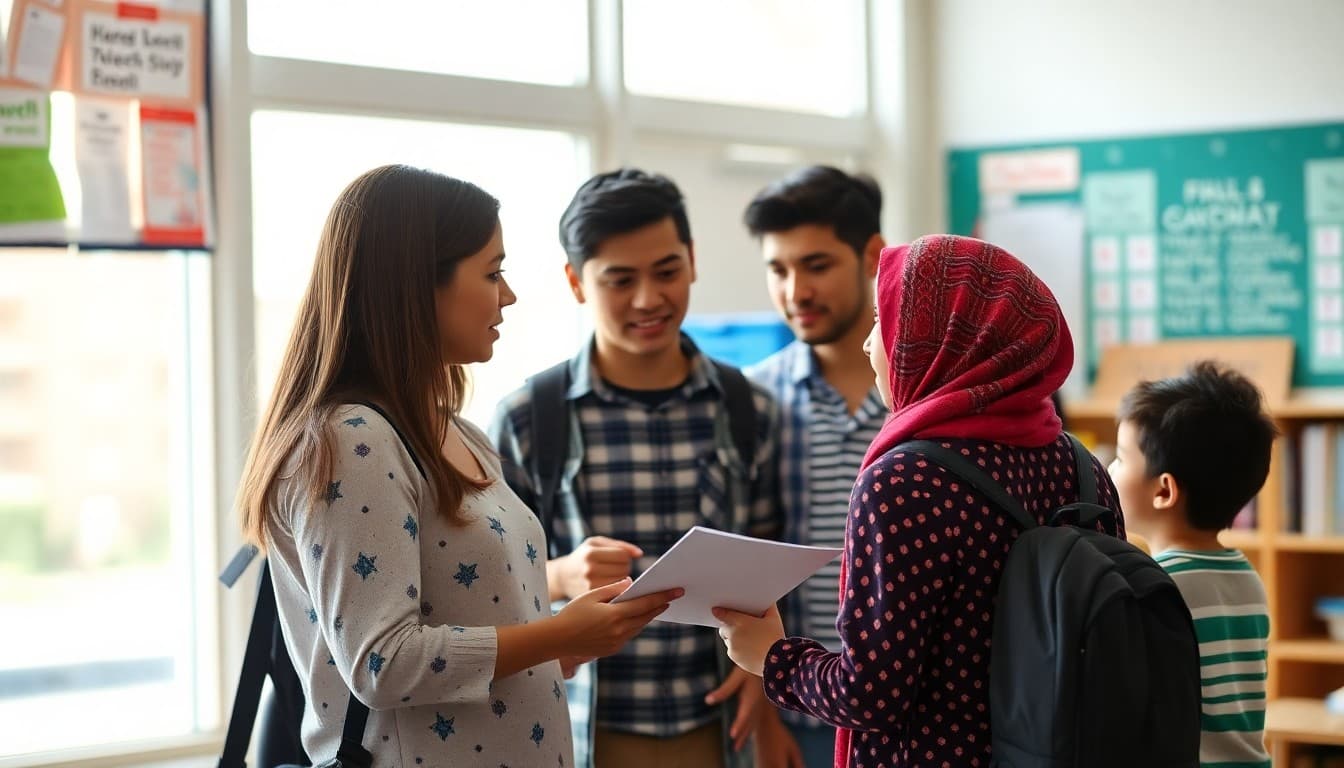
Kindergarten ELL Support Newsletter for Multilingual Families
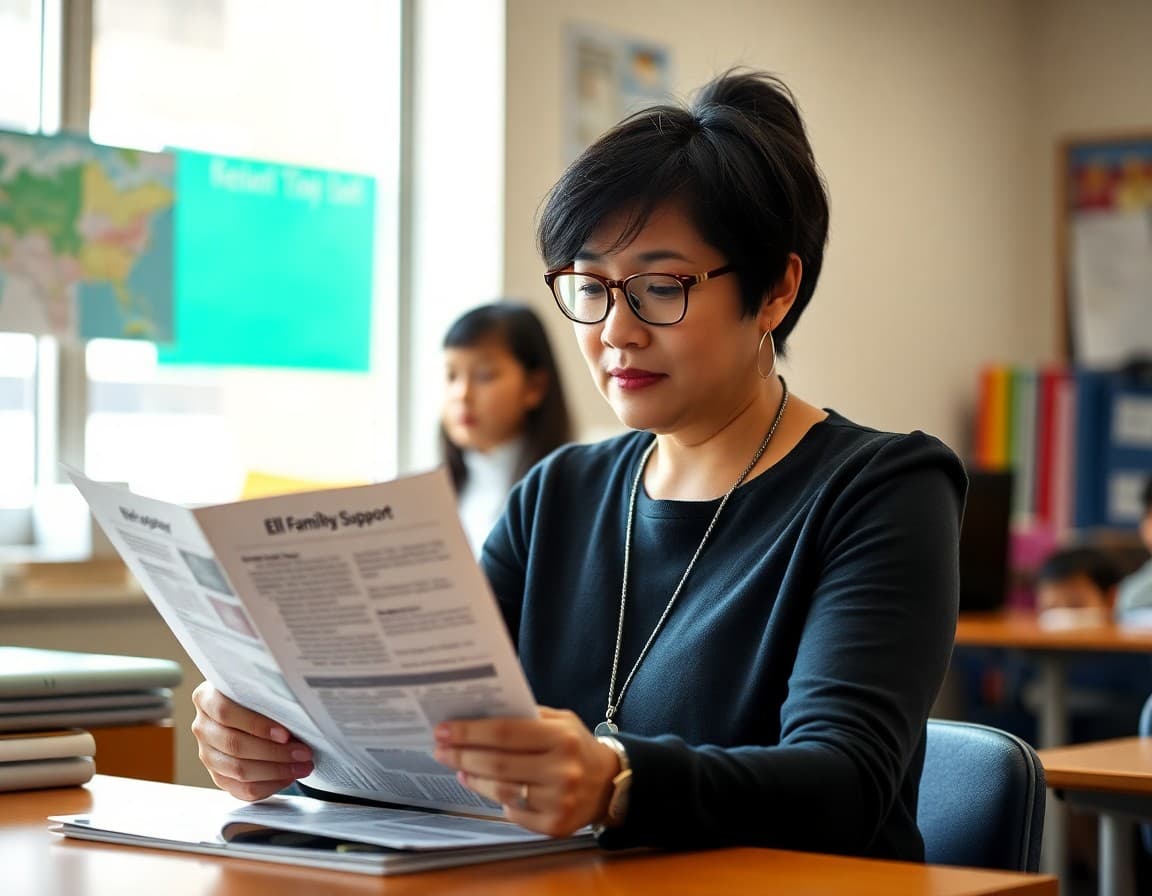
Families of English language learners often navigate the school system with incomplete information about what services their child is receiving, why, and how to support language development at home. A well-written ELL support newsletter fills that gap and builds the kind of trust that translates into better outcomes for students.
This guide covers what a kindergarten ELL newsletter should communicate, how to frame home language support accurately, and how to make the newsletter itself accessible to families who may not read English fluently.
What Services the Child Receives and Why
Open with a clear description of the ELL services your school provides at the kindergarten level. How many minutes per day or week does the child receive direct ELL support? Is support provided in the classroom (push-in) or in a separate setting (pull-out)? Who provides it? What is the goal of the support?
Plain language is essential here. "Your child receives 30 minutes of small group English language instruction four days per week with Mrs. Ramirez, our ELL specialist. This instruction focuses on the vocabulary and language structures your child needs to understand and participate in kindergarten learning" is a complete, clear description that most families can act on.
The Most Important Message: Keep Your Home Language Strong
This section is the most counter-intuitive part of the ELL newsletter and the most important. Many multilingual families switch to English at home because they believe it will help their child learn English faster. Research consistently shows the opposite: strong home language development, including literacy in the home language when possible, accelerates English acquisition rather than competing with it.
This message deserves a direct, confident statement: "The best thing you can do for your child's English learning is to read, talk, and tell stories in your home language every day. Children who are strong in their first language learn English more quickly and develop stronger academic language overall."
Sample Newsletter Section Excerpt
Here is how an ELL support newsletter section might read:
English language support in our classroom:
Your child is receiving English language development support as part of our kindergarten program. This support is provided by Mrs. Ramirez, our English language specialist, in daily small group sessions. The goal is to help your child build the vocabulary and language skills needed to fully participate in classroom learning.
Assessment: Twice per year, your child will complete the WIDA ACCESS assessment, which measures English language proficiency across four domains: listening, speaking, reading, and writing. You will receive a score report at the end of each year with an explanation of what the scores mean.
How to support your child at home:
- Read together in your home language daily. A 10 to 15 minute read-aloud makes a real difference.
- Tell stories. Share memories. Ask questions about your child's day in the language you are most comfortable with.
- Do not stop using your home language. Strong home language skills help children learn English faster.
Questions? Contact Mrs. Ramirez at [email] or the main office for translation assistance.
Family Rights Section
A brief section describing families' rights related to ELL services demonstrates transparency and builds trust. Include the right to receive program information in the family's language, the right to participate in placement decisions, and contact information for the ELL coordinator or district ELL director. Many families do not know these rights exist.
Making the Newsletter Accessible
Send the newsletter in the home languages of your students whenever possible. If your school has families from three or four language backgrounds, three or four translated versions is a reasonable number. For very diverse classes, prioritize the languages with the highest concentration of families who are not English-proficient.
A brief note at the top of the English version reading "Translation available in Spanish, Somali, and Arabic. Contact the office at [phone] to request a copy" serves families who may receive the English version but need a different one.
Building the School-Home Partnership
Close the newsletter by welcoming families to be active participants in their child's language education. Invite them to share books, songs, or stories from their home language for classroom read-alouds. Acknowledge explicitly that multilingualism is an asset, not a challenge to overcome. "Our classroom is richer because of the languages and cultures your families bring" is a statement worth making directly and often.
Get one newsletter idea every week.
Free. For teachers. No spam.
Frequently asked questions
What should a kindergarten ELL newsletter communicate to multilingual families?
The newsletter should explain what English language support services the child is receiving, how those services work within the kindergarten day, what assessment data is used to determine support levels, how families can communicate with the ELL teacher or coordinator, and how families can best support language development at home in both their home language and English. Clarity about these elements builds trust and reduces anxiety for families navigating a new school system.
Should families speak English at home to help their child learn English faster?
Research consistently shows that strong home language development supports English acquisition, not the other way around. Encouraging families to speak and read with their children in their home language is the evidence-based recommendation. The newsletter should communicate this clearly and directly. Many families receive the opposite message and abandon home language out of misguided support for their child's English learning.
How do you send a newsletter to families who may not read English fluently?
Translate the newsletter into the home languages represented in your class population. Work with a district translator, a bilingual parent liaison, or a translation service. Machine translation for school newsletters has improved significantly and can work for straightforward informational content. Always have a bilingual staff member or parent review the translation before sending if possible.
What rights do families of ELL students have that the newsletter should reference?
Families have the right to receive information about their child's educational programs in a language they understand, to participate in all educational decisions including ELL program placement, to opt out of ELL services in some states, and to receive annual notification of their child's language proficiency level and progress. A brief reference to these rights in the newsletter, with contact information for the ELL coordinator, is appropriate.
How can Daystage help send multilingual school newsletters?
Daystage supports creating and sending newsletters to specific family groups. You can build an English version and a translated version separately and send each to the appropriate families. This allows you to maintain translated communication without a complex workflow.

Adi Ackerman
Author
Adi Ackerman is a former classroom teacher and curriculum writer with 8 years in K-8 schools. She writes about school communication, parent engagement, and what actually works in real classrooms.
More for Kindergarten Transition
Kindergarten Special Education Inclusion Newsletter
Kindergarten Transition · 6 min read
Kindergarten Curriculum Overview Newsletter for Families
Kindergarten Transition · 6 min read
Kindergarten Academic Expectations Newsletter: What Families Need to Know About What Their Child Will Learn
Kindergarten Transition · 5 min read
Ready to send your first newsletter?
3 newsletters free. No credit card. First one ready in under 5 minutes.
Get started free