

Kindergarten Coloring Newsletter: How Art Builds Readiness
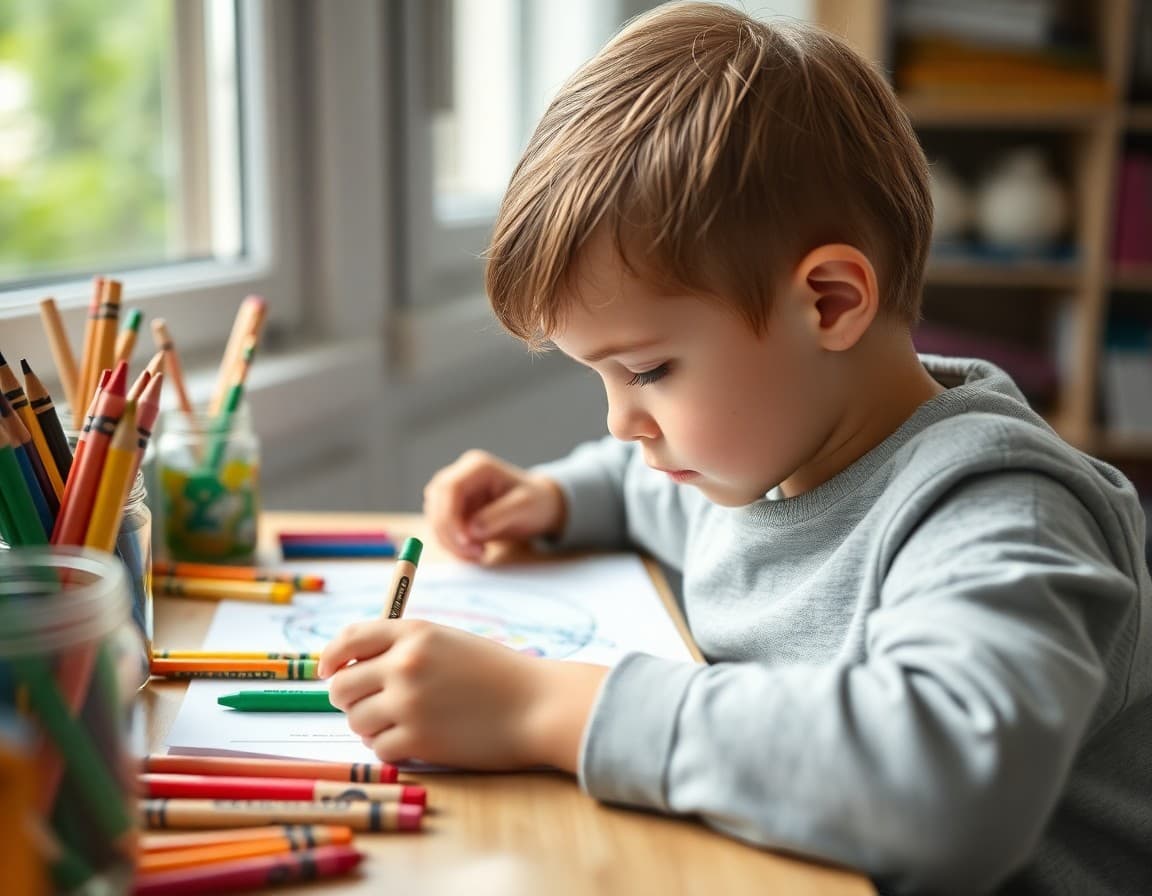
Coloring is one of the most accessible and underappreciated kindergarten readiness activities. Many families see it as entertainment. Teachers see it as fine motor training, visual-motor integration practice, and attention span development all happening simultaneously. A newsletter that connects coloring to the academic skills it supports changes how families engage with an activity their children already love.
What Coloring Actually Builds
When a child picks up a crayon and applies it to paper with purpose, several developmental processes are happening at once. The fingers and hand muscles are doing the same work they will do when holding a pencil for writing. The eyes are tracking the outline of the image and coordinating with hand movement, which is the visual-motor integration that letter formation and reading require. The brain is sustaining focus on a bounded task, building the attention span that classroom instruction demands.
A brief connecting statement for families: "The 10 minutes your child spends coloring tonight is building the same hand strength, visual tracking, and focus that we use in writing, reading, and art projects all day. It is not a time filler. It is a workout."
The Difference Between Scribbling and Coloring
At age 3-4, scribbling over a page with no attention to the image is developmentally appropriate. By kindergarten (5-6 years), children are ready to develop boundary awareness and purposeful coloring. This does not mean perfection. It means the child is attempting to apply color within the outline rather than across it randomly.
A gentle prompt families can use: "I see you are coloring the dog. Can you try to keep the blue mostly on the dog?" This is enough to invite purposeful attention without criticizing the child's current approach. Over time, the attempt to stay within boundaries becomes habitual, which is exactly the visual-motor control that letter formation requires.
Match the Materials to the Goal
Different coloring materials build different skills. Crayons require more pressure and hand strength than markers and are the best choice for fine motor development. Coloring pencils require even finer grip control and are appropriate for children who have good basic crayon skills. Large washable markers are appropriate for free creative expression but do not build the muscle precision that writing readiness requires.
Suggest families keep a mix available and use crayons or coloring pencils for skill-building sessions, while allowing markers for free creative drawing where the goal is expression rather than motor training. This distinction is not about making art less fun. It is about being intentional on the days when you specifically want to support writing readiness.
Coloring as a Sustained Attention Exercise
Completing a coloring page from beginning to end is an exercise in sustained attention and task persistence. Both are skills that kindergarten demands and that five-year-olds are still building. A child who stops coloring every few minutes to check in with the parent, ask for snacks, or switch activities has not yet built the sustained attention window that classroom instruction requires.
Families can gradually build this window by encouraging the child to complete one section of a coloring page before putting it down. Then one full page. Then two pages. The goal is not to force prolonged sitting but to gently extend the attention window through a task the child enjoys. This is far more effective than forcing attention in less preferred activities.
Connect Coloring to Classroom Learning
Many kindergarten art and classroom projects involve coloring as a component. When a child has strong coloring skills, they can produce work that reflects their knowledge rather than their motor limitations. A child who is working on a map of the classroom community but cannot hold a crayon with control produces less informative work than what they actually understand. Skill and content are separate; better skill lets the content show through.
In your newsletter, give families a preview of how coloring appears in classroom learning: "We use coloring as part of science, social studies, and math recording. Children who have practiced coloring with control can produce maps, diagrams, and illustrated writing that more accurately reflects what they have learned." This connection makes coloring feel consequential rather than recreational.
Celebrate Coloring as Art, Not Just Practice
The developmental framing of coloring should not override the artistic joy of it. Make sure your newsletter acknowledges that coloring is also creative expression, a calming activity, and a source of genuine pride when a page comes out well. Display finished coloring pages at home. Ask children to describe the choices they made. Treat the art as real art.
Children who see their coloring valued as both a skill-building activity and an artistic product are more motivated to practice than those who are told it is "good for you." The best fine motor practice is the kind that children seek out on their own because it is satisfying. Making coloring feel worthy of that engagement is worth the small narrative investment.
Get one newsletter idea every week.
Free. For teachers. No spam.
Frequently asked questions
Does coloring have real academic value for kindergartners?
Yes. Coloring builds multiple skills that directly support academic readiness. Coloring with control requires the same fine motor skills as writing. Staying within lines builds the visual-motor integration that letter formation depends on. Choosing and applying colors builds decision-making and planning. Completing a coloring page builds sustained attention and task persistence. These are not arts and crafts skills in isolation. They are foundational academic readiness skills expressed through art.
Is it better for children to color inside the lines or should we not worry about that?
The ability to color with boundary awareness (staying generally within an outline) is a developmental milestone that indicates visual-motor integration. Expecting perfection is counterproductive. But encouraging purposeful coloring rather than random scribbling over a page is developmentally appropriate for kindergartners. 'Can you try to keep most of your color inside the lines?' is a reasonable invitation that builds skill without creating anxiety about the artistic result.
What coloring materials are best for developing fine motor skills?
Crayons provide more resistance than markers, which builds more hand strength. Coloring pencils require finer grip control than crayons. Thick markers encourage large arm movements but less fine motor precision. For fine motor development, rotate between crayons and coloring pencils. Avoid large washable markers for intentional fine motor practice, though they are fine for free creative expression.
Should children color every day for it to be beneficial?
Daily coloring of even 5-10 minutes provides cumulative benefit over a school year. The consistency matters more than the duration. A child who colors for 10 minutes after school each day will have noticeably stronger pencil control and visual-motor integration by spring than one who colors for an hour once a week. Suggest families keep crayons and coloring materials easily accessible so coloring is a natural default activity rather than something that requires setup.
Can Daystage help send coloring and art readiness newsletters to kindergarten families?
Yes. Daystage lets teachers include photos of student artwork (with consent), specific suggestions for home coloring activities, and context about how the classroom uses art to build academic readiness skills. A well-crafted art newsletter changes how families view coloring from a time-filler to a purposeful developmental activity.

Adi Ackerman
Author
Adi Ackerman is a former classroom teacher and curriculum writer with 8 years in K-8 schools. She writes about school communication, parent engagement, and what actually works in real classrooms.
More for Kindergarten Transition
Kindergarten Cutting Skills Newsletter: Scissor Practice at Home
Kindergarten Transition · 6 min read
Kindergarten Writing Newsletter: Early Writing Skills at Home
Kindergarten Transition · 6 min read
Kindergarten Arts and Music Newsletter: How to Communicate the Value of Creative Learning to Families
Kindergarten Transition · 5 min read
Ready to send your first newsletter?
3 newsletters free. No credit card. First one ready in under 5 minutes.
Get started free