

Indiana Homeschool Newsletter: Local Resources and Guide for Families
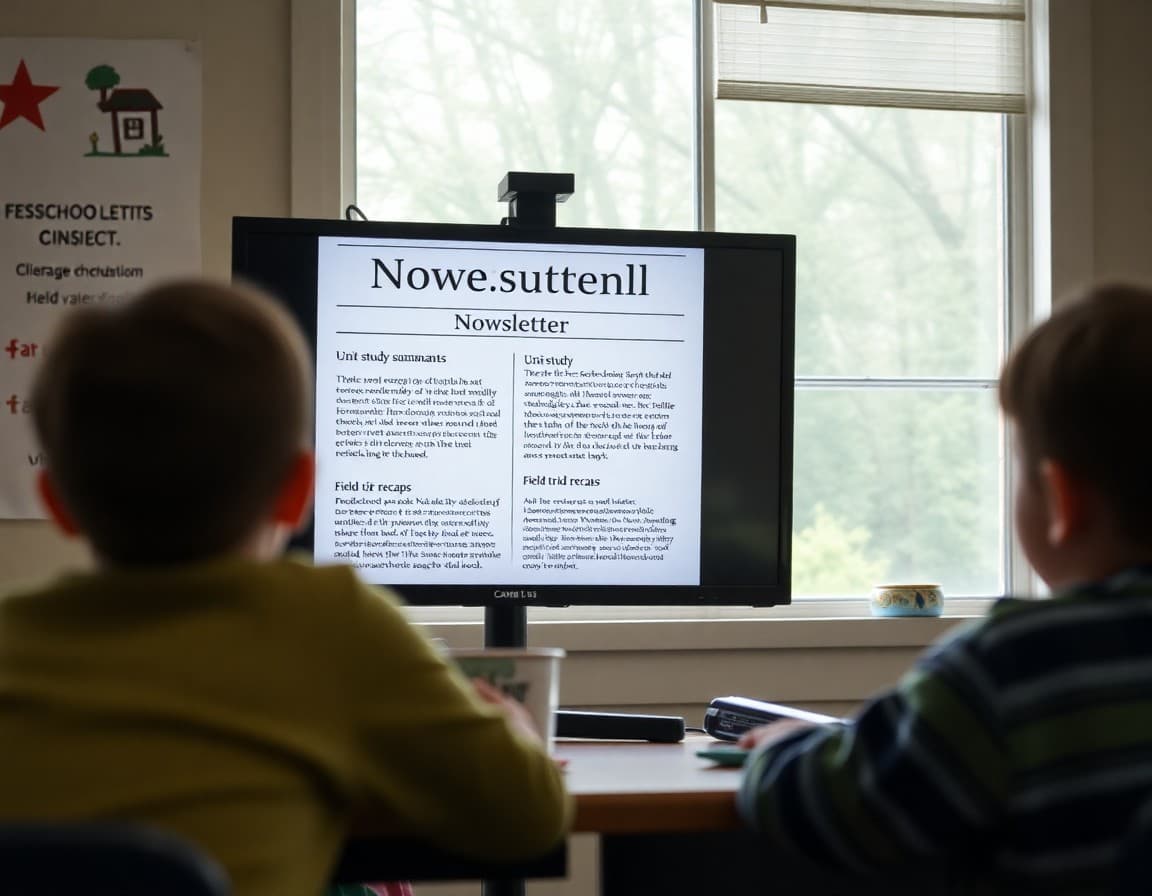
Indiana homeschooling operates with minimal state oversight, giving families real freedom to design the education that fits their students. The non-accredited school pathway is simple to understand and does not require families to navigate complex regulatory processes. A newsletter, in this environment, is entirely for your family's purposes: documenting learning, communicating with your community, and building the archive your students will eventually need.
Indiana's permissive homeschool environment
Families in Indiana operate as non-accredited, non-public schools. This requires no state registration, no testing, and no portfolio submission. The practical implication is that Indiana families can focus on curriculum and instruction without regulatory distraction. The newsletter fills the documentation gap that state oversight would otherwise create.
One area where documentation genuinely matters in Indiana is public school extracurricular participation. Some Indiana school districts allow homeschool students to participate in sports, arts programs, and other activities. Requirements vary by district, and documentation of educational activity is often part of eligibility verification.
Indiana's natural and cultural heritage
The Indiana Dunes National Park along Lake Michigan is one of the most biologically diverse areas in the Great Lakes region. The convergence of northern forest, southern hardwood forest, and prairie ecosystems in a compressed geographic area creates extraordinary biodiversity. Families who visit the Dunes for nature study have multiple curriculum connections available in a single location.
Indiana's covered bridges, particularly in Parke County, the covered bridge capital of the world, are both cultural and engineering curriculum content. The state's agricultural heritage, its significance in American car racing through Indianapolis, and its role in the development of jazz music in the 1930s all add layers to a rich history curriculum.
Underground Railroad history
Indiana was a significant corridor for the Underground Railroad, and many documented sites remain accessible for educational visits. The Levi and Catharine Coffin House in Fountain City is the most famous, but numerous sites across the state document this history. For families covering the Civil War era and the history of American slavery and freedom, Indiana offers primary source locations that make history tangible.
Working with Indiana's co-op community
Indianapolis has a particularly active homeschool community with co-ops ranging from classical programs to Charlotte Mason groups to eclectic learning communities. Fort Wayne, South Bend, and other cities have their own networks. The IAHE conference provides a statewide gathering point for families across approaches and backgrounds.
Co-op participation in Indiana often includes formal academic classes, lab sciences, and arts programs that supplement home instruction significantly. Document what your students cover in these settings alongside home instruction.
Building a newsletter that works for your family
Indiana families have the freedom to build their newsletter exactly as their family needs it. There is no state-mandated format, no required subjects to check off each issue, and no evaluator reading the result. This freedom means you can be creative, specific, and genuine in ways that prescribed documentation rarely allows.
Focus on what was interesting. What surprised your student this week? What question came up in the middle of a lesson that you did not expect? What book launched a week-long rabbit hole? These are the entries that make newsletters worth reading over time, and they happen to be the best evidence of genuine learning as well.
The long-term value of the newsletter archive
Indiana students who eventually apply to college, pursue dual enrollment, or transition to public school benefit from a documented learning history. A newsletter archive covering multiple years provides a narrative of education that transcripts alone cannot capture. Admissions readers and dual enrollment coordinators who see a year-by-year record of consistent, engaged learning are better positioned to evaluate a homeschool student accurately.
Daystage keeps your archive organized and accessible so that when you need it years from now, it is easy to find and share.
Get one newsletter idea every week.
Free. For teachers. No spam.
Frequently asked questions
What are Indiana's homeschool requirements?
Indiana families homeschool under the non-accredited, non-public school statute. There is no registration requirement with the state, no mandatory testing, and no required portfolio review. Families must provide equivalent instruction to public schools but are not subject to oversight as long as they operate as a non-accredited school. Indiana is one of the most permissive states for homeschooling.
Do Indiana families need to keep any official records?
Indiana does not mandate specific recordkeeping for homeschool families. However, maintaining records is advisable for dual enrollment purposes, college applications, and enrollment in extracurricular activities through public schools. Indiana law allows homeschool students to participate in public school extracurriculars in some districts.
What homeschool groups are active in Indiana?
Indiana has an active homeschool community. Indiana Association of Home Educators (IAHE) hosts an annual conference and provides legal resources. Indiana Religious Home Educators (IRHE) serves faith-based families. Indianapolis, Fort Wayne, South Bend, and Evansville all have local co-op networks.
What Indiana-specific content works in homeschool newsletters?
Indiana's Native American heritage from the Miami, Potawatomi, and Delaware peoples, the Underground Railroad history, covered bridge heritage, agricultural and racing heritage, the state's role in American manufacturing, and the Indiana Dunes ecosystem along Lake Michigan all provide strong curriculum content.
How does Daystage help Indiana homeschool families?
Daystage makes newsletter building and sending quick enough to sustain as a weekly or monthly habit. Indiana families who want to maintain documentation for extracurricular participation, dual enrollment, or college applications benefit from a consistent newsletter archive showing educational activity across subjects.

Adi Ackerman
Author
Adi Ackerman is a former classroom teacher and curriculum writer with 8 years in K-8 schools. She writes about school communication, parent engagement, and what actually works in real classrooms.
More for Homeschool
Ready to send your first newsletter?
3 newsletters free. No credit card. First one ready in under 5 minutes.
Get started free