
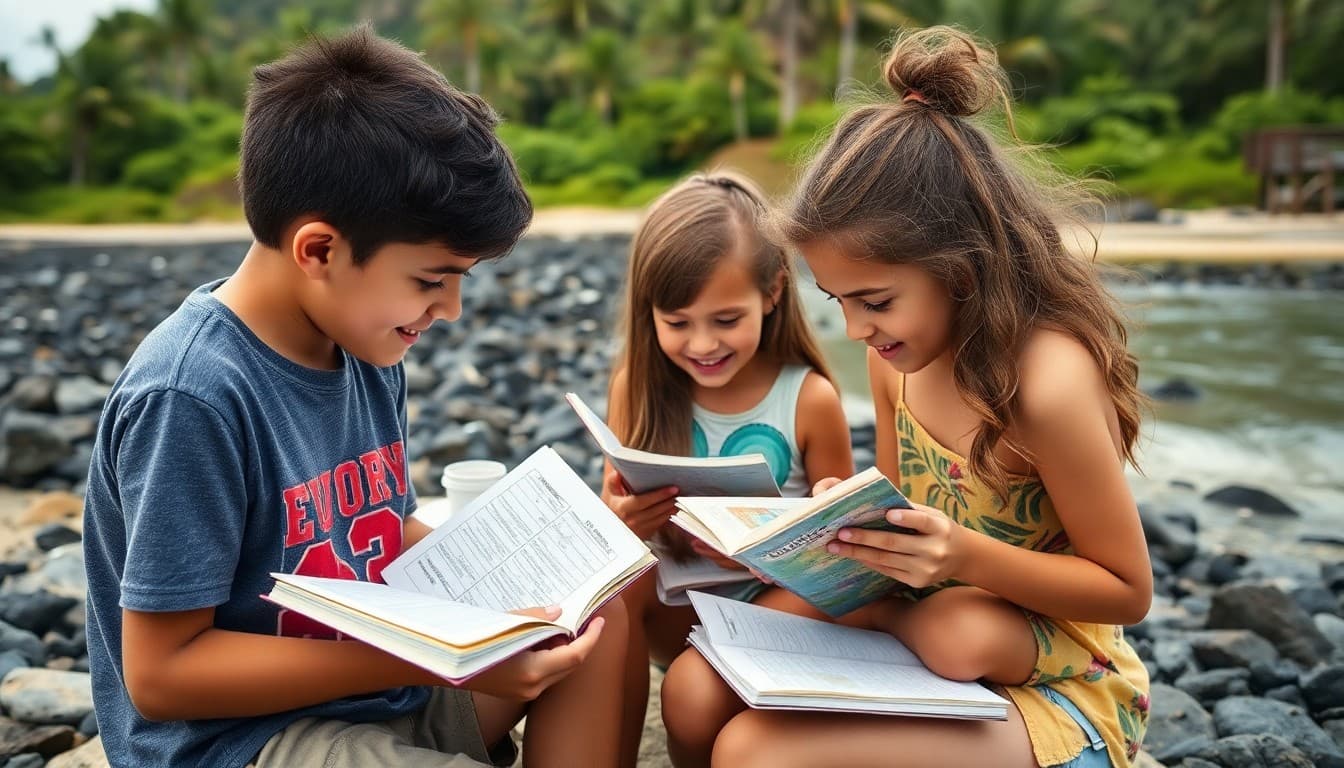
Hawaii Homeschool Newsletter: Local Resources and Guide for Families
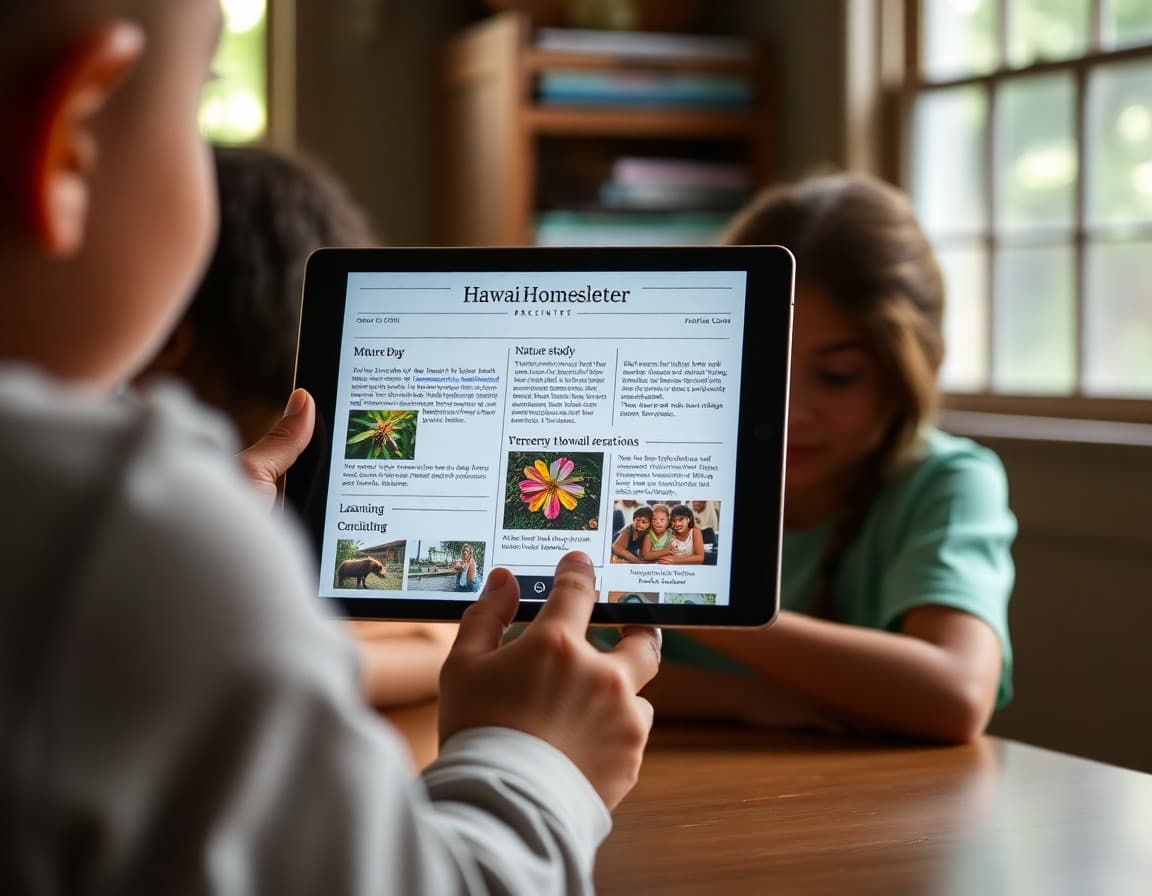
Homeschooling in Hawaii carries a quality that most families in other states can only imagine. The natural classroom is extraordinary: volcanic geology forming in real time, coral reefs accessible by snorkel, native forest birds found nowhere else on earth, and a cultural heritage that spans thousands of years of Pacific navigation and settlement. A regular newsletter documents this learning and brings the richness of an island education to extended family who may be thousands of miles away.
Hawaii's notification and reporting requirements
Hawaii requires initial notification to the local school principal and to the Board of Education before starting homeschool. The annual progress report due by May 30 is a meaningful documentation requirement. Families who build a newsletter habit throughout the year find the annual report straightforward to compile from their archive.
The annual report does not require test scores unless you choose to include them. Documenting subjects covered and student progress through narrative entries and portfolio materials is sufficient. A year of newsletters provides the narrative foundation.
Volcanic geology and earth science
Living in the most geologically active state in the country provides science curriculum that no textbook can replicate. Families on the Big Island can observe lava flows, study volcanic soil formation, and track the literal growth of the island. Families on other islands can study evidence of past volcanic activity, crater formation, and the role of volcanic processes in shaping Hawaiian ecosystems.
The Hawaii Volcanoes National Park visitor center and ranger programs provide structured educational opportunities that many homeschool families incorporate into their science curriculum. Document these visits with specifics: what students observed, what questions they asked, and what they recorded in their field journals.
Marine biology and ocean science
Hawaii's coral reef systems are among the most biodiverse in the United States. Snorkeling, tide pool study, and ocean observation are practical science activities for most Hawaii families. Many families build regular marine science observation sessions into their schedule throughout the year.
A newsletter entry documenting a session of coral reef observation might note the species identified, the conditions observed, and how the observation connected to formal curriculum. Over a school year, these entries build a genuine marine biology record that few schools anywhere can match.
Hawaiian language and culture as formal curriculum
The Hawaiian language, nearly lost in the 20th century, has experienced a significant revival. Many Hawaii homeschool families incorporate Olelo Hawaii as a formal language subject. Hawaiian cultural practices, navigation history, traditional agricultural systems like the ahupuaa land division, and the history of contact with Western civilization all provide rich content for history, social studies, and language arts.
Documenting cultural learning in your newsletter is particularly meaningful. A student who learns to sing a mele (song), identifies native plant species by their Hawaiian names, or researches the traditional navigation techniques of Polynesian wayfinders is engaging with curriculum that is genuinely irreplaceable.
The Pacific location as perspective
Living in the center of the Pacific Ocean gives Hawaii students a geographic perspective that is genuinely different from mainland experience. Pacific Island geography, ocean circulation patterns, weather systems, and the history of Pacific exploration and settlement are all curriculum areas where Hawaii students have immediate, physical context.
The Bishop Museum in Honolulu is an extraordinary resource for Pacific history, Hawaiian culture, and natural history. The USS Arizona Memorial provides powerful history education. Field trips to these institutions produce newsletter content that is both educational and deeply meaningful.
Connecting with Hawaii's small but committed homeschool community
Hawaii's homeschool community is smaller than in mainland states, but it tends to be deeply committed. Families who homeschool in Hawaii often do so because they value place-based learning that public schools cannot provide. The newsletter habit resonates with this community because it captures the particularity of learning that is specific to this place and this time.
Daystage makes the newsletter sending simple and professional. Hawaii families whose extended family lives on the mainland find the newsletter particularly valuable as a window into a life and education that feels genuinely different from what grandparents and cousins experience in their own communities.
Get one newsletter idea every week.
Free. For teachers. No spam.
Frequently asked questions
What are Hawaii's homeschool requirements?
Hawaii requires parents to notify the local school principal and the state Board of Education before beginning homeschool. Families must provide instruction in subjects equivalent to what is taught in public schools. Hawaii does not mandate standardized testing for homeschool students but does require annual progress reports to be filed.
What does Hawaii's annual progress report require?
Hawaii requires families to submit an annual curriculum and progress report to the local school principal by May 30. The report should document what subjects were covered and how the student progressed. A newsletter archive covering the full school year makes preparing this report much simpler.
Are there homeschool groups in Hawaii?
Hawaii has a small but active homeschool community. Groups exist on each major island, with the largest communities on Oahu. The Hawaii Homeschool Association connects families statewide. Given Hawaii's unique position as a Pacific island state, families often connect virtually with communities beyond the islands as well.
What Hawaii-specific learning content works well in newsletters?
Hawaii's volcanic geology, marine ecology, Pacific island navigation history, Hawaiian language and culture, biodiversity of native species, and the history of Western contact all provide extraordinary curriculum content. Many families incorporate Hawaiian language (Olelo Hawaii) and cultural practices as formal academic subjects.
How does Daystage help Hawaii homeschool families?
Daystage makes it easy to build and send polished newsletters that serve as your annual progress documentation and your community communication simultaneously. Hawaii families who need to file annual reports can reference their newsletter archive for documentation of subjects covered and student progress throughout the year.

Adi Ackerman
Author
Adi Ackerman is a former classroom teacher and curriculum writer with 8 years in K-8 schools. She writes about school communication, parent engagement, and what actually works in real classrooms.
More for Homeschool
Ready to send your first newsletter?
3 newsletters free. No credit card. First one ready in under 5 minutes.
Get started free