

Alabama Homeschool Newsletter: Local Resources and Guides for Families
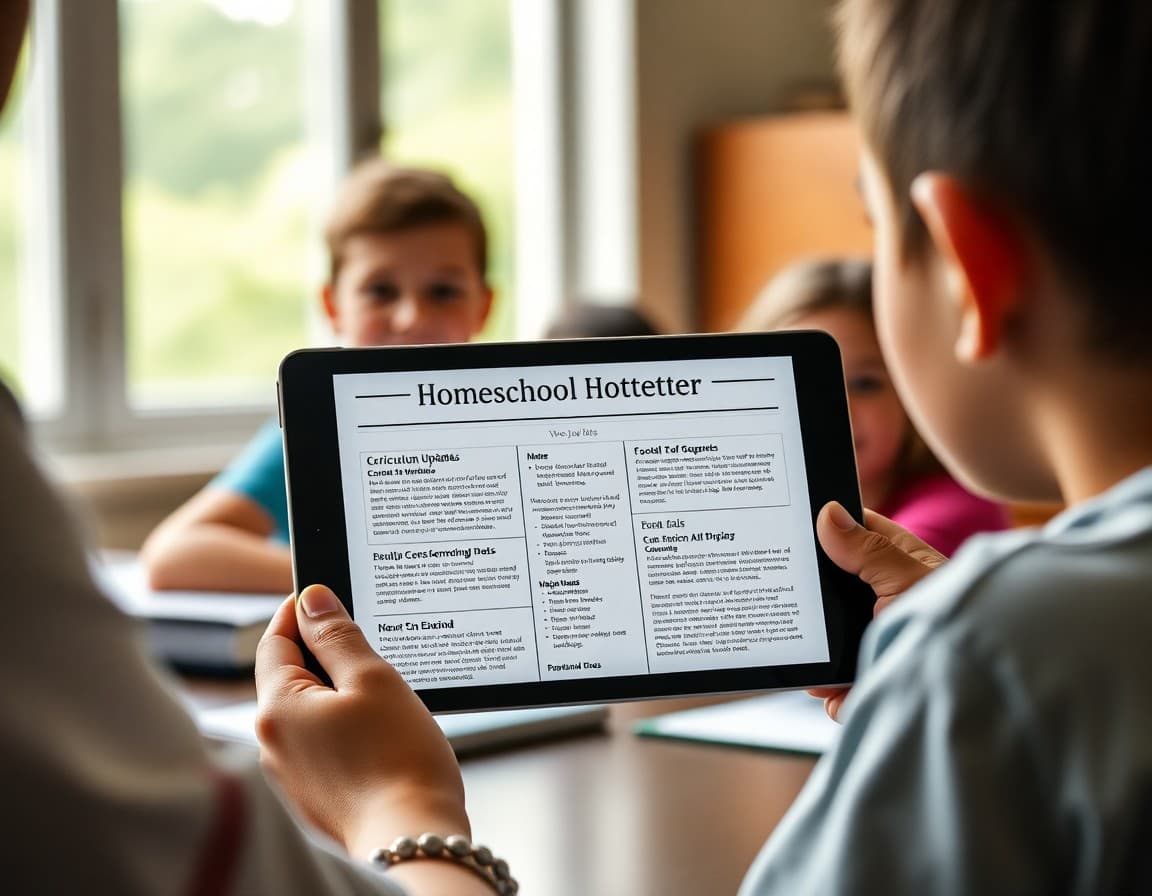
Homeschooling in Alabama is more common than most people outside the state realize. Alabama has a long tradition of family-directed education, and the state's legal framework gives families significant flexibility. A well-maintained homeschool newsletter helps families stay connected with extended family, co-op members, and accountability partners while building a solid documentation record across the school year.
Whether you are just starting out or have been homeschooling for years, the newsletter habit is one of the most practical things you can build into your routine. This guide covers what goes into an Alabama-focused homeschool newsletter and how to make it something people actually read.
Understanding Alabama's homeschool structure
Alabama families homeschool under one of two legal pathways. The first is enrolling under a church school, which covers many families and requires minimal paperwork. The second is establishing a private school, which gives families full independence. Neither pathway requires state approval of your curriculum, standardized testing results, or regular reports filed with any agency.
This flexibility means your newsletter is a voluntary tool rather than a compliance requirement. That is actually a good thing. It means you write it for the reasons that matter: documenting real learning, connecting with people who care about your students, and building a record you can use for future reference.
What Alabama homeschool families typically cover
A good Alabama homeschool newsletter draws on what makes learning in your state distinctive. Alabama's history offers rich material: civil rights history, Native American heritage, the Space and Rocket Center in Huntsville, Gulf Coast ecology. Families who weave regional content into their curriculum have natural newsletter material throughout the year.
Outdoor learning is another consistent feature for Alabama families. The state's parks, lakes, and coastal areas support nature study, environmental science, and hands-on biology in ways that are hard to replicate indoors. When your students spend a morning at a state park identifying plants or studying bird migration, that belongs in your newsletter.
Connecting with Alabama co-ops and support networks
The Home Educators Association of Alabama connects families across the state and can help you find local co-ops, curriculum fairs, and legal resources. Many Alabama co-ops meet weekly or biweekly and offer classes in subjects families prefer not to teach solo, from lab sciences to foreign languages to art.
If your family participates in a co-op, your newsletter is a natural place to share what your students are covering there. Co-op classes often produce some of the most interesting newsletter content because students are working alongside peers on projects that parents might not run at home.
A simple newsletter format that works year-round
The most useful homeschool newsletters follow a repeatable structure. Open with a brief overview of the week or month. Follow with a section for each student or subject area, keeping each entry to two or three sentences. Close with upcoming events, curriculum notes, or anything relevant for the coming weeks.
Here is a short example of how a section might read for an Alabama family:
"This week Marcus finished his unit on Alabama's role in the space race. He built a model rocket and wrote a short paper on Wernher von Braun's work at Redstone Arsenal. Next week we visit the U.S. Space and Rocket Center to follow up on what he learned."
That is three sentences. It tells the reader what was studied, how it was applied, and what comes next. No elaboration needed.
Documenting progress without overcomplicating it
Alabama's reporting flexibility means you are not writing for a state official. Write for your own archive and for the people in your community who genuinely want to follow your students' progress. Grandparents, extended family, accountability partners, and co-op teachers are your primary audience.
Keep notes during the week to make the writing faster on newsletter day. A short voice memo or a running document where you drop observations is enough. When you sit down to write, you are editing notes rather than trying to reconstruct a week from memory.
Field trips and seasonal learning
Alabama's mild climate and geographic variety make field trips practical across most of the school year. The newsletter is where you document these experiences in enough detail to be meaningful. Include where you went, what the students were looking for, and what they found or learned. A photo with a caption is often more effective than two paragraphs of description.
Keep a running list of field trip destinations you have visited and ones you plan to visit. Alabama has Civil War sites, natural history museums, botanical gardens, aquariums, and working farms that provide strong cross-curricular experiences. The newsletter captures these visits as part of the formal learning record.
Keeping your subscriber list manageable
Most homeschool family newsletters go to a small, defined audience: grandparents, close family friends, co-op teachers, and accountability partners. You do not need a large list to make the newsletter worthwhile. A consistent newsletter sent to ten engaged readers is more valuable than a sporadic one sent to fifty people who barely skim it.
Tools like Daystage make it easy to maintain a clean subscriber list and send newsletters that look polished without requiring any design work. The writing is the work. The sending should be quick.
Building a documentation archive over time
One of the most practical reasons to maintain a regular newsletter is the archive it creates. If your students eventually apply for dual enrollment, plan to take standardized tests, or need to document their education for any formal purpose, a dated archive of newsletters showing consistent subject coverage and regular learning activity is genuinely useful.
Alabama families who stick with the newsletter habit for multiple years consistently say the archive becomes one of their most valued homeschool resources. It shows the full arc of a student's education in a way that individual lesson plans or grade books never quite capture.
Get one newsletter idea every week.
Free. For teachers. No spam.
Frequently asked questions
What are the homeschool reporting requirements in Alabama?
Alabama requires homeschool families to enroll under a church school or to establish their own private school. There is no state approval or curriculum mandate, but families must keep an attendance register and have it available if requested. Connecting with a local homeschool co-op or legal organization helps families stay current on any changes.
Do Alabama homeschool families need to send newsletters to anyone?
Alabama does not require families to send progress reports to the state. However, many families send newsletters to extended family, accountability partners, or co-op groups to document learning and maintain connection. The newsletter serves as a record rather than a compliance document.
What should an Alabama homeschool newsletter include?
A strong newsletter covers recent learning highlights for each student, upcoming activities or field trips, curriculum changes, and any community events relevant to local homeschool families. Alabama families often note outdoor learning tied to the region, from nature study at state parks to visits to historic sites.
Are there active homeschool co-ops in Alabama?
Yes. Alabama has a healthy network of homeschool co-ops and support groups, particularly around Birmingham, Huntsville, Mobile, and Montgomery. Many operate under church school umbrellas. Searching for co-ops through the Home Educators Association of Alabama (HEAA) is a good starting point.
How can Daystage help Alabama homeschool families send newsletters?
Daystage makes it simple for homeschool families to send polished, consistent newsletters without wrestling with email formatting. Families can build a newsletter in minutes, add photos, and send to their full list. It keeps the focus on the learning content rather than the technical work of communication.

Adi Ackerman
Author
Adi Ackerman is a former classroom teacher and curriculum writer with 8 years in K-8 schools. She writes about school communication, parent engagement, and what actually works in real classrooms.
More for Homeschool
Ready to send your first newsletter?
3 newsletters free. No credit card. First one ready in under 5 minutes.
Get started free