

Alaska Homeschool Newsletter: Local Resources and Guide for Families
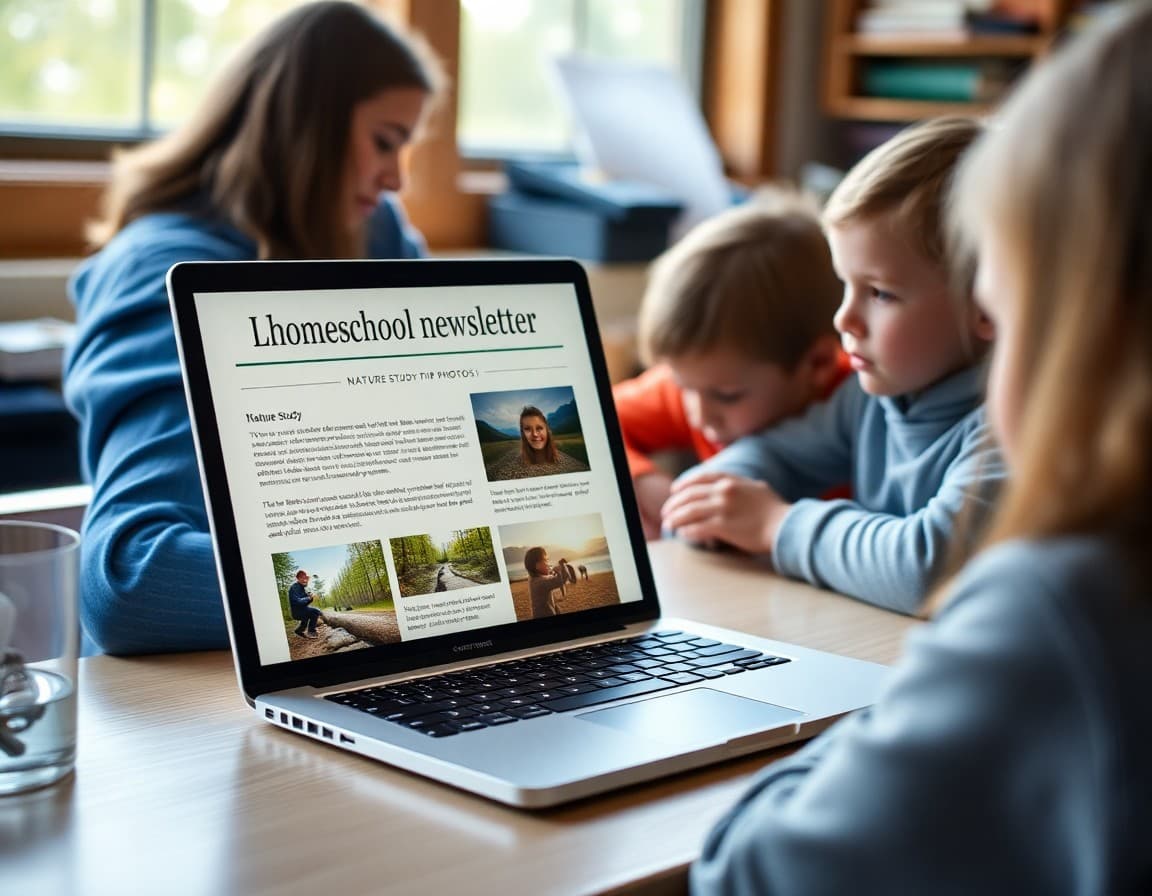
Homeschooling in Alaska looks different from homeschooling almost anywhere else. The state's geography, its state-funded correspondence programs, and the culture of self-sufficiency that runs through many Alaskan communities all shape what homeschool education looks like here. A well-written newsletter reflects that reality and gives families a way to document learning that is genuinely connected to their place.
This guide covers what makes an Alaska homeschool newsletter useful, what to include, and how to build the habit without making it feel like a burden.
Alaska's unique homeschool structure
Alaska is one of the best states for homeschool families from a regulatory standpoint. The state funds multiple correspondence school programs that allow families to homeschool while accessing state funding for curriculum and materials. Programs like IDEA (Interior Distance Education of Alaska), Alyeska Central School, and others give families flexibility plus financial support.
Families in these programs typically have a relationship with an assigned teacher who reviews portfolios and learning documentation periodically. A regular newsletter creates a natural record for these check-ins. It shows what students are learning, how they are progressing, and how the family is structuring their time.
Writing for an Alaskan context
One thing that makes Alaska homeschool newsletters distinctive is the depth of place-based learning available. No other state offers the same combination of ecosystems, indigenous cultures, climate variation, and access to raw wilderness as part of daily life.
When a student spends a week observing salmon spawning, documenting species, and mapping a creek system, that is science, geography, and writing rolled into one unit. When a family processes a harvest from hunting or fishing, that involves biology, math, and practical life skills. These experiences belong in the newsletter with enough detail to show what was actually learned.
Staying connected across distance
Alaska's size means homeschool families are often far from other homeschool families. Extended family may be in the lower 48. The newsletter bridges that distance more effectively than social media posts because it creates a structured, recurring communication that people look forward to rather than scroll past.
Grandparents and extended family who receive a regular newsletter from an Alaska homeschool family often describe it as one of their most anticipated communications. The combination of education updates and glimpses into a life that feels genuinely different from their own makes for compelling reading.
A format that fits Alaska learning
Build your newsletter around the natural rhythm of Alaska seasons. The academic year in Alaska often follows seasonal patterns differently from the lower 48. Many families do intensive academic work in winter, when outdoor activity is limited, and shift to more project-based and outdoor learning in spring and summer.
A seasonal newsletter format might look like: a section on what the season is bringing in terms of outdoor learning, a section on formal academics, a section on skills being practiced, and a short look ahead. This structure fits Alaskan life better than a subject-by-subject format built around a traditional school calendar.
Documenting skills alongside academics
Alaska homeschool families often include practical skills as a formal part of their curriculum. Wilderness skills, food preservation, mechanical maintenance, fishing and hunting, navigation, and weather reading are all real subjects with real educational content. Your newsletter can and should document these alongside reading, writing, math, and history.
Here is a short example of how a skills section might read: "This month Naya learned to read topographic maps and navigate to a series of marked waypoints using only map and compass. She covered about eight miles of terrain over three days and maintained a trail journal the entire time."
That is a geography, writing, and physical education record in three sentences.
Using the newsletter to document indigenous studies
Many Alaska homeschool families incorporate Alaska Native history, language, and culture into their curriculum. This content is appropriate for the newsletter and reflects the kind of regionally grounded education that Alaska genuinely supports. Documenting what students are learning about local languages, traditional practices, and regional history shows the breadth of an Alaskan education.
Be specific. "We studied Athabascan beadwork patterns and their connection to regional clan identities" is more useful documentation than "we studied Alaska Native culture."
Building a correspondence school portfolio through newsletters
Families enrolled in Alaska correspondence school programs often need to document learning for their assigned teacher. Newsletters serve as natural portfolio entries. Each issue becomes evidence of consistent educational activity across subjects.
Keep a digital archive organized by school year. When a portfolio review or check-in comes up, you have months of documented learning to draw from rather than scrambling to reconstruct what happened.
Sending newsletters that people read
The practical work of sending a newsletter does not need to take much time. Daystage lets families build and send newsletters without wrestling with formatting tools. Once you have a template and a routine, the writing takes fifteen to twenty minutes and the sending takes two.
Alaska families who build the newsletter habit consistently say it becomes one of the most valued artifacts of their homeschool years. The distance between Alaska and extended family makes the newsletter more meaningful, not less.
Get one newsletter idea every week.
Free. For teachers. No spam.
Frequently asked questions
What are Alaska's homeschool requirements?
Alaska offers several pathways, including enrolling in a state-funded correspondence program, registering as a private school, or submitting a home education notification to the local school district. Correspondence schools like Interior Distance Education of Alaska (IDEA) and Alyeska Central School provide curriculum and support while remaining state-funded options.
Do Alaska homeschool families receive state funding?
Yes. Alaska is one of the few states that provides significant funding to homeschool families through correspondence schools and homeschool programs. These programs often come with allotments that families can spend on approved curriculum and educational materials. Families enrolled in these programs typically have some reporting requirements to their program teacher.
What regional topics work well in an Alaska homeschool newsletter?
Alaska offers extraordinary content for nature study, geography, indigenous history and culture, marine biology, geology, and survival skills. The state's seasons, wildlife, and ecosystems are natural curriculum topics that give Alaska homeschool newsletters a distinct character. Many families document seasonal harvests, fishing trips, and outdoor expeditions as part of formal learning.
How do rural Alaska families stay connected to homeschool communities?
Many rural Alaska families rely on online communities, correspondence school networks, and annual gatherings. Some areas have active co-ops, particularly around Anchorage, Fairbanks, and the Kenai Peninsula. For families in more remote areas, correspondence school teachers often serve as the primary professional connection.
How can Daystage help Alaska homeschool families with newsletters?
Daystage makes it easy to send professional-looking newsletters without designing from scratch. Alaska families who want to send updates to extended family, correspondence school teachers, or accountability partners can build and send a newsletter in under fifteen minutes. The platform handles formatting so you can focus on the content.

Adi Ackerman
Author
Adi Ackerman is a former classroom teacher and curriculum writer with 8 years in K-8 schools. She writes about school communication, parent engagement, and what actually works in real classrooms.
More for Homeschool
Ready to send your first newsletter?
3 newsletters free. No credit card. First one ready in under 5 minutes.
Get started free