

Teacher Newsletter for Senior Breakfast Events: What Families Need to Know
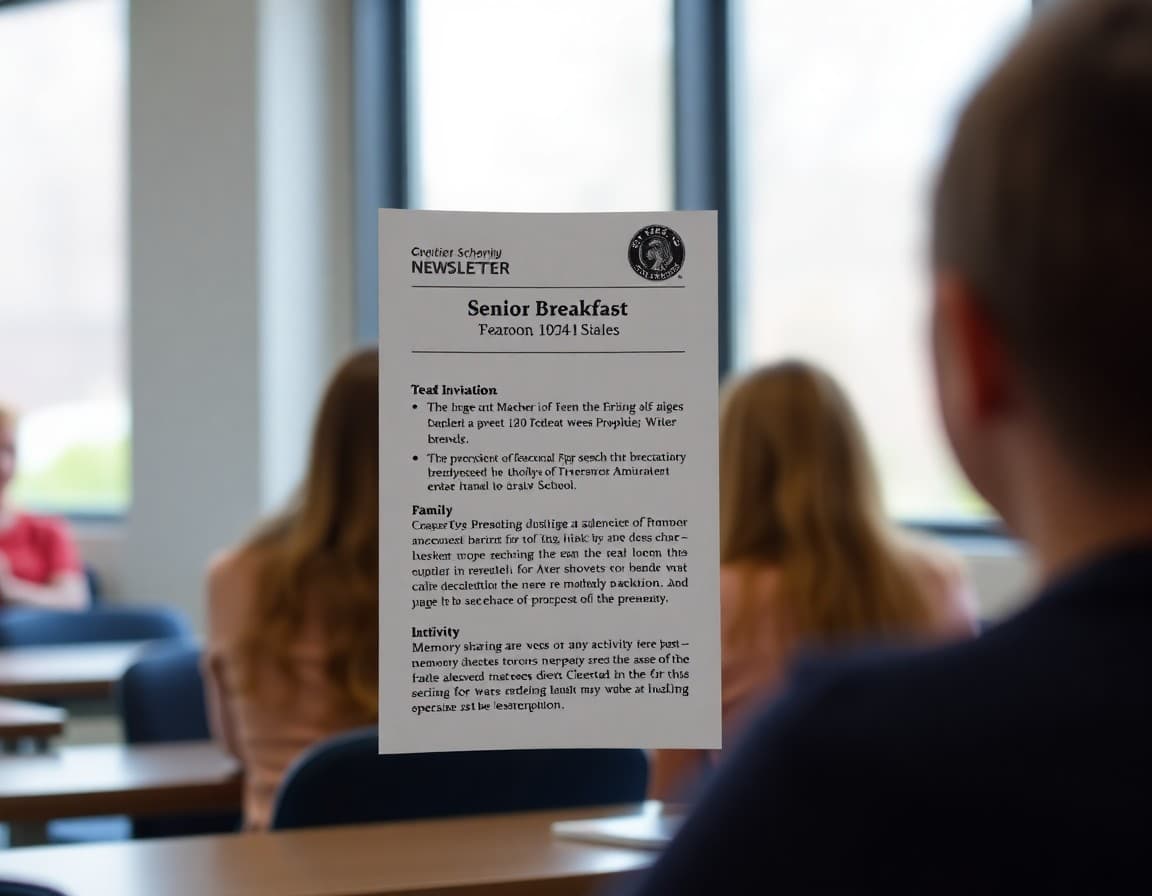
What a Senior Breakfast Means in the Arc of Senior Year
A senior breakfast sits in the final chapter of high school: the weeks between the last regular school day and the ceremony. It is one of the few events designed specifically to honor the student cohort as a group, to give teachers and staff a moment to express what they have meant, and to give seniors a chance to feel the weight of the transition they are about to make. A newsletter that communicates the spirit of the event, not just the logistics, helps families show up with the right mindset.
Event Date, Time, and Location
The logistics matter first. Your newsletter should give families the full schedule: when the event starts, where it is held, how long it typically runs, whether parking is available, and what families should plan for before and after. If the event is on a school day and seniors are expected to attend school before or after, name that explicitly so families can plan transportation.
Family Invitation Policy
Whether family members are invited to a senior breakfast varies significantly by school and by the tradition at your specific campus. Your newsletter should state this clearly: families are invited, families are not invited, or a specific number of family guests per senior are permitted. Families who receive ambiguous information often ask individual teachers rather than accepting a clear answer from the newsletter, which creates unnecessary follow-up work.
Activities and Traditions
Senior breakfasts often include activities that are meaningful to the senior class: a slide show of four-year photos, readings of memory letters from teachers, a tradition-specific activity the school has done for years, or a senior class gift presentation. A newsletter that describes these activities in advance helps families appreciate the significance of the event rather than experiencing it as a meal with unclear purpose.
How Families Can Contribute
Senior breakfasts that involve family contributions need specific asks rather than general calls for help. Whether you need baby or childhood photos for a slide show, food donations, financial support for decorations, or volunteers for setup, name exactly what is needed and how to submit or sign up. Families who want to contribute but receive vague requests often default to doing nothing rather than asking for clarification.
Making the Event Feel Significant
The senior breakfast is one of the last opportunities teachers have to tell seniors what they meant to the school community. A newsletter that conveys this, framing the event as a genuine celebration and farewell rather than a logistical requirement, helps families and seniors arrive with the openness to receive it that way.
Communicating Through Daystage
High school teachers and senior class advisors who use Daystage for senior celebration newsletters reach every family with the information and spirit of each event. A series of newsletters covering the final senior events, from breakfast to graduation night, creates a communication arc that families can follow and appreciate as the senior year draws to a close.
Get one newsletter idea every week.
Free. For teachers. No spam.
Frequently asked questions
What should a senior breakfast newsletter include?
A senior breakfast newsletter should explain the event date, time, and location, whether family members are invited or if it is a student-only event, what the event includes, whether there is a registration or RSVP requirement, what families should bring if anything, and any meaningful traditions or activities that are part of the celebration.
What is a high school senior breakfast?
A senior breakfast is a celebration held near the end of senior year, often the morning before or after the commencement ceremony or in the final week of school. It typically includes a shared meal, recognition of seniors by name, speeches or memories from teachers and staff, and sometimes activities like slide shows, memory readings, or tradition-specific presentations.
Do families typically attend senior breakfast events?
Some schools host senior breakfasts as student-only events where teachers and staff celebrate seniors without family attendance. Others include family members as guests. A newsletter should be explicit about whether family is invited, and if so, how many guests are permitted per senior, so families can plan accordingly.
How can families contribute to a senior breakfast event?
If families are invited to contribute, a newsletter should explain what is needed, whether that is food, decorations, memory photos, donations, or volunteer time for setup and cleanup. Specific asks produce more reliable responses than general requests for help. Families who know exactly what is needed and when can plan their contribution easily.
What tool helps teachers send newsletters efficiently?
Daystage is built for school communication. High school teachers use it to send formatted event newsletters with senior breakfast details, invitation information, and activity descriptions directly to senior parent email lists.

Adi Ackerman
Author
Adi Ackerman is a former classroom teacher and curriculum writer with 8 years in K-8 schools. She writes about school communication, parent engagement, and what actually works in real classrooms.
More for High School
Teacher Newsletter for Senior Sunset Events: Celebrating the Final Chapter With Families
High School · 6 min read
Teacher Newsletter: Writing a Letter to Seniors That Families Will Save
High School · 6 min read
Teacher Newsletter for Graduation Party Info: Keeping Families Informed About Senior Celebrations
High School · 6 min read
Ready to send your first newsletter?
3 newsletters free. No credit card. First one ready in under 5 minutes.
Get started free