
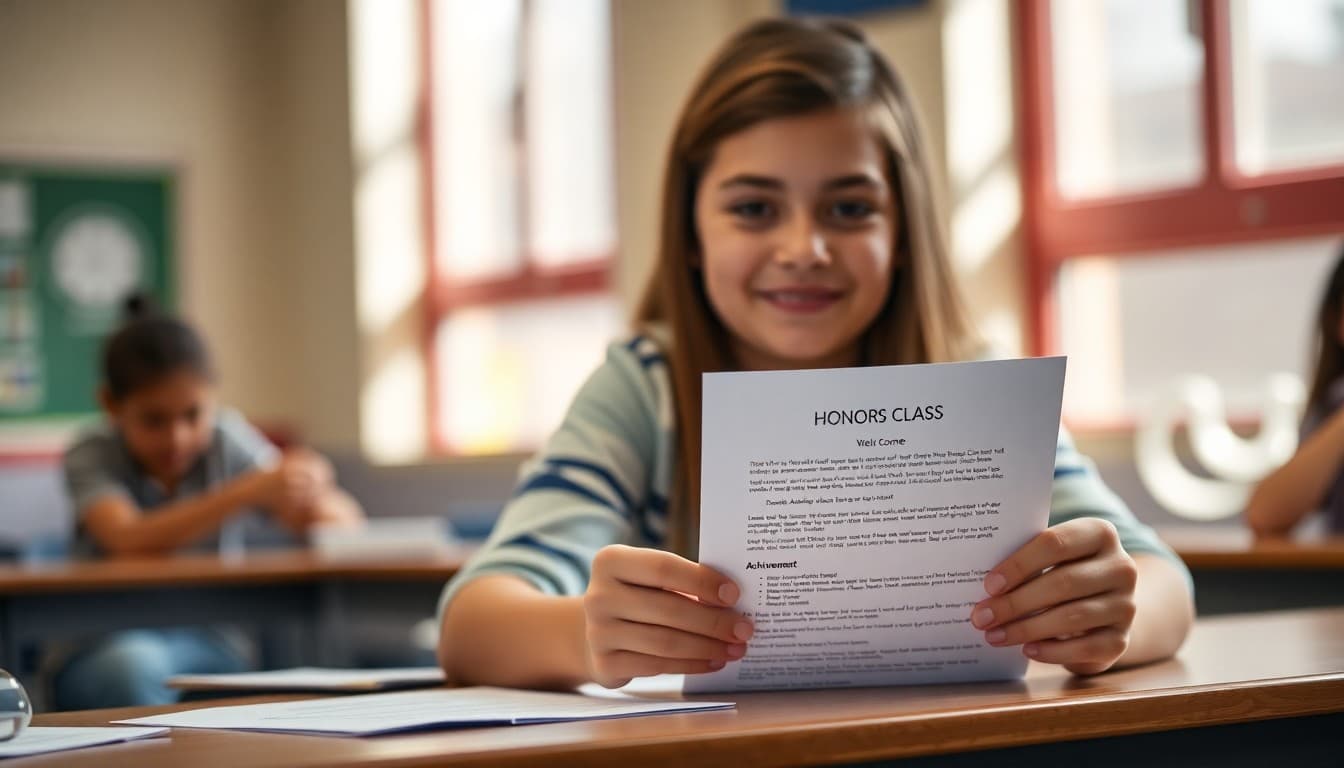
Teacher Newsletter for Honors Class Introductions: Setting Expectations With Families

What an Honors Course Introduction Newsletter Should Accomplish
The first newsletter for an honors course does three things: it sets accurate expectations about the workload, it explains the academic environment students are entering, and it tells families exactly how to support their student without accidentally working against the course goals. Done well, it reduces the parent emails that arrive in week three when families realize the expectations are higher than they anticipated.
What Makes This Course Different From Standard
Your newsletter should name the specific differences between the honors and standard versions of the course. Faster pacing? Greater depth of analysis in writing? More independent reading? Higher expectations for discussion preparation? Specific differences are more useful than saying the course is simply harder. Families who know exactly what changed can help their student prepare for the right challenges.
GPA Weighting: How It Works and What It Means
Many families choose honors courses primarily for the GPA weighting, which can significantly affect class rank and college application profiles. A newsletter that explains how your school calculates the weighted GPA, what the weighting is for the course, and how colleges typically view weighted versus unweighted GPAs helps families understand the practical implications of the enrollment decision they have already made.
Self-Advocacy as a Skill
Honors students are expected to monitor their own understanding and seek help when they need it rather than waiting for the teacher to identify the gap. This is a skill many students have not developed. Your newsletter should name self-advocacy explicitly and explain what it looks like: coming to office hours before a test rather than after, asking specific questions in class rather than hoping to figure it out later, and communicating directly when a deadline is a problem rather than missing it silently.
What Families Should Not Do
An honors course introduction newsletter is a good place to be direct about what family support should not look like. Editing or completing assignments, providing answers to homework problems, or contacting the teacher to negotiate grades on behalf of the student all undermine the course goals. Families who understand this are in a better position to encourage independent problem-solving rather than rescuing their student from difficulty.
Setting Up for a Successful Year
Encouraging students to start strong by reading ahead, setting up a consistent study schedule, and identifying a peer study partner in the first two weeks pays dividends across the entire year. A newsletter that recommends these specific actions gives families something concrete to support rather than just reminding students to try hard.
Ongoing Communication Through Daystage
An honors class introduction newsletter is the first in a series of communications. Daystage makes it easy to follow up with unit newsletters, assessment updates, and exam preparation notes throughout the year. Consistent communication from an honors teacher builds the family confidence that makes the course feel supported rather than isolated.
Get one newsletter idea every week.
Free. For teachers. No spam.
Frequently asked questions
What should an honors class introduction newsletter include?
An honors class introduction newsletter should explain what distinguishes the honors course from the standard course, what the increased workload and pacing look like, how GPA weighting works, what self-advocacy skills students will need, and what families can do to support success without overstepping. Setting these expectations clearly at the start prevents misunderstandings about both the rigor and the grading.
How is an honors course different from an AP course?
Honors courses offer accelerated or enriched content beyond the standard curriculum but are typically not tied to a standardized external exam. AP courses follow a College Board-specified curriculum that culminates in an exam for potential college credit. Both offer GPA weighting at most schools, but they serve different purposes and attract different student profiles. A newsletter that clarifies this distinction helps families make informed placement decisions.
What does academic rigor mean in an honors course?
Rigor in an honors course means higher expectations for independent reading, greater depth of analysis in writing, faster pacing, and assessments that require application rather than recall. It does not mean more busywork or arbitrary difficulty. Students who choose honors courses should expect to spend more time on the subject and should value the depth the course provides.
How can families support honors students without taking over?
Families can support honors students by protecting consistent study time, asking about the student's progress and challenges without providing answers, encouraging the student to seek help from the teacher when they are confused rather than working around the difficulty, and framing challenge as a feature of the course rather than evidence of inadequacy.
What tool helps teachers send newsletters efficiently?
Daystage is built for school communication. High school teachers use it to send formatted course introduction newsletters with expectations, grading notes, and family support tips directly to parent email lists.

Adi Ackerman
Author
Adi Ackerman is a former classroom teacher and curriculum writer with 8 years in K-8 schools. She writes about school communication, parent engagement, and what actually works in real classrooms.
More for High School
Teacher Newsletter for AP Literature Units: Communicating Rigor to Families
High School · 6 min read
Teacher Newsletter for STEM Pathways: Communicating Program Goals to Families
High School · 6 min read
Teacher Newsletter for College Prep Programs: Communicating Academic Readiness to Families
High School · 6 min read
Ready to send your first newsletter?
3 newsletters free. No credit card. First one ready in under 5 minutes.
Get started free