

Teacher Newsletter for AP Literature Units: Communicating Rigor to Families
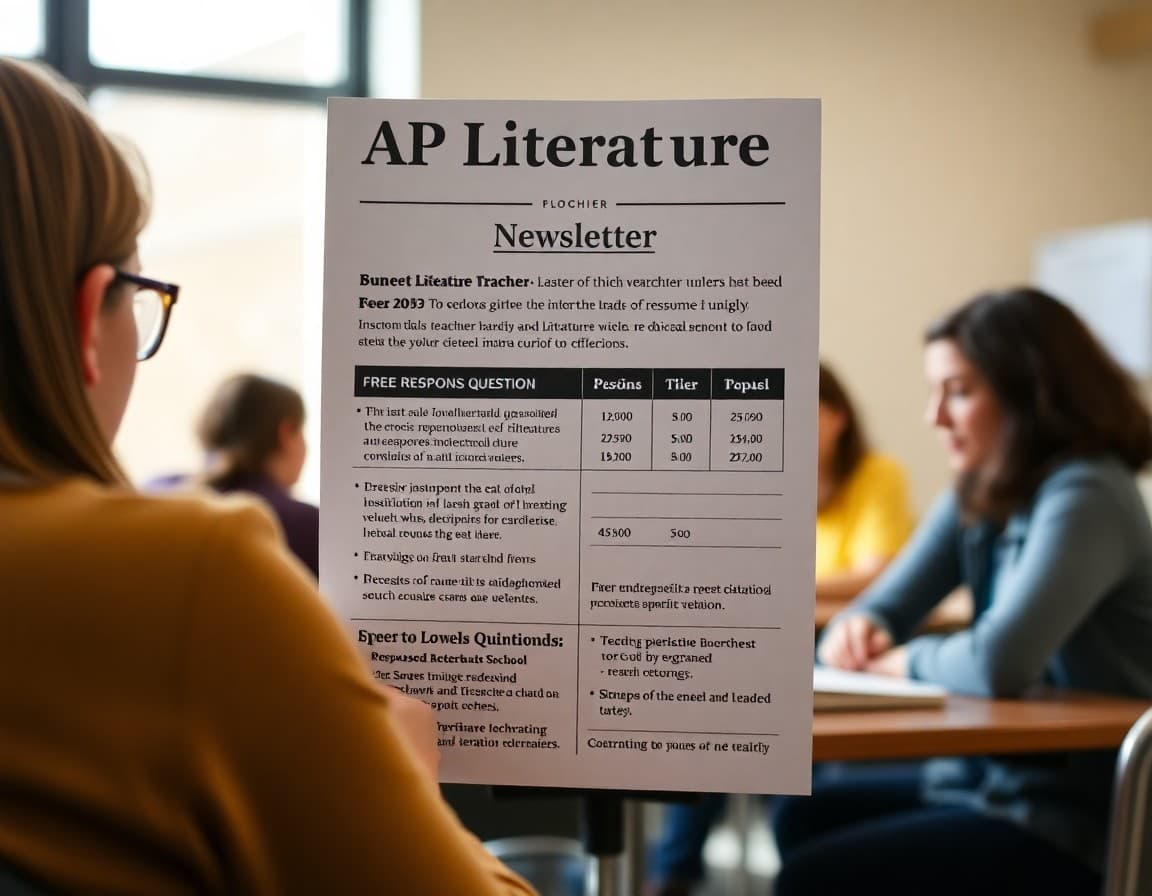
Setting Expectations for AP Literature
AP Literature is a college-level course, and a unit newsletter should reflect that without apologizing for the rigor. Families whose students are enrolled in AP Lit are choosing a challenging academic experience, and they deserve clear communication about what that involves. A newsletter that explains the unit's goals and the reading and writing demands prevents the confusion that happens when families compare AP expectations to those of standard English courses.
The Text: Why This Choice, This Semester
Every AP Lit unit centers on a specific text or set of texts. Your newsletter should explain why this text is in the curriculum, what analytical skills it teaches, and how it connects to the larger arc of the course. When families understand the pedagogical reasoning, they treat the reading with more respect than they would a book picked arbitrarily.
Close Reading as the Core Skill
AP Literature is built on close reading: the ability to analyze how specific word choices, structural decisions, and narrative techniques create meaning. Students who develop close reading skills in a rigorous course arrive at the exam ready to produce quality free response essays on passages they have never seen. Your newsletter should explain that close reading is a transferable skill, not just an exercise in finding symbols.
Free Response Question Preparation
The three AP Literature free response types each require a different kind of thinking. A poetry analysis essay asks students to read an unseen poem and analyze how specific poetic elements contribute to meaning. A prose fiction analysis essay does the same with a prose passage. A literary argument essay applies a prompt to a work the student chooses. Let families know which type the current unit is preparing for and what strong responses look like.
Time Management With AP Reading Loads
AP Literature reading cannot be done the night before class. Close reading requires time, re-reading, and annotation. A newsletter that gives families the weekly reading schedule helps them understand why consistent daily reading is the only realistic approach. Students who fall behind in AP Lit rarely recover the analytical depth they missed by rushing to catch up.
Exam Timeline and Score Expectations
A mid-year newsletter that covers the May exam timeline, the score scale, the college credit policies at common colleges, and what strong AP preparation looks like helps families make informed decisions about exam registration and preparation resources. This information belongs in a unit newsletter rather than a separate parent meeting.
Communicating With Families Throughout the Course
Daystage makes it straightforward to send a unit newsletter at the start of each new text and a preparation newsletter as the exam approaches. Consistent communication builds the trust that carries AP families through a demanding course without the noise of individual questions that could have been answered in a well-timed update.
Get one newsletter idea every week.
Free. For teachers. No spam.
Frequently asked questions
What should an AP Literature unit newsletter tell families?
An AP Literature unit newsletter should explain the text being studied, the analytical skills the unit targets, what the free response question format looks like, how the unit connects to the May exam, and what the reading and writing demands are. Families who understand the AP Literature framework can support preparation more effectively than those who see it as a harder version of regular English.
What are the three types of AP Literature free response questions?
The AP Literature exam includes three free response questions: a poetry analysis essay, a prose fiction analysis essay, and a literary argument essay in which students apply a thematic or analytical prompt to a work they have read. Understanding these three types helps teachers explain to families which skills each unit builds and how the coursework connects to the May exam.
How much reading do AP Literature students typically do per week?
AP Literature students typically read 30 to 60 pages per week of demanding literary prose or poetry, plus re-reading annotated passages for in-class analysis. The volume is less important than the depth. A newsletter that sets reading expectations clearly helps families understand that AP reading is slow, intentional work rather than coverage reading.
How can families support AP Literature students?
Families can support AP Literature students by protecting consistent study time, being curious about what the student is reading, and asking open-ended questions about the text rather than testing comprehension. A student who can explain an author's craft choice in a conversation is practicing the same thinking the exam requires.
What tool helps AP teachers send newsletters efficiently?
Daystage is built for school communication. AP teachers use it to send formatted unit newsletters with reading schedules, essay prompts, and exam preparation tips directly to parent email lists.

Adi Ackerman
Author
Adi Ackerman is a former classroom teacher and curriculum writer with 8 years in K-8 schools. She writes about school communication, parent engagement, and what actually works in real classrooms.
More for High School
Teacher Newsletter for Literary Analysis Essays: Supporting Students at Home
High School · 6 min read
Teacher Newsletter for AP Language Units: What Families Need to Understand
High School · 6 min read
Teacher Newsletter for AP History Units: Communicating Skills and Content to Families
High School · 6 min read
Ready to send your first newsletter?
3 newsletters free. No credit card. First one ready in under 5 minutes.
Get started free