

Teacher Newsletter for Freshman Welcome: Setting the Right Tone for New High Schoolers
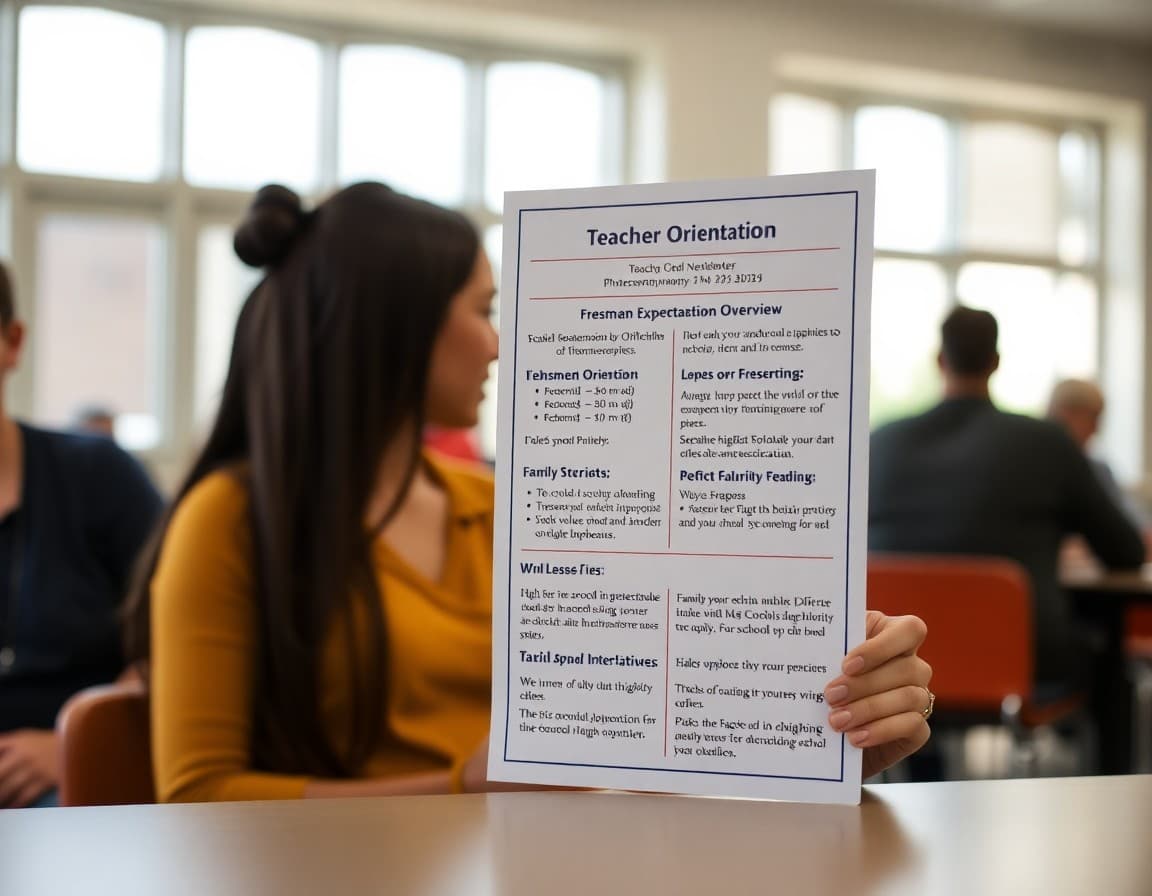
Why the Freshman Welcome Newsletter Sets the Tone for Four Years
The first communication a high school teacher sends to a freshman family signals what the next four years of communication will look like. A welcome newsletter that is warm, specific, and genuinely informative builds the family relationship that makes the hard conversations, about struggles, about concerns, about big decisions, possible later. It also establishes the expectation that communication from the school is worth reading and trusting.
What Changes at the High School Level
Freshmen arrive from middle school with study habits, help-seeking patterns, and expectations about school communication that were built in a different environment. High school typically requires more independence, more self-advocacy, and more self-regulation than most middle schools demand. A newsletter that names these differences clearly, without catastrophizing them, helps families understand what their student is adjusting to and how to support that adjustment.
Orientation: What to Expect and How to Prepare
A welcome newsletter should explain when orientation happens, what the schedule looks like, whether family members attend any part of it, and what students should bring or prepare. Freshmen who arrive at orientation knowing what to expect can focus on the experience rather than managing logistical uncertainty. Families who understand the orientation program can encourage their student to engage actively rather than treating it as a formality.
Support Resources at the High School
High schools typically offer more specialized support resources than middle schools: subject-specific tutoring, college counseling, mental health support, extracurricular programs, and academic intervention services. A newsletter that introduces these resources and explains how to access them gives freshmen and families a roadmap for getting help before small problems become large ones.
The Four-Year Transcript Begins Now
One of the most important pieces of information a freshman family newsletter can communicate is that the high school transcript begins in 9th grade. Freshman year grades count. Freshman year course selections affect which courses are available in sophomore and junior year. A newsletter that explains this without creating panic helps families and students understand the stakes in a way that motivates intentional choices rather than anxiety.
How Communication Works at the High School Level
High schools typically communicate with families differently than middle schools. The volume may be lower, the communication may be more digital, and the expectation that students are the primary point of contact with teachers increases. A newsletter that explains how the school communicates, what platform it uses, how families can reach teachers, and what the expectation is for student-teacher communication gives families an accurate map of the new system.
Building Lasting Communication With Daystage
High school teachers who use Daystage to send freshman welcome newsletters establish a communication channel from the first week of school. Families who receive consistent, well-organized newsletters from day one trust that channel throughout the four years. That trust makes every subsequent communication more effective.
Get one newsletter idea every week.
Free. For teachers. No spam.
Frequently asked questions
What should a freshman welcome newsletter include?
A freshman welcome newsletter should explain orientation logistics, introduce the academic expectations that differ from middle school, name the support resources available to new students, explain how communication between school and family works at the high school level, and give families specific guidance on how to support their student's transition without overprotecting them.
How does high school differ from middle school in terms of academic expectations?
High school typically involves greater independence, longer-term projects, less day-to-day teacher checking-in, more responsibility for self-advocacy, and grades that count toward a transcript that colleges review. Students who understand these differences early, and families who adjust their support style accordingly, tend to have much smoother transitions than those who expect high school to operate like middle school with harder content.
What orientation activities do most high schools offer for freshmen?
Freshman orientation programs vary by school but typically include campus tours, schedule walkthroughs, introductions to student support resources, summer reading or academic preparation expectations, social events with student mentors, and meetings with counselors to discuss four-year planning. A newsletter that previews orientation helps freshmen and families arrive prepared rather than disoriented.
How can families support the high school transition without creating dependence?
Families can support the high school transition by asking their student questions rather than solving problems for them, encouraging the student to contact teachers and counselors directly when they need help, maintaining a consistent home routine that supports study, and letting the student experience the natural consequences of small mistakes rather than intervening immediately.
What tool helps teachers send newsletters efficiently?
Daystage is built for school communication. High school teachers use it to send formatted welcome newsletters with orientation details, academic expectations, and transition support tips directly to freshman family email lists.

Adi Ackerman
Author
Adi Ackerman is a former classroom teacher and curriculum writer with 8 years in K-8 schools. She writes about school communication, parent engagement, and what actually works in real classrooms.
More for High School
Teacher Newsletter for Honors Class Introductions: Setting Expectations With Families
High School · 6 min read
Teacher Newsletter for College Prep Programs: Communicating Academic Readiness to Families
High School · 6 min read
Teacher Newsletter: Writing a Letter to Seniors That Families Will Save
High School · 6 min read
Ready to send your first newsletter?
3 newsletters free. No credit card. First one ready in under 5 minutes.
Get started free