

Teacher Newsletter for AP Art History Units: Communicating Visual Analysis to Families
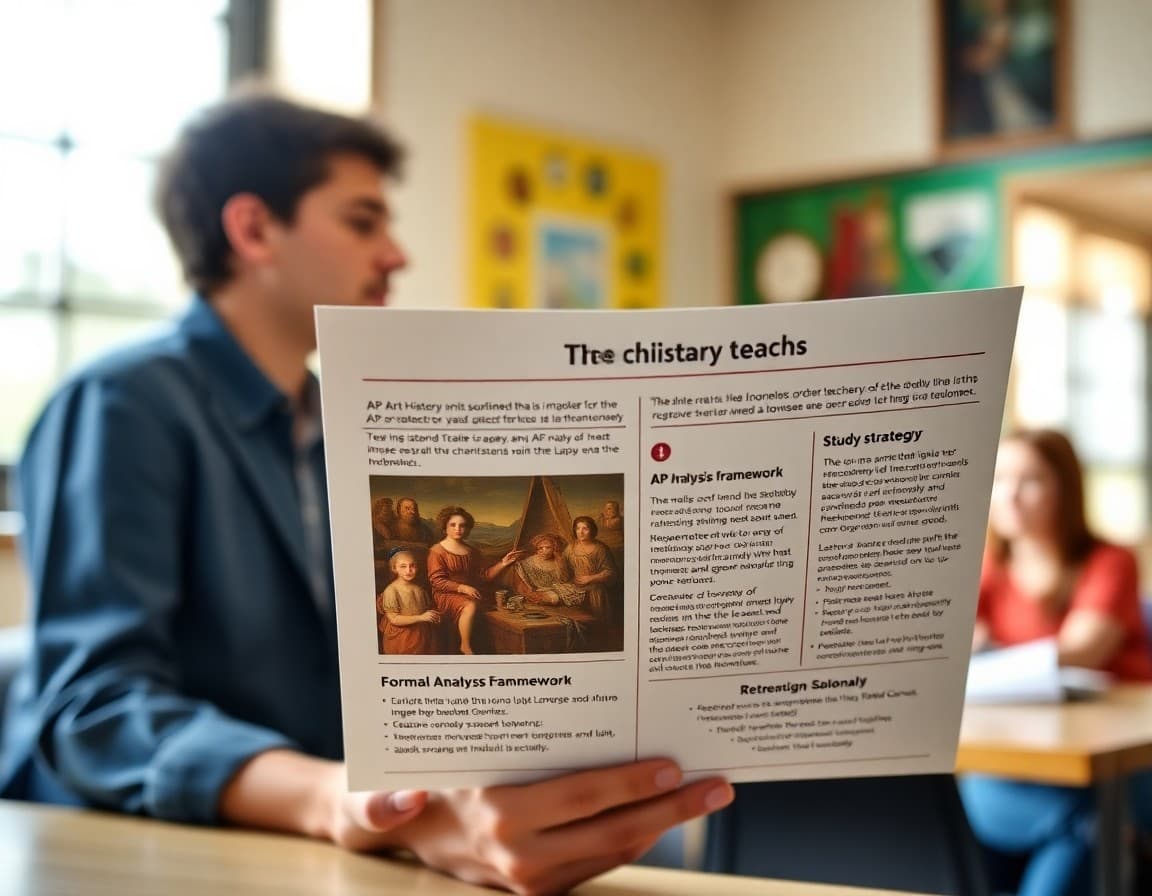
What AP Art History Requires of Students
AP Art History covers 250 required works across global cultures and ten thousand years of human image-making. Students learn to identify works, analyze their formal properties, understand their historical context, and compare them across cultures and time periods. This is not a memorization course, though memorization is necessary. It is a course in visual thinking and historical argument. A unit newsletter that explains this distinction helps families understand why their student spends time both memorizing images and writing analytical essays.
The Current Unit: Geographic and Cultural Focus
AP Art History is organized into ten global content areas, ranging from ancient Mediterranean and Near Eastern art to modern and contemporary global work. A unit newsletter should name the region and time period, highlight three to five works in the image set, and explain the key themes and formal characteristics that connect them. This gives families a mental framework and specific conversation points.
Formal Analysis as a Transferable Skill
Students who develop formal analysis skills in AP Art History become better visual thinkers across every domain, including design, film, architecture, and scientific illustration. The ability to look carefully and describe specifically what you see before interpreting it is a skill with broad application. Your newsletter should name this transfer so families understand why the analysis work matters beyond the exam.
Study Strategies for a Visual Course
AP Art History requires different study strategies than most other AP courses. Spaced repetition with image-based flashcards, regular review of previous units while covering new material, and practice writing about unfamiliar works all matter. A newsletter that names these strategies gives families something concrete to encourage rather than just telling their student to study more.
Connecting Units to the Exam Essay Types
The AP Art History exam includes multiple-choice image identification questions, short essay questions comparing two works, and a long essay question. Each unit builds toward one or more of these question types. Naming the essay connection in your newsletter helps students and families see the coursework as purposeful preparation rather than discrete topic coverage.
Museum Visits and Real-World Engagement
Seeing works in person, even works unrelated to the current unit, accelerates students' development as visual thinkers. A newsletter that encourages a museum visit, a gallery walk, or even careful looking at architecture in the neighborhood gives families a concrete activity that extends the course beyond the classroom.
Communicating With Families Through Daystage
AP Art History teachers who use Daystage to send unit newsletters find that families feel connected to a course that might otherwise feel remote. Regular updates build the understanding that makes family support possible even in a discipline that requires specialized knowledge.
Get one newsletter idea every week.
Free. For teachers. No spam.
Frequently asked questions
What should an AP Art History unit newsletter explain to families?
An AP Art History unit newsletter should explain the geographic and time period being studied, the works in the current image set, what formal analysis means, and how the unit connects to the long essay and short essay question types on the exam. Families who understand that art history is a discipline requiring active analysis, not passive memorization, can support their student's preparation more effectively.
How many works of art does AP Art History require students to know?
The AP Art History course is organized around 250 required works spanning global art history from 30,000 BCE to the present. Students learn to identify, analyze, and contextualize each work. The breadth is significant, and the study strategies required, including spaced repetition and regular image review, are different from those that work in other AP courses.
What is formal analysis in AP Art History?
Formal analysis examines the visual elements of a work, line, shape, color, texture, space, composition, and scale, and considers how those elements create meaning. Students learn to describe what they see before interpreting what it means. This approach allows them to analyze unfamiliar works on the exam without needing prior knowledge of the specific object.
How can families help AP Art History students study?
AP Art History is well-suited to flashcard study using image-based decks. Families can quiz students by showing an image and asking for the title, artist, date, culture, and formal analysis. This kind of low-stakes review over dinner or during commute time builds the retrieval practice the exam requires without requiring families to know anything about art history.
What tool helps AP teachers send newsletters efficiently?
Daystage is built for school communication. AP Art History teachers use it to send formatted newsletters with unit image sets, study strategies, and exam preparation notes directly to parent email lists.

Adi Ackerman
Author
Adi Ackerman is a former classroom teacher and curriculum writer with 8 years in K-8 schools. She writes about school communication, parent engagement, and what actually works in real classrooms.
More for High School
Teacher Newsletter for AP Music Theory Units: What Families Should Know
High School · 6 min read
Teacher Newsletter for Arts Pathways: Communicating Creative Education to Families
High School · 6 min read
Teacher Newsletter for Honors Class Introductions: Setting Expectations With Families
High School · 6 min read
Ready to send your first newsletter?
3 newsletters free. No credit card. First one ready in under 5 minutes.
Get started free