

Teacher Newsletter for Arts Pathways: Communicating Creative Education to Families
What an Arts Pathway Develops in Students
An arts pathway does more than develop creative skill. Students in arts programs develop critical observation, iterative thinking, the ability to give and receive feedback, public performance confidence, and the capacity to communicate complex ideas through non-verbal means. These are transferable skills that serve students across every professional and personal domain. A newsletter that articulates these outcomes helps families see arts pathway enrollment as academically and professionally valuable.
The Pathway Sequence and How It Builds
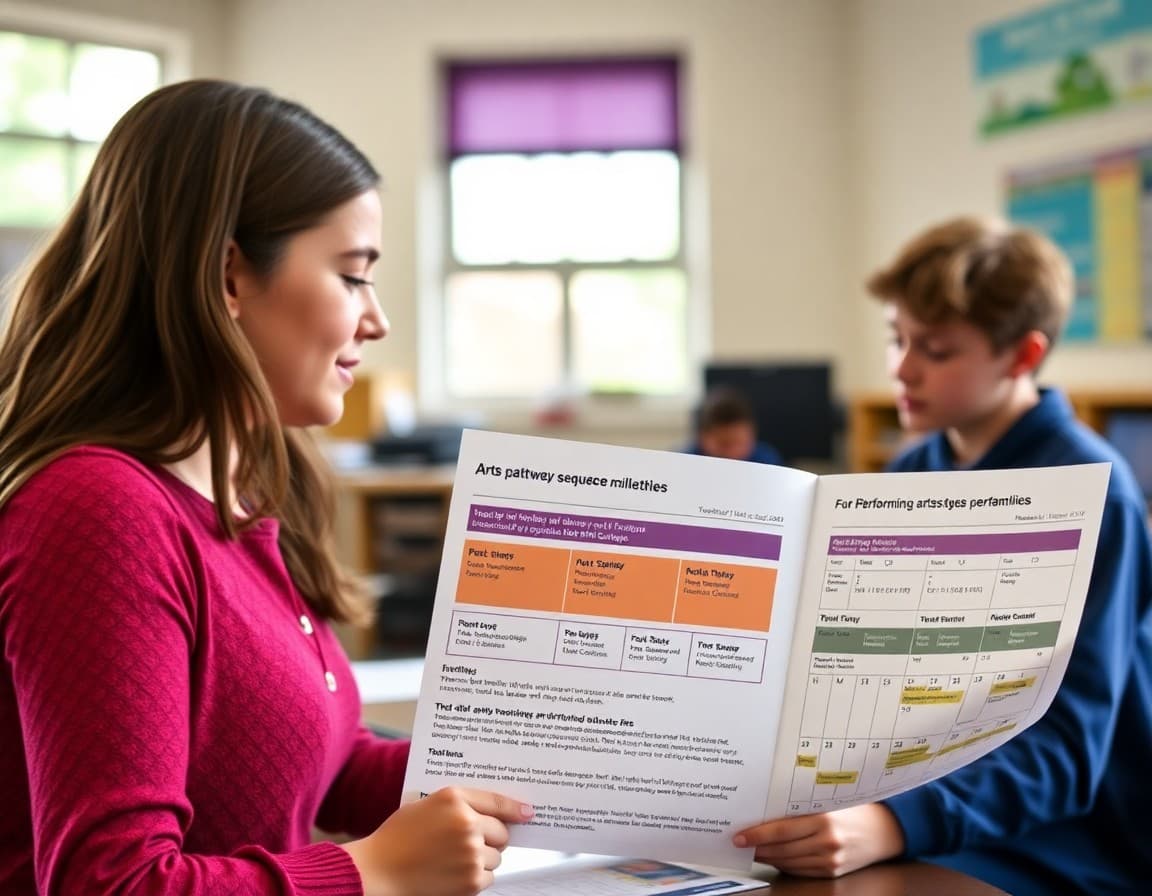
Arts pathways work as sequences where each course level builds on the previous one. A student who completes the full sequence arrives at senior year with a developed body of work rather than a collection of unconnected projects. A newsletter that maps out the pathway arc from foundational to advanced courses helps families understand why sequential enrollment matters and why a student who drops out of the sequence loses more than a single course's credit.
Portfolio Development: Starting Early Matters
The arts pathway portfolio is both an academic record and a college application tool. Students who understand from freshman year that they are building a portfolio work more intentionally across all four years than those who scramble to assemble one during senior fall. Your newsletter should explain what goes into a strong portfolio, how work is evaluated, and when major portfolio reviews happen so families understand the ongoing stakes of arts coursework.
Performances, Exhibitions, and Family Attendance
Arts pathway programs culminate in public performances and exhibitions that are significant academic events. A newsletter that communicates the full performance and exhibition calendar well in advance gives families time to plan attendance. Students whose families attend performances and exhibitions take the work more seriously than those whose achievements go unwitnessed by the people who matter most to them.
Connecting the Pathway to Post-Secondary Options
Students in arts pathways have a wider range of post-secondary options than many families realize. BFA and BA programs in studio art, design, film, music, and theatre are available at research universities, specialized arts colleges, and community colleges. Professional technical programs in graphic design, digital media, and music production lead directly to employment. A newsletter that maps out these options at different points in the student's high school career helps families engage seriously with the pathway as preparation, not just as elective credit.
Supporting Creative Practice at Home
Creative skills require practice outside class. Whether the student is a visual artist who needs studio time, a musician who needs to rehearse, or a filmmaker who needs to shoot and edit, the hours spent outside class are often where the most significant development happens. Families who protect this practice time and show genuine interest in the work are providing a form of support that directly affects the student's growth.
Keeping Families Connected With Daystage
Arts pathway teachers who use Daystage for program newsletters keep families involved in a program that has visible public outcomes like performances and exhibitions. Regular updates before each performance season, portfolio milestone, or major project build the anticipation and engagement that makes attendance feel important rather than optional.
Get one newsletter idea every week.
Free. For teachers. No spam.
Frequently asked questions
What should an arts pathway newsletter explain to families?
An arts pathway newsletter should explain the program's course sequence, what portfolio or performance requirements students will build toward, what creative disciplines the pathway covers, how the program connects to post-secondary arts education and creative careers, and what families can do to support their student's creative development.
What does a high school arts pathway typically include?
Arts pathways typically include sequences in visual arts (drawing, painting, sculpture, digital media, photography), performing arts (theatre, dance, music), or media arts (film, digital production, graphic design). Advanced students often work toward AP Studio Art, AP Music Theory, or a senior portfolio or capstone performance.
How do arts pathway portfolios work in college applications?
Arts college programs typically require a portfolio submission alongside or in place of standardized test scores. Visual arts portfolios are usually submitted digitally through common portfolio platforms or directly to individual schools. Performing arts programs may require live or recorded auditions. Starting portfolio development early in high school gives students significantly more material to select from during applications.
How can families support arts pathway students at home?
Families can support arts pathway students by providing dedicated creative workspace, attending performances and exhibitions, engaging genuinely with the student's work by asking questions rather than offering quick evaluations, and treating creative coursework with the same academic seriousness as STEM or humanities work.
What tool helps teachers send newsletters efficiently?
Daystage is built for school communication. Arts pathway teachers use it to send formatted newsletters with portfolio milestones, performance calendars, and college arts program information directly to parent email lists.

Adi Ackerman
Author
Adi Ackerman is a former classroom teacher and curriculum writer with 8 years in K-8 schools. She writes about school communication, parent engagement, and what actually works in real classrooms.
More for High School
Teacher Newsletter for AP Art History Units: Communicating Visual Analysis to Families
High School · 6 min read
Teacher Newsletter for AP Music Theory Units: What Families Should Know
High School · 6 min read
Teacher Newsletter for CTE Pathways: Communicating Career Education to Families
High School · 6 min read
Ready to send your first newsletter?
3 newsletters free. No credit card. First one ready in under 5 minutes.
Get started free