
High School Student Spotlight Newsletter: How to Feature Students Effectively
Why Student Spotlights Build Classroom Community
A student spotlight in a high school newsletter does more than recognize one student. It signals to every reader that this class notices people, that effort and achievement get named, and that belonging here means something. High school students are at a developmental stage where being seen matters deeply. A newsletter that does this well builds the kind of classroom culture that teachers spend years trying to create.
What Makes a Spotlight Worth Reading
The difference between a spotlight that feels meaningful and one that feels like a rubber stamp is specificity. "Sarah worked incredibly hard this semester" says nothing. "Sarah rewrote her argumentative essay three times, each time finding a stronger line of reasoning, and her final draft was the most compelling piece of writing in this class all year" means something. Name the specific thing the student did. Be precise.
Rotating Across Different Definitions of Success
If every spotlight features the student with the highest grade, you are telling the rest of the class that you only see one kind of achievement. Rotate deliberately. Feature a student who showed significant growth from September to November. Feature a student whose question in class changed the direction of a discussion. Feature a student who helped a peer through a difficult assignment. Feature a student doing something remarkable outside of school. Broad recognition builds broad community.
Getting the Student's Voice In
A spotlight with a direct quote from the student feels authentic. A spotlight written entirely in the teacher's voice feels like an award citation. Ask the student one or two questions: What are you working on that you are proud of? What did you learn from this project? What is something people in this class do not know about you? Use their words. The best spotlights read like a brief interview, not a commendation.
Photos and Privacy Considerations
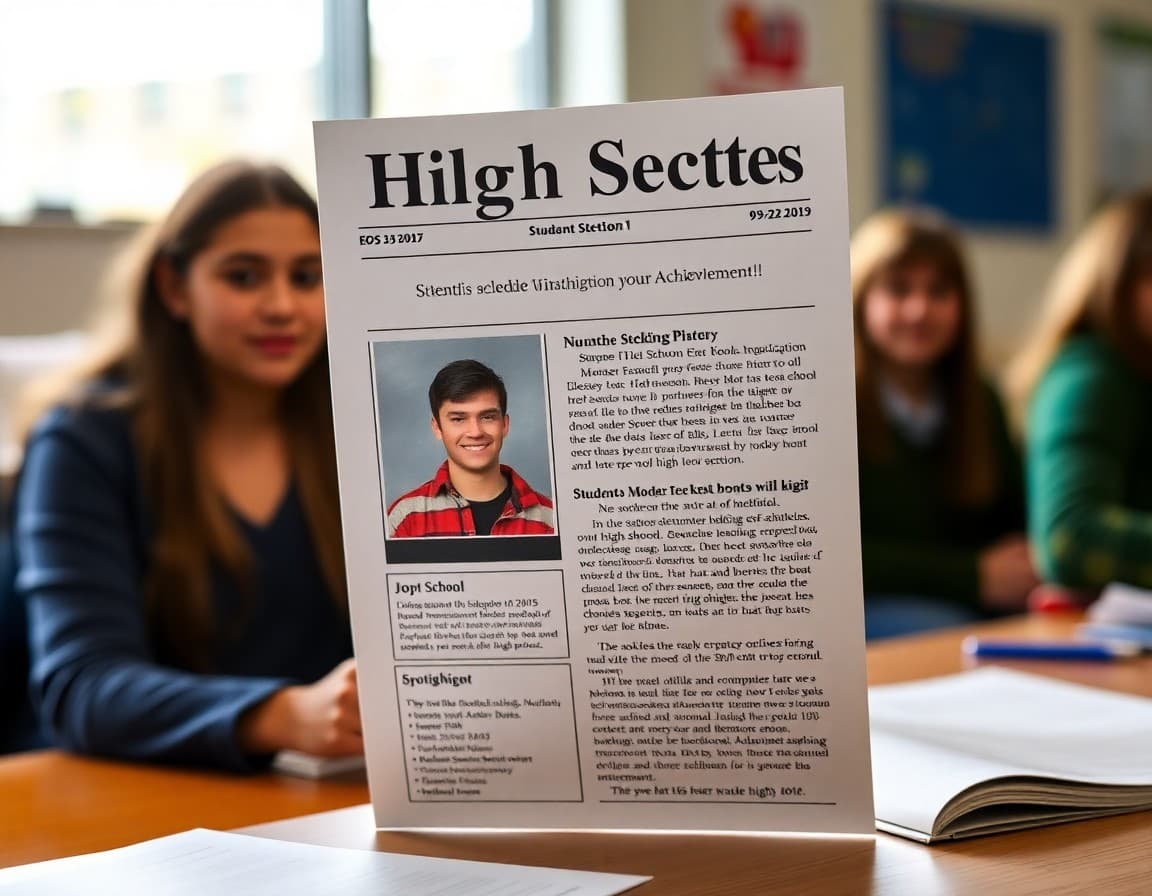
A photo makes a spotlight more memorable. Before including student photos in newsletters that go outside the classroom, confirm your school's media release policy. Many high schools collect blanket media releases at enrollment; others require per-use consent. When you cannot use photos, a brief student bio or a quote formatted as a pull quote works as a visual anchor for the section.
Building a Year-Long Archive of Spotlights
Some teachers save their spotlight sections and compile them at the end of the year. A printed or digital archive of student achievements from the year becomes a meaningful artifact for the class. Students who see their name in a year-end collection remember that their teacher noticed them, which is the kind of thing that makes a lasting impression.
Making Spotlights Sustainable and Consistent
The hardest part of a student spotlight program is maintaining it consistently when the school year gets busy. Keep your process simple: a brief template with three fields (achievement, quote, photo), a rotating list of students so no one gets forgotten, and a tool like Daystage to drop the section into your regular newsletter without extra formatting work. Systems that are simple enough to maintain during assessment season actually get maintained.
Get one newsletter idea every week.
Free. For teachers. No spam.
Frequently asked questions
What should a high school student spotlight newsletter include?
A strong high school student spotlight should include the student's name, grade, a brief description of the achievement or quality being recognized, a direct quote from the student, and ideally a photo. Keep it brief, specific, and about the student rather than about the teacher or the course. The student should feel genuinely seen, not generically praised.
How should teachers select students for high school newsletter spotlights?
Rotate spotlights across different student profiles: academic achievers, students who showed significant improvement, students who contributed to class community, students with interesting extracurricular work, and students who are doing something worth noting outside of school. Limiting spotlights to the highest-grade students communicates a narrow definition of success that does not serve the whole class.
Do high school teachers need parent permission for student spotlights?
Check your school's media policy before including photos or full names in newsletters sent beyond the school community. Most schools require a signed media release for published photos. For class newsletters sent only to enrolled families, general course policies often cover this. When in doubt, ask your school's communications coordinator what the current policy requires.
How often should high school teachers include student spotlights in newsletters?
One student spotlight per newsletter issue is a sustainable cadence for most high school teachers. Over the course of a semester, rotating through twenty to thirty spotlights covers a meaningful portion of your class and creates a record of achievement that students and families value. Some teachers save spotlight sections and compile them into an end-of-year class archive.
What tool helps high school teachers create professional student spotlight newsletters?
Daystage gives high school teachers an easy editor for building newsletters with student spotlights, photos, and achievement descriptions. Teachers use it to create visually clean updates that look professional without design skills, and send them to parent and student email lists in minutes.

Adi Ackerman
Author
Adi Ackerman is a former classroom teacher and curriculum writer with 8 years in K-8 schools. She writes about school communication, parent engagement, and what actually works in real classrooms.
More for High School
Ready to send your first newsletter?
3 newsletters free. No credit card. First one ready in under 5 minutes.
Get started free