

High School Newsletter Examples: Templates and Ideas for Teachers
Why Good Newsletter Examples Matter for Teachers
Most high school teachers were not taught how to write parent newsletters. Seeing a concrete example of what works, and understanding why it works, is far more useful than a list of abstract principles. This article breaks down the types of newsletters that serve high school families best and explains the specific elements that make each type effective.
The Course Introduction Newsletter
Sent the first week of school, this newsletter covers the course syllabus highlights in plain language, homework and assessment expectations, the teacher's contact information and office hours, required materials, and the overall arc of the year. It does not need to be long. It needs to answer the questions every new parent has: What is my student doing in this class, and how do I reach the teacher if something goes wrong?
The Unit Kickoff Newsletter
At the start of each major unit, a brief newsletter explaining what students will study, why it matters, what the major assignments are, and what parents can do at home to support learning keeps families engaged throughout the year rather than only at grading periods. This is the newsletter type that most directly improves academic performance because it activates home support during the learning process.
The Assessment Prep Newsletter
A week before a major test, quiz series, or project due date, a newsletter covering what the assessment requires, how students can prepare, and what resources are available does two things: it helps students who need external prompting to start preparing, and it gives parents language for the conversation at dinner that night. Keep it short. The goal is a reminder and a resource list, not a study guide.
The College and Career Readiness Update
For junior and senior families especially, a newsletter that covers college application timelines, financial aid deadlines, dual enrollment registration windows, and career exploration opportunities fills a communication gap that school-wide announcements often miss. Families navigating these processes for the first time benefit enormously from a teacher they trust providing clear, timely information.
The End-of-Semester Reflection
A brief newsletter at the end of each semester that names what students accomplished, acknowledges how demanding the work was, and previews what comes next builds a narrative arc that parents and students can follow over the year. It also provides natural closure before a break and sets expectations for the next semester before families go on autopilot.
Building a Template That Saves Time
The most practical newsletter strategy is to build a single template with four or five standard sections, then edit only the content that changes each cycle. The format stays consistent so parents know where to find information. The content stays fresh so they keep opening it. A tool like Daystage lets you save templates and reuse them across the year without starting from a blank page every two weeks.
Get one newsletter idea every week.
Free. For teachers. No spam.
Frequently asked questions
What are some good high school newsletter examples for teachers?
Good high school newsletter examples include a course introduction letter sent the first week of school, a unit kickoff newsletter explaining new content and home support strategies, a test prep newsletter sent a week before a major assessment, a college and career readiness update for junior and senior families, and an end-of-semester reflection covering what students accomplished and what comes next.
What makes a high school newsletter example worth copying?
A newsletter example worth copying is one that is scannable in under two minutes, answers the three questions parents need (what is happening, what is coming up, how do I reach you), uses plain language instead of educational jargon, and includes a clear call to action when one is needed. Format matters as much as content: a well-structured newsletter communicates competence before parents read a word.
How long should a high school teacher newsletter be?
Most high school teacher newsletters should be between 200 and 400 words. That is long enough to cover three to five meaningful topics and short enough that a busy parent reads the whole thing. Newsletters that run longer typically have sections that could be cut or saved for a different communication. Lead with the most important information, not background context.
Can you give an example of a high school newsletter opening?
"This week in AP English we finished our close reading unit on Toni Morrison and moved into research writing. Here's what's coming up in the next two weeks, what your student needs to have ready, and where to go if they need help." That is a good newsletter opening: it tells you where the class is, what is coming, and signals that useful information follows.
What tool helps high school teachers create newsletter examples they can reuse?
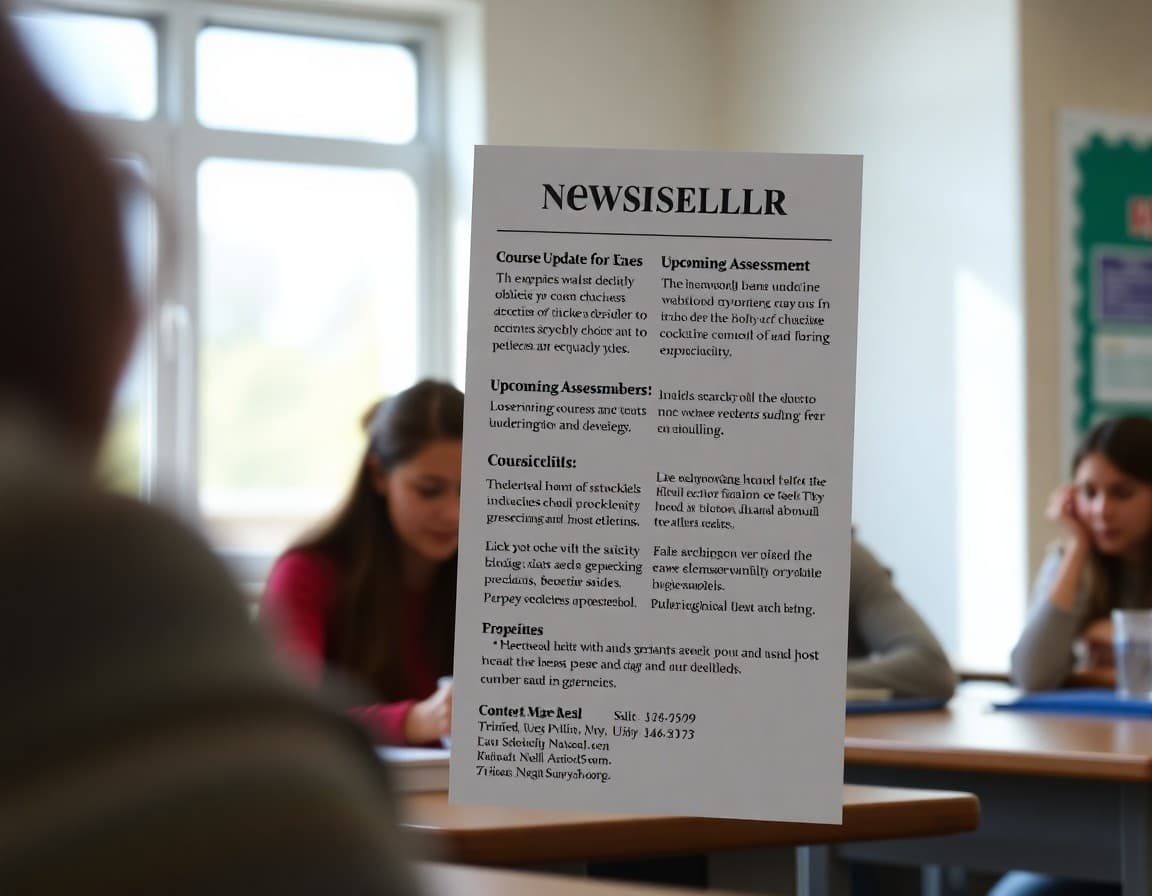
Daystage lets high school teachers build newsletter templates they can reuse and adapt each cycle. Teachers create a base structure once (course update, upcoming assignments, resources, contact) and edit the specific content each time they send. The result is professional-looking newsletters that take fifteen minutes to update instead of starting from scratch each time.

Adi Ackerman
Author
Adi Ackerman is a former classroom teacher and curriculum writer with 8 years in K-8 schools. She writes about school communication, parent engagement, and what actually works in real classrooms.
More for High School
Ready to send your first newsletter?
3 newsletters free. No credit card. First one ready in under 5 minutes.
Get started free