

High School Parent Reading Support Newsletter Ideas
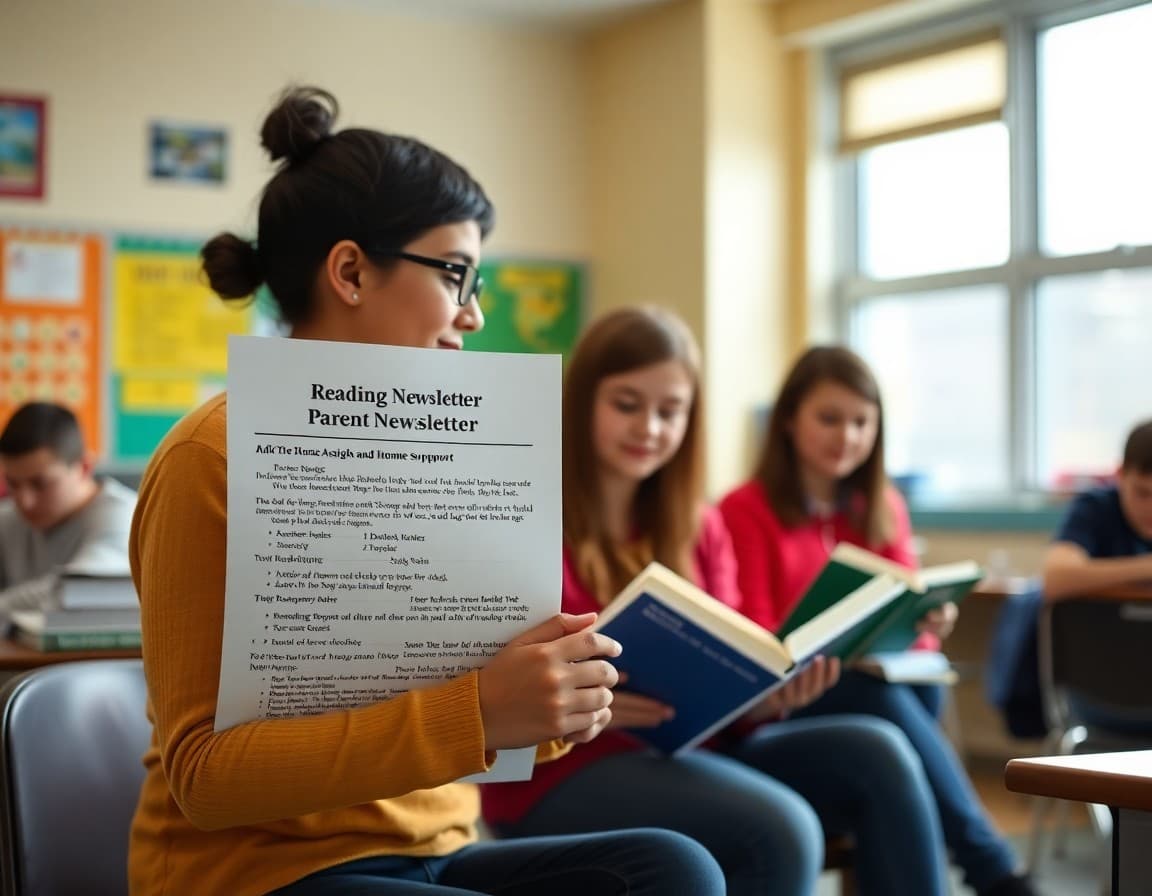
Why Reading Communication Matters in High School
High school texts are demanding. Parents who understand what their student is reading and why the class is reading it are far more likely to support the work at home. A brief newsletter at the start of each unit gives parents the context they need to have real conversations with their student instead of asking if homework is done.
What to Include in a Reading Support Newsletter
Cover three things: what the class is reading and the historical or cultural context that helps it make sense, what reading skills students are practicing, and what parents can specifically do at home. Avoid jargon. If the class is working on rhetorical analysis, explain that plainly rather than using academic shorthand that parents may not recognize.
Home Strategies Parents Can Actually Use
The most useful parent newsletter does not just describe school activities. It gives parents two or three concrete actions. Suggest asking their student to summarize the chapter they read today. Recommend a five-minute conversation about the main character's motivation. Point to a free online resource that provides background on the historical period. Specific beats general every time.
Addressing Struggling Readers Without Stigma
Some students enter high school reading below grade level. A parent newsletter can acknowledge this without singling out individual students. Include a section on available supports: school tutoring, reading center hours, digital text-to-speech tools, and how parents can request a reading assessment if they have concerns. Make it easy for any parent to seek help without feeling their child has been labeled.
Cross-Disciplinary Reading in High School
High school reading is not only an English class responsibility. Science teachers assign lab reports and scientific articles. History teachers assign primary sources. Technical courses use dense procedural texts. A brief note to parents about what reading looks like in your specific subject area, and how it differs from narrative reading, helps families set appropriate expectations for homework time.
Connecting Reading to College Readiness
College admissions essays, scholarship applications, and standardized test reading sections all build on the skills students practice in high school. Framing your reading assignments in terms of the real-world skills they build motivates both students and parents. A single line in your newsletter connecting close reading practice to SAT or ACT performance can shift how families prioritize reading homework.
Building a Consistent Communication Cadence
A reading support newsletter does not need to be long. A short message at the start of each major text, covering context, skills, and home strategies, is enough to keep parents informed. Use a consistent template and a tool that makes sending simple so the habit stays intact during the weeks when grading and planning eat up your time.
Get one newsletter idea every week.
Free. For teachers. No spam.
Frequently asked questions
What should a high school reading support newsletter include?
A high school reading support newsletter should explain current texts and their context, describe reading skills being practiced in class, list specific ways parents can support reading at home, and flag any students who may need additional literacy support. Keep the focus on what parents can actually do, not just what is happening in class.
How can parents support high school students with difficult texts?
Parents can help by discussing the text at the dinner table, asking their student to explain what they read that day, encouraging use of school resources like the library database or tutoring center, and making sure students have uninterrupted reading time at home. Even parents who have not read the assigned text can ask meaningful questions.
What reading skills matter most in high school?
High school reading instruction focuses on close reading for textual evidence, analysis of author's purpose and rhetoric, vocabulary in context, synthesis across multiple texts, and discipline-specific reading in science, history, and technical subjects. Letting parents know which skills your class is practicing helps them understand why certain assignments look the way they do.
How often should high school teachers send reading update newsletters?
Once per unit is a practical cadence for reading newsletters. At the start of each new text or unit, a brief communication explaining what students will read and why, plus what parents can do at home, sets expectations without creating a weekly writing burden for the teacher.
What tool helps high school teachers send reading support newsletters efficiently?
Daystage lets high school teachers create formatted newsletters with assignment context, support tips, and resource links, then send them to parent email lists in minutes. No design skills needed, and the same template works across multiple units with small edits each cycle.

Adi Ackerman
Author
Adi Ackerman is a former classroom teacher and curriculum writer with 8 years in K-8 schools. She writes about school communication, parent engagement, and what actually works in real classrooms.
More for High School
Ready to send your first newsletter?
3 newsletters free. No credit card. First one ready in under 5 minutes.
Get started free