
High School Parent Mental Health Support Newsletter Guide

Mental Health Is an Academic Issue in High School
Anxiety, depression, and chronic stress are among the most common reasons high school students underperform academically. Teachers see it directly: a student whose grades drop after a difficult family event, a student who cannot focus because they are running on anxiety and no sleep, a student who stops submitting work because the paralysis of depression makes starting feel impossible. A parent newsletter that names mental health as an academic concern opens a conversation that too many families avoid until a crisis forces it.
What Teachers Observe That Parents Should Know
High school teachers notice patterns that parents do not always see at home: persistent disengagement that started suddenly, a shift from enthusiastic participation to flat withdrawal, escalating absences on days when difficult content or presentations are scheduled. Sharing these observations in a parent newsletter without identifying individual students helps families calibrate their own observations at home.
School Resources Families May Not Know About
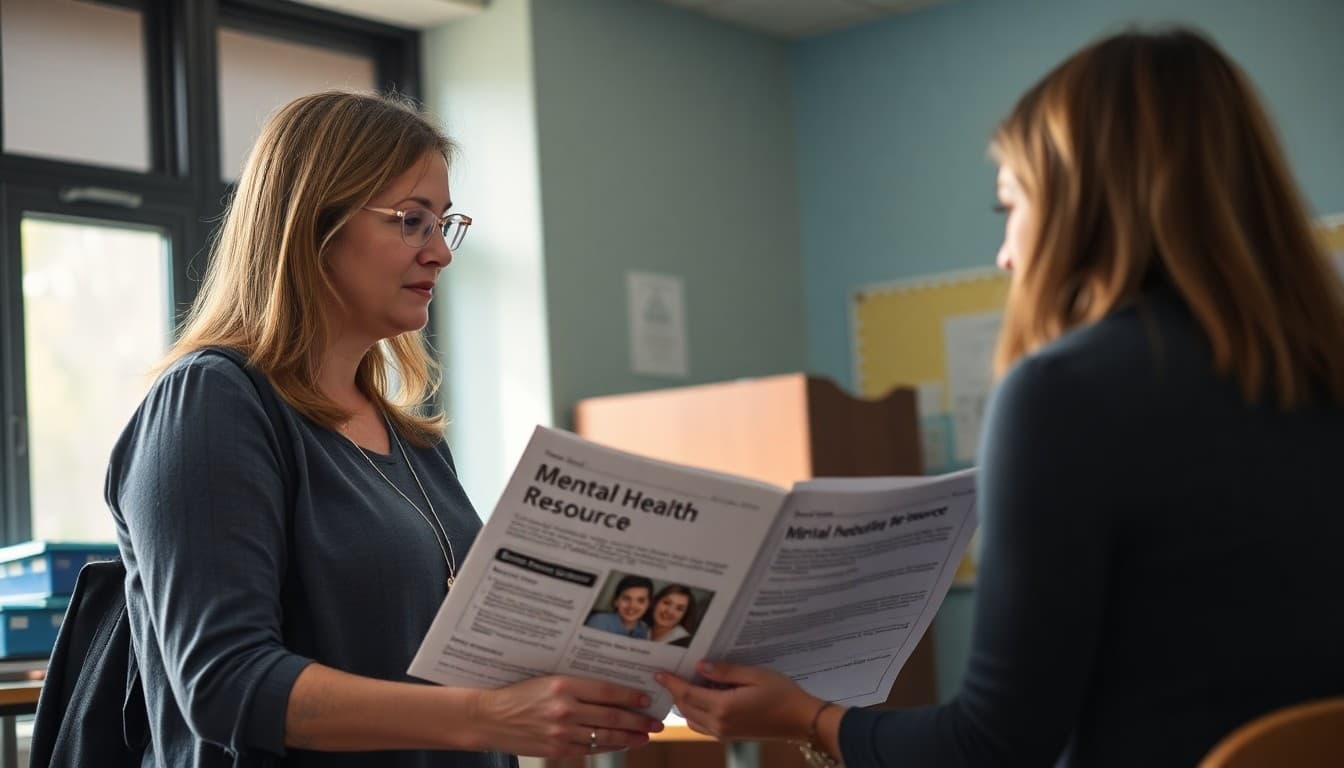
Many high school parents do not know what mental health resources their school offers or how to access them. A newsletter that lists the school counselor's name and how to request an appointment, describes any peer support or wellness programs, and points to community mental health resources makes it easier for families to act when they notice a concern. Remove the friction from help-seeking by making the information easy to find.
Stress, Pressure, and High-Achieving Students
Mental health challenges are not limited to students who are struggling academically. Some of the most academically accomplished high school students carry significant anxiety related to grades, college admissions, and the pressure to perform. A parent newsletter that addresses performance anxiety specifically, and that frames asking for help as a strength rather than a failure, reaches families who might otherwise dismiss mental health concerns because their student's grades look fine.
What to Do When You Are Concerned About a Student
If you observe warning signs in a student, the school counselor is your first call, not the parent newsletter. But the newsletter can prepare parents to recognize signs at home and to reach out proactively before they are called by the school. A family that already has the counselor's name and number does not have to scramble when a concern arises.
Talking to Teenagers About Mental Health
Parents who try to have mental health conversations by announcing concern and offering solutions often find their teenager shuts down. What works better is checking in regularly with open questions, listening without immediately problem-solving, and treating emotional difficulty as normal rather than alarming. A newsletter that offers parents specific conversation scripts or approaches is more useful than one that simply encourages talking to your teen.
Making Mental Health Communication a Regular Part of Your Newsletter
You do not need to write a full mental health newsletter every month. Including a brief mental health resource in a standard update, pointing to the counselor before a high-stress assessment season, or noting the availability of peer support programs, normalizes mental health as part of the school conversation rather than a separate crisis-only topic. Regular, low-key mention reduces stigma over time.
Get one newsletter idea every week.
Free. For teachers. No spam.
Frequently asked questions
What mental health signs should high school parents watch for?
High school parents should watch for persistent changes in mood, energy, sleep, appetite, or social engagement. Declining grades combined with withdrawal from activities the student previously enjoyed is a common pattern. Increased irritability, talk of hopelessness, and changes in friend groups can also signal mental health concerns that deserve attention. A newsletter that lists these signs without alarm helps parents observe with more nuance.
How should high school teachers address mental health in parent newsletters?
Address mental health by describing what you observe in a classroom context, what resources the school offers, and when parents should seek outside support. Avoid diagnosing or speculating about individual students. Frame mental health support as routine, not emergency-only, so families feel comfortable seeking help before a situation becomes a crisis.
What school mental health resources should parents know about?
High school parents should know about the school counselor and how to request an appointment, any peer support programs or student wellness groups, anonymous tip lines for safety concerns, and community mental health resources available to families who need more support than the school can provide. Your newsletter can serve as a clearinghouse for this information.
How can parents talk to high school students about mental health?
Parents get further by asking open questions and listening without immediately fixing than by delivering advice. Check in regularly rather than only when something seems wrong. Normalize mental health conversations by discussing stress, anxiety, and sadness as ordinary human experiences rather than things to be ashamed of. Students who learn to name their emotional states at home are better equipped to seek help when they need it.
What tool helps high school teachers send mental health resource newsletters?
Daystage makes it easy for high school teachers to send formatted newsletters with mental health resources, warning signs, and school support information to parent email lists. A single well-organized communication covers more ground than a series of fragmented announcements and reaches families who might not know what to look for.

Adi Ackerman
Author
Adi Ackerman is a former classroom teacher and curriculum writer with 8 years in K-8 schools. She writes about school communication, parent engagement, and what actually works in real classrooms.
More for High School
Ready to send your first newsletter?
3 newsletters free. No credit card. First one ready in under 5 minutes.
Get started free