
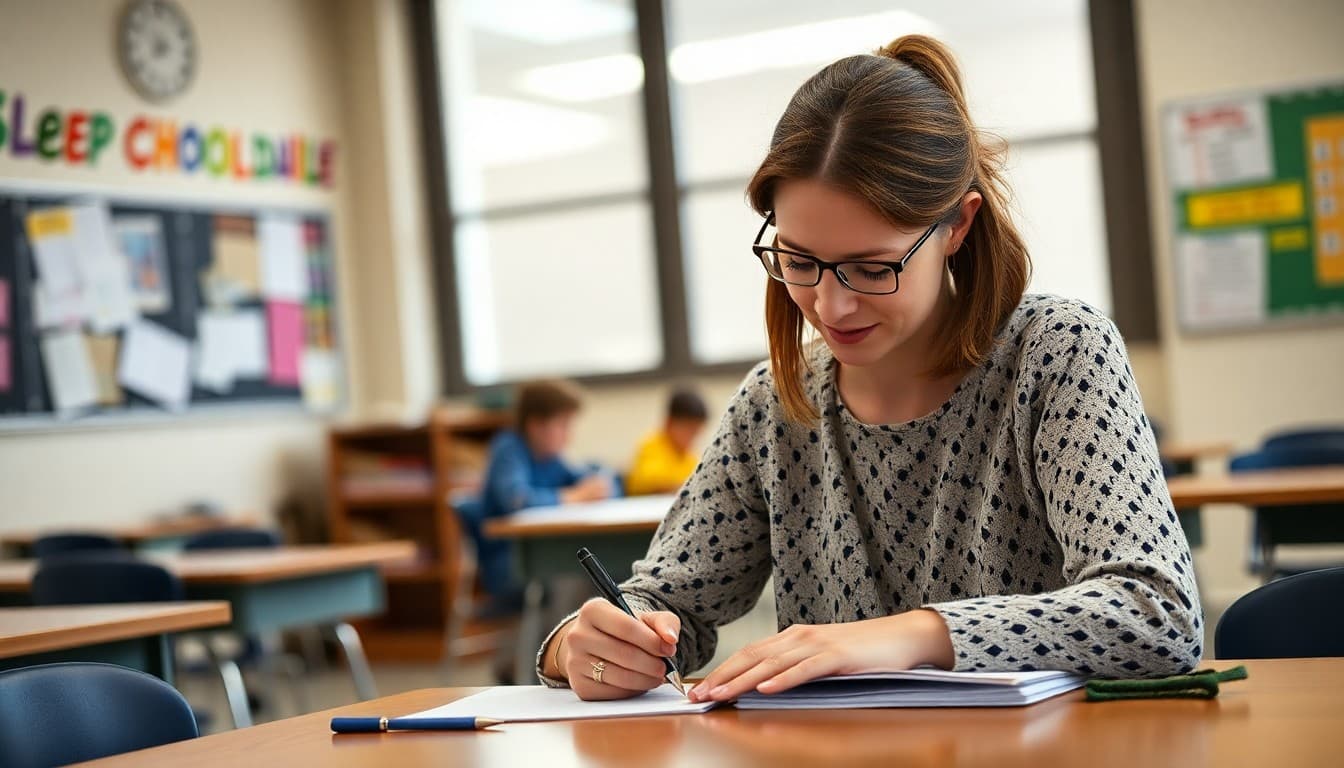
High School Parent Sleep Schedule Newsletter for Teachers
Sleep Is an Academic Issue
High school teachers know what a sleep-deprived class looks like. Students who cannot focus, who doze off during a lesson, who are irritable and short-tempered, and who perform far below their actual ability on assessments they did not sleep before. Sleep deprivation is not a side issue. It directly affects every academic outcome families care about, from test scores to college readiness.
What the Research Says
Teenagers need eight to ten hours of sleep per night according to the American Academy of Pediatrics. Most high school students get significantly less. The reasons are structural: early start times, heavy academic and extracurricular schedules, and the biological shift in adolescent circadian rhythms that pushes the natural sleep window later. A newsletter that acknowledges these structural factors builds credibility with parents rather than sounding like another adult telling them to send their kid to bed earlier.
The Brain Science Parents Need to Know
Sleep is when the brain consolidates what it learned during the day. Students who review material and then sleep on it retain it far better than those who study late and sleep poorly. Sharing this specific fact with parents reframes sleep as part of the study process, not a break from it. A well-rested student who studies for two hours typically outperforms an exhausted student who studies for four.
Screen Time and Sleep Are Connected
Blue light from phones and tablets suppresses melatonin production, making it harder to fall asleep. But the bigger issue is cognitive stimulation: social media and entertainment content keep the brain active when it needs to be winding down. A device-free bedroom, with phones charging in a common area, addresses both the light exposure problem and the notification problem simultaneously.
Practical Steps Families Can Take This Week
Rather than abstract advice, give parents specific steps: set a consistent lights-out time tonight, move the phone charger to the hallway or kitchen, dim household lights in the hour before bed, and keep weekend sleep schedules within an hour of weekday schedules to prevent social jet lag. Small structural changes create better sleep habits more reliably than willpower alone.
When Sleep Problems Signal Something More
Sometimes persistent sleep problems in high school students indicate anxiety, depression, or another mental health concern that deserves professional attention. A newsletter can acknowledge this without diagnosing or alarming families. Simply note that if sleep struggles persist despite good habits, it is worth a conversation with the school counselor or a pediatrician.
Making Sleep Part of Your Year-Long Communication
One sleep newsletter at the start of the year sets good expectations. Revisiting the topic before high-stakes assessment seasons, when students are most likely to sacrifice sleep for last-minute cramming, reinforces the message when it matters most. Keep it brief, specific, and focused on the outcomes parents care about.
Get one newsletter idea every week.
Free. For teachers. No spam.
Frequently asked questions
How does sleep affect high school student academic performance?
Sleep deprivation is one of the most consistently documented factors in poor academic performance among teenagers. Students who sleep fewer than eight hours show reduced memory consolidation, slower processing speed, lower test scores, and higher rates of emotional dysregulation in class. Many high school teachers recognize sleep-deprived students on sight. Sharing this research with parents frames sleep as an academic priority, not just a wellness concern.
How much sleep do high school students need?
The American Academy of Pediatrics and the CDC recommend eight to ten hours of sleep per night for teenagers aged 13 to 18. Most high school students get significantly less. Early school start times, heavy homework loads, extracurricular schedules, and evening screen use all compress sleep. A newsletter that acknowledges these structural barriers shows parents you understand the challenge.
What can parents do to improve their high school student's sleep?
Parents can set a consistent lights-out time even on weekends, establish a device charging station outside the bedroom, keep evenings calmer in the hour before bed, and advocate for the student to drop a lower-priority commitment if their schedule is genuinely unsustainable. Consistency matters more than perfection.
How should high school teachers talk to parents about sleep?
Frame sleep in terms of outcomes parents care about: test performance, focus in class, mood regulation, and college readiness. Avoid lecturing about bedtime. Instead, share specific observations and specific actions. A newsletter is the right format for this conversation because it reaches all families simultaneously without singling out individual students.
What tool helps high school teachers send wellness newsletters to parents?
Daystage lets high school teachers create formatted newsletters covering sleep, focus, and wellness topics, then send them to parent email lists efficiently. A brief sleep newsletter at the start of the semester takes minutes to send and can meaningfully shift family habits before the academic pressure builds.

Adi Ackerman
Author
Adi Ackerman is a former classroom teacher and curriculum writer with 8 years in K-8 schools. She writes about school communication, parent engagement, and what actually works in real classrooms.
More for High School
Ready to send your first newsletter?
3 newsletters free. No credit card. First one ready in under 5 minutes.
Get started free