

School Health Fair Newsletter: How to Promote, Prepare, and Follow Up
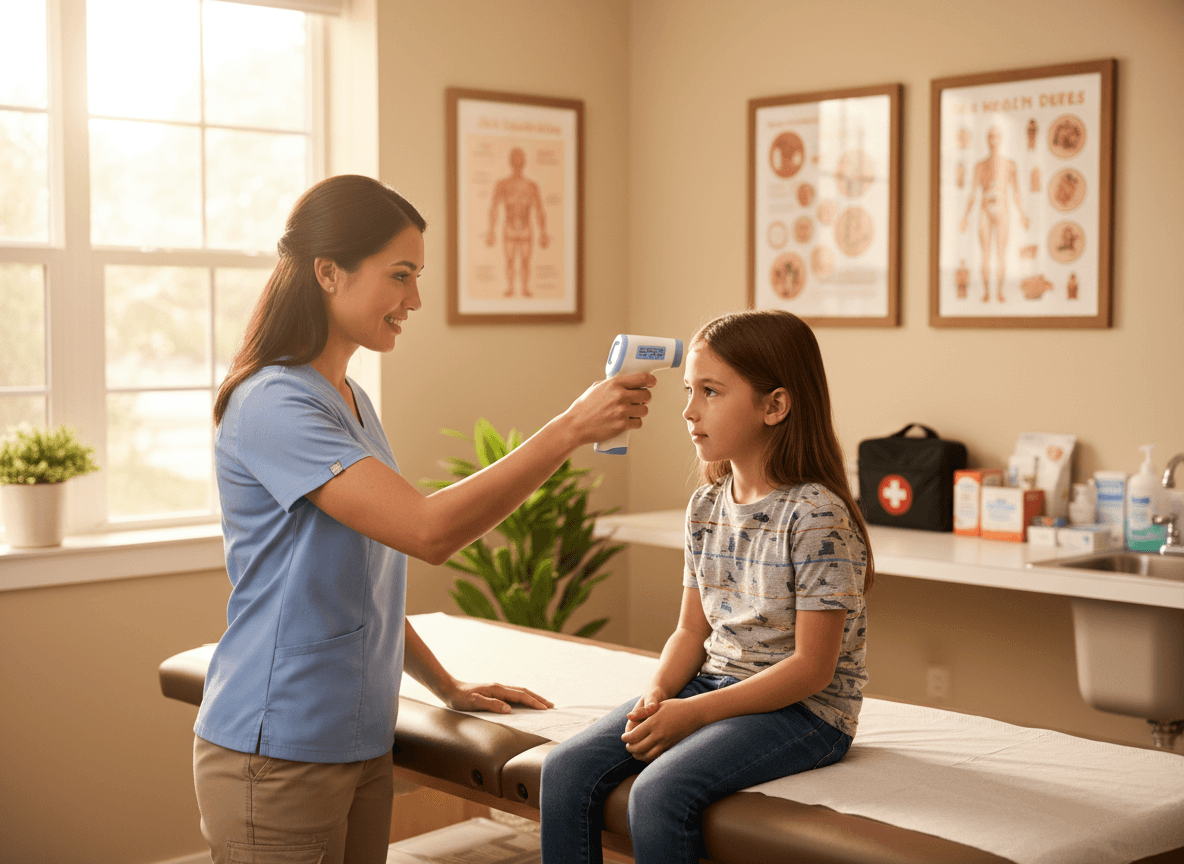
A school health fair is one of the highest-impact wellness events a school can offer, and one of the most frequently underattended due to poor promotion. Most families who do not come simply did not have enough information in advance to plan for it. A well-written newsletter promotion cycle changes that.
This guide covers the three-newsletter cycle that drives health fair attendance: the advance announcement, the one-week reminder, and the post-event follow-up. Each has a different job, and together they build the communication arc that makes the event worth the school's investment.
What the advance announcement should accomplish
The advance announcement, sent three to four weeks before the event, has one goal: put the health fair in families' calendars. Everything else is secondary. The announcement should lead with the specific date, time, and location, and immediately follow with the strongest services being offered.
Specific services outperform general descriptions every time. "Free blood pressure checks, pediatric vision screenings, and dental consultations" is a specific reason to attend. "Health information and wellness resources" is not. List every service or vendor by name with a one-sentence description of what families will receive.
Include any logistical details that might prevent families from planning to attend: parking, whether students participate during the school day or families come after hours, whether any services require pre-registration, and whether the services are available to uninsured families.
Writing the one-week reminder
The reminder newsletter is shorter than the announcement. Families who read the announcement have already decided. The reminder is for families who saw the announcement and did not act yet, and families who missed the announcement entirely.
Lead with the date and time again. Repeat the three to four most compelling service offerings. Include a specific call to action if any services require pre-registration. Close with the location one more time. A well-written reminder is five to seven sentences and goes out exactly one week before the event.
Reaching families who have barriers to attending
A newsletter that does not address common attendance barriers implicitly assumes those barriers do not exist. Insurance status is a significant factor for some families attending health screenings. If services at the fair are available to uninsured or underinsured families, say so explicitly in the announcement. Families who do not know this assume they are not the target audience.
Language access matters for schools with significant non-English-speaking populations. If the health fair promotion is only available in English, a significant share of the families who would benefit most from community health services never know the event exists. If translation is not available for the full newsletter, at minimum translate the date, time, and key services.
During the event: what to collect
Before writing the follow-up newsletter, the school needs basic event data. Track attendance count, number of screenings completed, number of referrals made, and any significant findings (like the percentage of students whose vision screenings led to follow-up recommendations). These numbers make the follow-up newsletter substantive rather than a generic thank-you note.
The post-event follow-up newsletter
A follow-up newsletter sent within one week of the health fair serves two audiences: families who attended and want confirmation that their participation mattered, and families who did not attend but could still benefit from the resources.
Share brief impact data from the event. Thank attending families and volunteers. For families who could not attend, include direct contacts or websites for the services that were present so they can access them independently. A link to the local FQHC, the dental program's scheduling page, and the vision assistance program is worth more in the follow-up newsletter than any motivational language about wellness.
Building the health fair into the annual communication calendar
Schools that hold an annual health fair should plan the newsletter promotion cycle in August when the school year calendar is set. Block the announcement date, reminder date, and follow-up date alongside the fair date. When these are planned in advance, the newsletter content can be partially drafted in the summer and updated with specific vendor details as they are confirmed. The communication happens on schedule without a last-minute scramble.
Get one newsletter idea every week.
Free. For teachers. No spam.
Frequently asked questions
How far in advance should schools start promoting a health fair in the newsletter?
Three to four weeks before the event, with a reminder one week before. A single announcement the week before is not enough time for families to arrange schedules. The first announcement should cover what the fair includes, what families can expect to receive or do there, and any logistical details like parking and timing. The reminder one week before is a shorter version of the same information with a specific call to action like registering for a free screening.
What information should the health fair promotion newsletter include?
Name every service or vendor that will be present and briefly describe what families can receive from each. Free blood pressure checks are more compelling than 'health screenings.' A free pediatric vision exam is more compelling than 'eye health information.' Also include practical logistics: exact start and end time, location within the school, whether students attend during the school day or families come after hours, and whether any registration is needed for specific services.
How should schools follow up with families after a health fair in the newsletter?
Send a short follow-up within a week of the event. Thank families who attended, share any summary statistics like how many vision screenings were completed or how many families connected with a new resource, and include links or contacts for families who could not attend but are interested in the services that were offered. A follow-up newsletter also signals that the school views the fair as part of an ongoing health communication program rather than a one-off event.
How can schools make health fair communication more inclusive for families who have barriers to attending?
Address common barriers directly: offer translations of the health fair announcement for families whose primary language is not English, clarify whether services are available for uninsured families, and describe any childcare provisions if they exist. If the fair is held during a school day, explain how student participation works. If it is held in the evening, clarify whether younger siblings can attend. Addressing barriers in the newsletter reduces the assumption that the fair is not for certain families.
How does Daystage help schools communicate health fair information more efficiently?
Daystage lets you build a health fair template that holds the standard logistics sections, vendor list format, and call-to-action structure. For recurring annual fairs, you update the date, vendor list, and specific service details rather than rebuilding the announcement each year. The follow-up template works the same way. Both send faster and look more polished than emails written from scratch.

Adi Ackerman
Author
Adi Ackerman is a former classroom teacher and curriculum writer with 8 years in K-8 schools. She writes about school communication, parent engagement, and what actually works in real classrooms.
More for Health & Wellness
Flu Season School Newsletter: What to Communicate and When
Health & Wellness · 7 min read
School Opioid and Naloxone Policy Newsletter: What Families Need to Know
Health & Wellness · 5 min read
School Vision Health Newsletter: What Families Need to Know About Student Eye Health
Health & Wellness · 5 min read
Ready to send your first newsletter?
3 newsletters free. No credit card. First one ready in under 5 minutes.
Get started free