
PE Teacher Newsletter Guide: Communicating Physical Education to Families
PE teachers are among the least-heard voices in school communication. While classroom teachers send newsletters home regularly, many PE programs have no regular family communication at all. Families often do not know what unit students are in, what fitness skills are being developed, or how they can support physical activity at home. A regular PE newsletter changes that, and it is simpler to produce than most teachers expect.
Explain the Curriculum, Not Just the Activities
Families who think PE is "just games" have never been shown the curriculum. The newsletter is the place to change that perception. Briefly describe the physical education standards your program addresses and explain what students are developing in the current unit: cardiovascular endurance, muscular strength, flexibility, motor skills, team cooperation, or movement literacy. When families understand that PE has a curriculum, they support it differently, both at school and at home.
Current Unit Overview
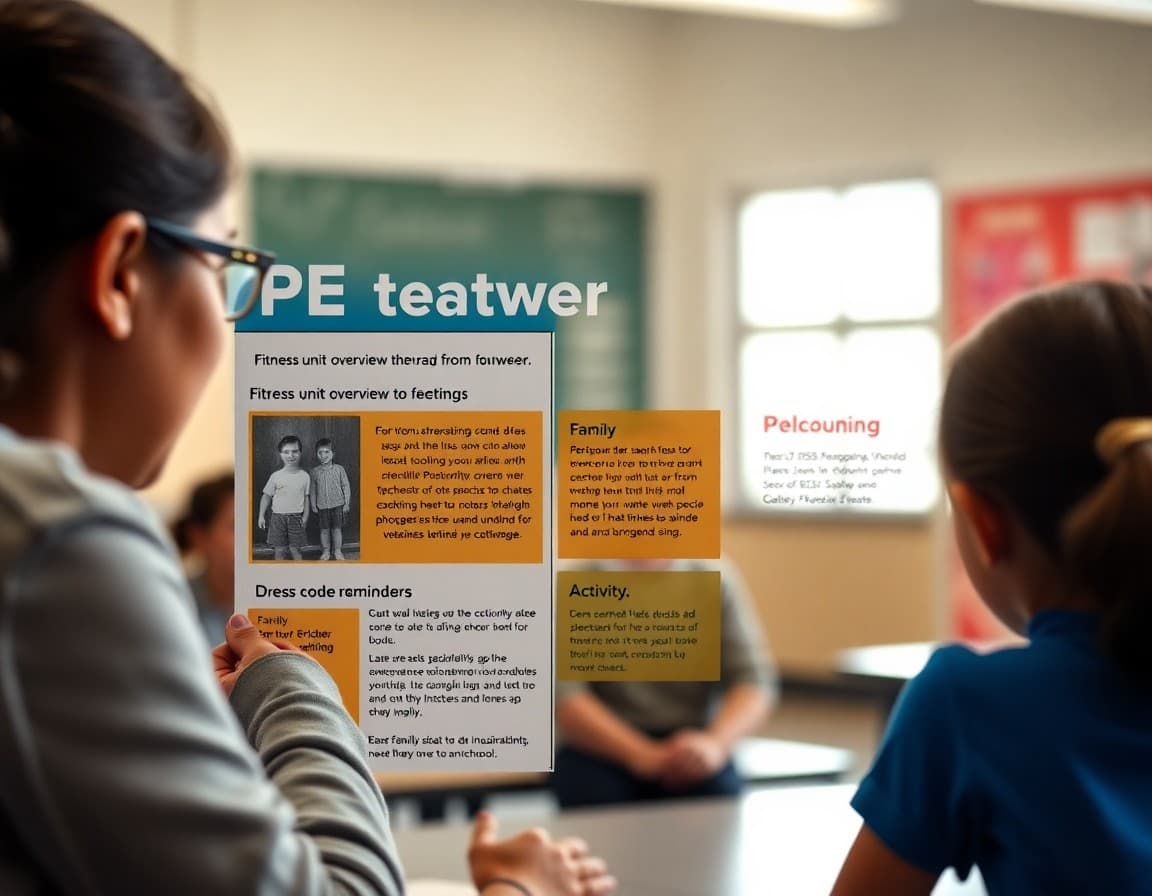
Tell families what students are working on in a brief paragraph at the start of each newsletter issue. Not a list of activities, but a description of the learning focus: "This month we are developing cardiovascular endurance through interval training, cooperative challenges, and tracking our own heart rate and recovery time." This kind of description respects the academic seriousness of physical education and gives families conversation material for after school.
Dress Code and Equipment Reminders
PE teachers consistently report that the most impactful single newsletter item is a clear dress code reminder at the start of the year and again at season changes. Students who come to PE without appropriate footwear often cannot participate safely. A brief, friendly reminder about required shoes, athletic clothing, and whether students should keep a PE change of clothes at school prevents the recurring problem of students unprepared for class.
Fitness Testing Communication
Presidential Fitness Test, FitnessGram, and other fitness assessments are important moments in the PE year. Families should know these are coming, what they measure, and how to frame them at home. The newsletter is the right place to explain that fitness testing measures current fitness as a starting point for improvement, not as a grade or a judgment of the student. Families who understand this framing can support their child's attitude toward testing rather than inadvertently creating anxiety about performance.
At-Home Activity Suggestions
PE class is typically 30 to 45 minutes a few times a week. Research on children's physical activity recommends 60 minutes of moderate to vigorous activity daily. The gap between what PE provides and what children need is significant, and families can help fill it. Give them specific, low-cost suggestions tied to the current unit: a family bike ride, a neighborhood walk with a steps goal, a backyard agility course, or a follow-along yoga video. Specific suggestions get acted on. Vague encouragement to "be active" does not.
Upcoming Events and Demonstrations
If your PE program hosts events, field day, a fitness challenge, a jump rope contest, or a demonstration for families, announce them in the newsletter with enough lead time for families to plan around them. Families who see PE program events in advance are more likely to attend and to recognize the value of the program. Field day especially benefits from early promotion, since families often want to volunteer or attend as spectators.
Building a PE Communication Habit
A PE teacher who sends a monthly newsletter for a full school year will have significantly more family understanding and support than one who communicates only when a problem arises. Daystage makes it practical to produce a clean, professional newsletter without graphic design skills. The investment in regular communication pays dividends in student preparation, family engagement, and administrative support for the PE program.
Get one newsletter idea every week.
Free. For teachers. No spam.
Frequently asked questions
What should a PE teacher newsletter include?
Current fitness unit focus, physical activity standards being addressed, upcoming fitness testing periods, dress code reminders, suggestions for physical activity at home, and any PE-related events or demonstrations coming up.
How often should PE teachers send newsletters to families?
Monthly or at the start of each new unit is appropriate for most PE programs. More frequent newsletters are useful around fitness testing windows, before outdoor activity seasons, or when policy changes (like dress code updates) need communication.
How do you communicate PE curriculum to families who think PE is just recreation?
Briefly describe the physical education standards your program addresses, explain the skills and fitness components students are developing, and connect physical fitness to academic performance. Many families underestimate the curriculum rigor of modern PE programs and benefit from understanding what students are actually learning.
What at-home physical activity suggestions work best for PE newsletters?
Specific, low-cost suggestions tied to the current unit. If students are working on cardiovascular fitness, suggest a family walk or bike ride. If they are working on flexibility, suggest five minutes of stretching before bed. Keep suggestions short, specific, and genuinely doable.
What tool works best for PE teacher newsletters?
Daystage makes it easy for PE teachers to send clean, professional newsletters that go beyond email. Photos from class activities, links to fitness resources, and event announcements all work within Daystage's newsletter format.

Adi Ackerman
Author
Adi Ackerman is a former classroom teacher and curriculum writer with 8 years in K-8 schools. She writes about school communication, parent engagement, and what actually works in real classrooms.
More for Health & Wellness
Ready to send your first newsletter?
3 newsletters free. No credit card. First one ready in under 5 minutes.
Get started free