
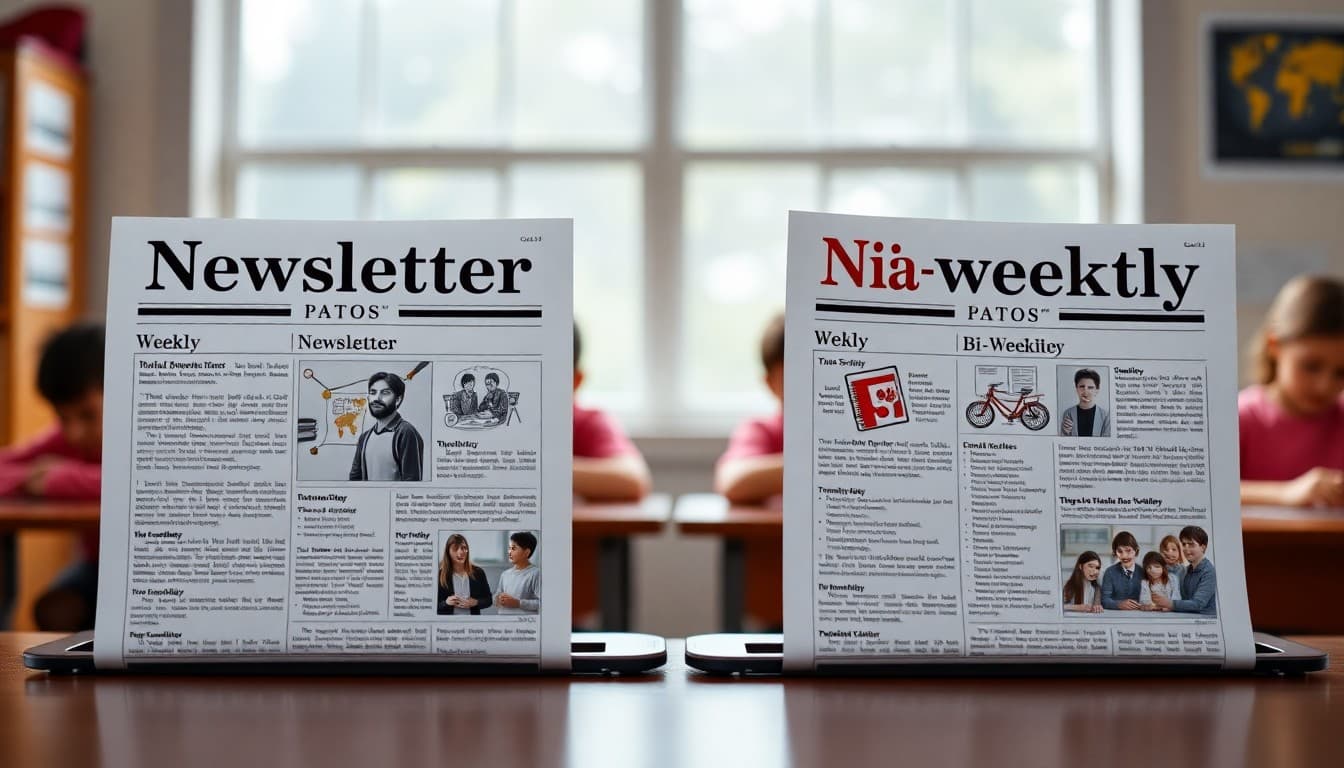
Weekly vs. Bi-Weekly School Newsletter: What Works Best?
Two schools decide to use newsletters. One commits to weekly, sets up a template, and sends 38 newsletters in the school year. The other aims for weekly but falls to bi-weekly by October and monthly by February. After three years, which school has stronger parent communication? Not necessarily the one that planned weekly sends. The one that delivered consistently.
The Case for Weekly Newsletters
Weekly newsletters build a reading habit in families. Parents who receive a newsletter every Tuesday know what to expect and develop a pattern of looking for it. Weekly frequency keeps school information at the front of parents' minds throughout the week, which means action items are less likely to be forgotten. And weekly newsletters can be short: 150 to 200 words that cover this week specifically is entirely appropriate for weekly frequency.
The Case for Bi-Weekly Newsletters
A bi-weekly newsletter sent consistently is better than a weekly one sent sporadically. Bi-weekly frequency gives teachers more time to gather meaningful content, which often results in higher-quality newsletters that families read more thoroughly. Some parent communities prefer less frequent communication and respond better to a denser, more substantive newsletter every two weeks than to a brief weekly one.
What Determines the Right Choice
The right frequency is the highest frequency you can maintain consistently throughout the school year. Ask yourself honestly: can I write a useful 200-word newsletter every week without skipping? If yes, weekly is your answer. If you know from experience that you skip sends when things get busy, bi-weekly is a more honest commitment. Setting a weekly goal you will not maintain damages trust more than setting a bi-weekly goal you will.
Newsletter Type Affects Frequency
Classroom newsletters about what the class did this week can sustain weekly frequency because the content is specific and always fresh. School-wide newsletters covering programs, policies, and community news may not have enough genuinely new information to sustain weekly sends without becoming padded. Match your frequency to the pace at which genuinely new, relevant information is available.
How to Know If You Are Sending Too Often
Watch for two signals: a steady decline in open rates over a semester with no change in content quality, and an increase in unsubscribes after frequency changes. If your open rate was 42 percent in September and has declined to 31 percent by November without a major content shift, frequency fatigue is a likely cause. Try shifting to bi-weekly for one month and compare the open rates.
How to Know If You Are Sending Too Infrequently
The signal for under-frequency is different: parent questions about things that were in newsletters, families who say they did not know about events that were well-communicated, and a pattern of parents relying on informal sources for school information. When you hear "I heard from another parent that..." about information that should have come from the school newsletter, you are communicating too infrequently.
The Frequency Commitment Test
Before committing to a frequency, ask: can I maintain this during testing week, the week before winter break, and the three weeks of spring conferences? Those are the hardest stretches of the school year for consistent communication. If the answer is yes for your chosen frequency, you have the right frequency. If you have to think hard about whether you can manage it during those periods, lower the frequency until the answer is an easy yes.
Get one newsletter idea every week.
Free. For teachers. No spam.
Frequently asked questions
Is a weekly or bi-weekly school newsletter better?
Weekly newsletters produce stronger parent engagement when the content is consistently useful and appropriately short. Bi-weekly newsletters produce better engagement than weekly newsletters that are too long, too generic, or inconsistently sent. The right answer depends on whether you can produce a genuinely useful newsletter every week. If yes, weekly is better. If not, consistent bi-weekly beats inconsistent weekly every time.
What is the risk of sending too frequently?
Over-frequency leads to newsletter fatigue, which shows up as declining open rates, increasing unsubscribes, and a pattern of families skimming rather than reading. The threshold is different for every parent community, but a common signal is an open rate that has dropped more than 10 percentage points over a semester without a change in content quality. That drop often reflects frequency fatigue.
What is the risk of sending too infrequently?
Under-frequency leads to trust erosion and a pattern of families going elsewhere for school information, typically social media or peer networks. When families get their school information from informal sources, they get it with less accuracy and more anxiety. A school that communicates infrequently cedes its role as the authoritative source of school information.
Should a classroom newsletter be sent at a different frequency than a school-wide newsletter?
Often yes. A classroom newsletter with specific, useful information about what is happening in one classroom can sustain weekly frequency because the relevance is high. A school-wide newsletter covering all grades and all programs may be better at bi-weekly frequency because not every section applies to every family. The more specific the content, the higher the frequency it can sustain.
Does Daystage work well for both weekly and bi-weekly newsletter schedules?
Yes. Daystage supports any frequency. The template-based workflow makes weekly sends practical because you are not rebuilding from scratch each time. For schools moving from bi-weekly to weekly, Daystage reduces the time-per-newsletter enough that the increased frequency feels manageable rather than burdensome.

Adi Ackerman
Author
Adi Ackerman is a former classroom teacher and curriculum writer with 8 years in K-8 schools. She writes about school communication, parent engagement, and what actually works in real classrooms.
More for Guides
Ready to send your first newsletter?
3 newsletters free. No credit card. First one ready in under 5 minutes.
Get started free