

Quarterly School Newsletter: Pros, Cons, and Best Practices
A district superintendent sends a newsletter four times a year. Each edition is comprehensive: program updates, budget information, strategic plan progress, staff highlights, and upcoming events. Parents who receive it read it because it is substantive enough to be worth the time. The quarterly format works for this communication because the content matches the frequency. Here is when and how to make quarterly newsletters work.
When Quarterly Is the Right Frequency
Quarterly frequency makes sense when the updates are cumulative rather than immediate. District-level strategic initiatives develop over months, not weeks. Program funding changes, enrollment trends, and board decisions unfold over quarters. School improvement plans are measured in terms, not weeks. For communications at this level, quarterly is not too infrequent. It is appropriately calibrated to the pace of the content.
What a Quarterly Newsletter Must Be
A quarterly newsletter earns its send interval by being genuinely substantive. That means: at least two or three feature-length sections with real depth, multiple photos that document the period covered, a forward-looking section that covers what is happening in the next quarter, and a resource section that points families to more detailed information. A quarterly newsletter that could have been a single paragraph email is a trust-eroding disappointment.
Structure for a Quarterly Newsletter
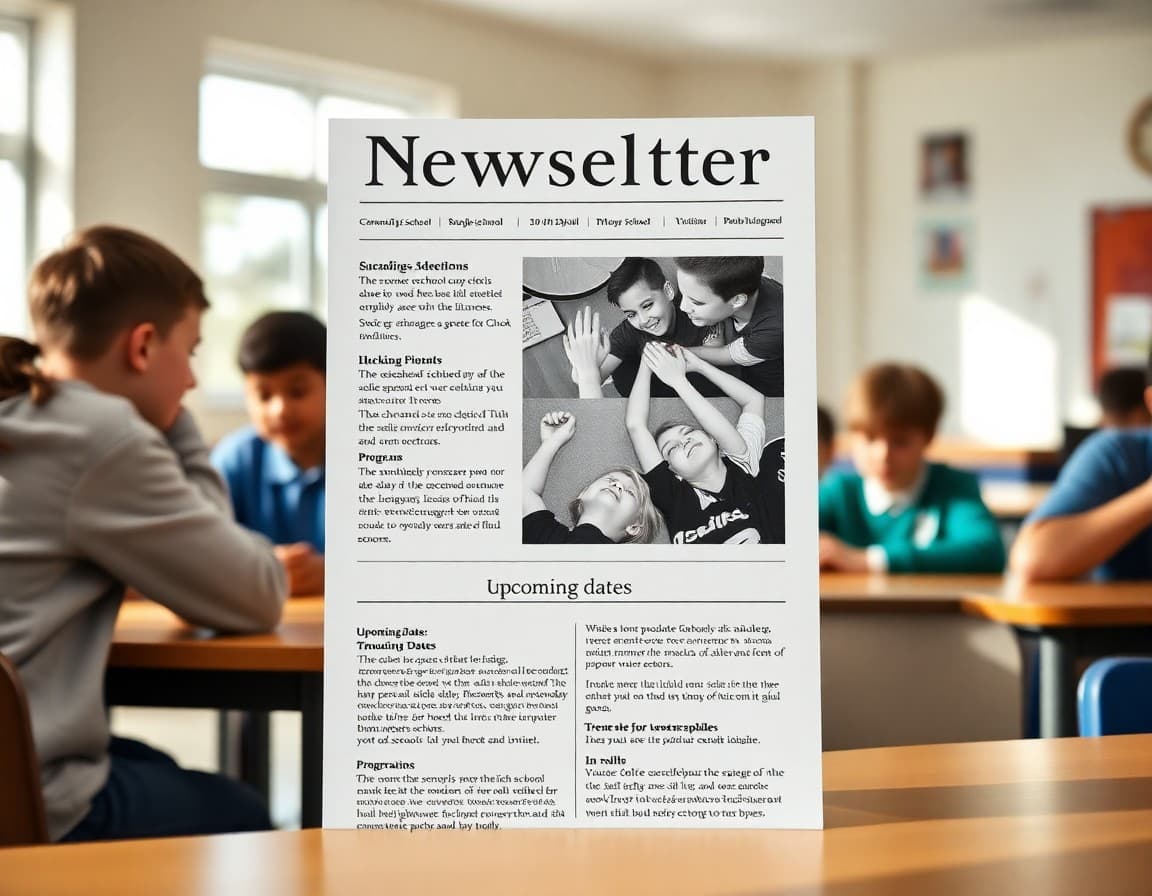
Quarterly newsletters benefit from clear sections that readers can navigate. A useful section structure: a brief message from the principal or superintendent that frames the quarter, a highlights section covering the most significant things that happened, a feature story that goes deep on one program or initiative, an upcoming dates section covering the next quarter, a data or metrics section if relevant, and a resources or contacts section. This structure serves both readers who want the highlights and those who want the depth.
Supplementing Quarterly with Shorter Sends
A quarterly newsletter covers cumulative updates and context. It does not replace time-sensitive communication. Schools that send quarterly newsletters still need a mechanism for school closure notifications, urgent announcements, and event reminders. These supplemental communications are brief and operational. The quarterly newsletter is substantive and contextual. Both roles are necessary and they do not replace each other.
Planning a Quarterly Newsletter
A quarterly newsletter requires more planning than a weekly one because the stakes per issue are higher. Plan each edition two to three weeks before the send date. Identify the main feature story subject and begin gathering quotes and photos. Draft the forward-looking section using the school calendar for the next quarter. Brief any contributors early so their sections arrive before the deadline. Review the draft with at least one other administrator before sending.
Design Standards for Quarterly Publications
Quarterly newsletters benefit from more design investment than weekly ones. A consistent design template with clear section headers, branded colors, and professional photo placement signals that the quarterly newsletter is a significant publication. Schools that use a polished quarterly format report that parents are more likely to save it and share it with family members than weekly newsletters. The design communicates the value of the content before families read a word.
Announcing the Next Send in Every Edition
The biggest engagement challenge for quarterly newsletters is that families forget they exist between editions. Include in every quarterly newsletter the expected send date for the next edition. This sets an expectation and a small amount of anticipation. "Our next newsletter will be sent in late October." When the October newsletter arrives, some families will recognize it as the one they were expecting. That recognition produces higher open rates than cold, unannounced sends.
Get one newsletter idea every week.
Free. For teachers. No spam.
Frequently asked questions
Who should use a quarterly school newsletter format?
Quarterly newsletters work well for district-level communications, school board updates, fundraising organizations, and programs that do not have enough weekly activity to justify more frequent sends. A classroom teacher would rarely publish quarterly, as the content gap is too large for families managing a student's current school experience. But a district superintendent reporting on strategic priorities or a PTA board sharing program updates operates at a pace where quarterly makes sense.
What are the risks of a quarterly school newsletter?
The primary risk is that families forget the newsletter exists between sends. A quarterly newsletter must be substantive and well-designed to justify the gap. If the quarterly newsletter arrives and reads like a brief update that could have been an email, families will not look forward to the next one. Quarterly frequency requires proportionally higher content quality per issue than weekly or bi-weekly formats.
How long should a quarterly school newsletter be?
600 to 1200 words is appropriate for most quarterly newsletters. This is longer than a weekly newsletter because the quarterly covers more ground: a quarter's worth of activities, several upcoming dates, feature stories, and any updates to programs or policies. The longer format is justified by the longer interval. However, keep each section scannable even if the overall newsletter is long.
Should a quarterly newsletter use a different format from a weekly newsletter?
Yes. A quarterly newsletter benefits from a more magazine-like format with section headers, feature stories, multiple photos, and a clear table of contents or visual hierarchy. The longer format requires more organization so readers can find what is relevant to them. Weekly newsletters can be linear because they are short. Quarterly newsletters need navigation because they are long.
Can Daystage produce a high-quality quarterly newsletter?
Yes. Daystage's block-based editor supports the multi-section, photo-rich format that quarterly newsletters benefit from. You can include feature story sections, photo galleries, event blocks for upcoming dates, and detailed content sections. Many schools use Daystage for both their weekly classroom newsletters and their quarterly school-wide publications.

Adi Ackerman
Author
Adi Ackerman is a former classroom teacher and curriculum writer with 8 years in K-8 schools. She writes about school communication, parent engagement, and what actually works in real classrooms.
More for Guides
Ready to send your first newsletter?
3 newsletters free. No credit card. First one ready in under 5 minutes.
Get started free