
School Newsletter: Memorial Day Edition Ideas and Template
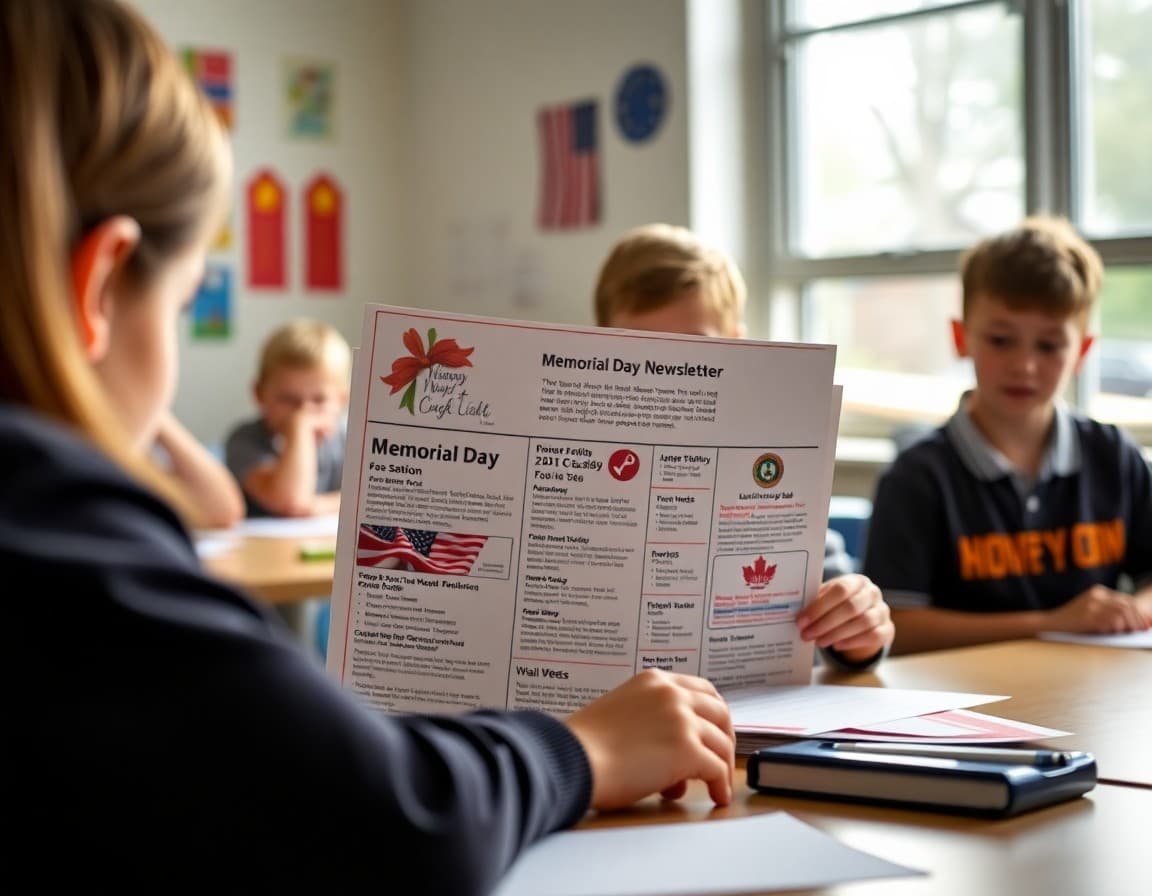
Memorial Day marks the end of the school year sprint. After the holiday weekend, most schools have fewer than three weeks left, major events are stacking up, and the newsletter needs to work harder than ever to keep families oriented through a busy and emotionally loaded stretch. Here is how to handle Memorial Day content with appropriate weight while keeping the issue operational and useful.
The Meaning of Memorial Day in a School Context
Do not treat Memorial Day as just a Monday off. Address its meaning directly in the principal's message or a dedicated section. "Memorial Day is set aside to honor the men and women who gave their lives serving in the US military. For some families in our school community, this is a personal day of remembrance, not just a long weekend. We encourage families to take a moment, whether at a local ceremony, in conversation at home, or in quiet reflection, to acknowledge what the day represents." That kind of direct acknowledgment takes three sentences and means a great deal to military families who too often feel invisible in civilian school communities.
School Flag Ceremony or Moment of Silence
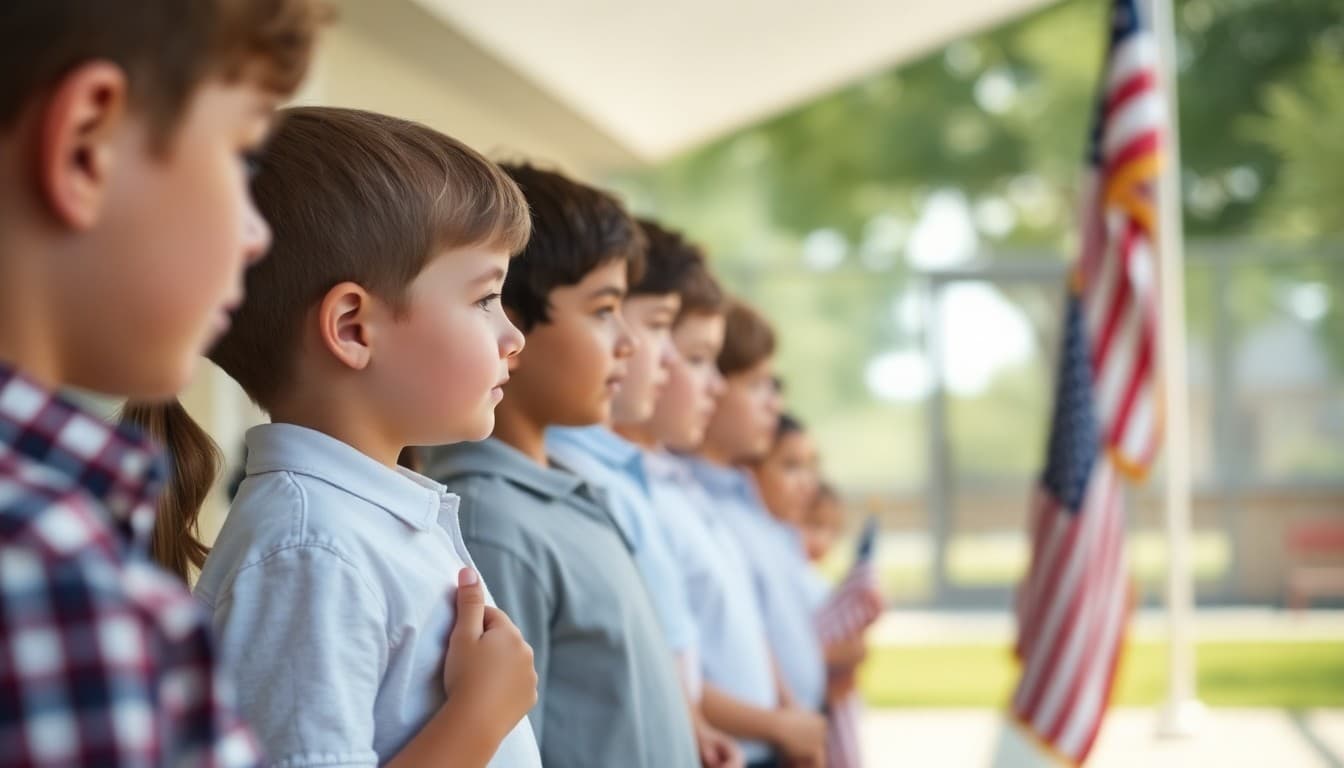
Many schools hold a brief flag ceremony or moment of silence on the Friday before Memorial Day. If yours does, announce it in the newsletter with the time, the location in the building, and whether families are welcome to attend. "Our student council will lead a Memorial Day moment of silence on Friday, May 23 at 8:15 AM, beginning of first period. Parents are welcome to observe from the main lobby." Short, respectful, and well-attended when promoted in advance.
Connecting to Social Studies Curriculum
At the elementary level, Memorial Day connects naturally to units on American symbols and civic traditions taught across K-5. Note briefly what students have been learning. "Our 3rd and 4th graders have been studying American national holidays and their origins this month. Students who visit a Memorial Day ceremony this weekend are encouraged to share what they observed with their class on Tuesday." This kind of curriculum connection respects the holiday's meaning and gives students a reason to pay attention during family observances rather than seeing the day only as a vacation.
The End-of-Year Countdown Calendar
The Memorial Day newsletter is usually the last one published before the final two to three weeks of school. Include a comprehensive countdown calendar for everything remaining in the school year. List every event with date, time, and whether it is open to families. Parents need to see the full remaining schedule to plan final field trip chaperone requests, request time off for promotion ceremonies, and arrange end-of-year childcare.
Example: Tue May 27 , School resumes after Memorial Day
Wed May 28 , Science fair display, gym, open to families 3-5 PM
Fri May 30 , Last library due date
Mon Jun 2 , Field day, regular start time, wear PE clothes
Wed Jun 4 , 5th grade promotion ceremony, 10 AM, gymnasium
Fri Jun 6 , Last day of school, noon dismissal, report cards sent electronically
Meal Service and Care Program Notes
Memorial Day affects meal service and extended care for families who rely on these programs. Address it directly: "School meal service resumes Tuesday, May 27. If your family relies on school meals, please plan accordingly for the Monday closure. Community meal resources are available at [LINK] for families who need support over the long weekend." This brief note takes 30 seconds to write and matters enormously to the subset of families for whom a school closure means a meal planning challenge they would rather know about in advance.
Summer Preview Before the Holiday
Use the Memorial Day newsletter to introduce summer transition content. Summer school enrollment deadlines, public library summer reading program information, summer office hours for the school building, and supply lists for the next grade level if your district publishes them in May. Families who receive this information before the school year ends use summer more intentionally than families who receive it in August. The Memorial Day newsletter is the ideal moment to plant these seeds because families are still in the school communication habit and the summer is just close enough to feel real.
A Note for Military Families Specifically
If your school serves a significant military population, consider adding a brief dedicated note. "To our military families: we know Memorial Day may carry personal meaning that goes beyond a national holiday. If your family wishes to share a memory or tribute connected to this day, please reach out to Ms. Carter at the front office. We are honored to acknowledge the service of every veteran connected to our school community." This is not required for every school but is meaningful where it applies and signals that the school sees and honors every family's reality.
Get one newsletter idea every week.
Free. For teachers. No spam.
Frequently asked questions
What is the school newsletter's role around Memorial Day?
The newsletter serves two purposes around Memorial Day: informing families about the school closure (Memorial Day is the last Monday in May, a federal holiday and school non-attendance day in all US public school districts) and connecting the holiday to social studies or civics curriculum the school may be addressing. The newsletter should also note that the weekend signals the unofficial start of the end-of-year rush, with typically two to four weeks of school remaining after Memorial Day in most districts.
How can school newsletters address Memorial Day respectfully for families with military connections?
Memorial Day is specifically a day to honor military members who died in service to the country, distinct from Veterans Day which honors all who served. For schools with significant military family populations, the newsletter should reflect this distinction clearly. Acknowledge the weight of the day for families who have lost someone in service. If the school is hosting a flag ceremony or moment of silence, describe it respectfully with the date and time. Invite military families to share photos or stories they are comfortable sharing for a school-wide recognition.
What curriculum connections can the newsletter make around Memorial Day?
Social studies connections at the elementary level typically include American symbols and traditions (flags, the national anthem, the Pledge of Allegiance, Arlington National Cemetery). Middle school curriculum often includes the history of Memorial Day after the Civil War and its evolution as a national holiday. High school connects to larger themes of civic responsibility, military history, and national identity. The newsletter can briefly note what students are learning and suggest family conversations: 'Ask your 4th grader what they learned about the history of Memorial Day this week.'
What practical information should the Memorial Day newsletter include?
The school closure date (the Monday of Memorial Day weekend), the return date, any end-of-year events happening the week after Memorial Day, and whether extended care or after-school programs are affected by the holiday closure. Also note whether the school cafeteria or any food service programs will be affected for families who depend on school meals. Memorial Day often falls with one to three weeks of school remaining, making the newsletter published the week before Memorial Day one of the most operationally important of the final month.
Can Daystage produce a Memorial Day themed newsletter with patriotic design elements?
Yes. Daystage newsletter templates can be customized with patriotic color palettes (red, white, and blue) appropriate for Memorial Day content. The template editor lets you adjust header colors, section accent colors, and button colors to create a visually appropriate Memorial Day edition. Several schools use the same design framework for Memorial Day and the Fourth of July summer communication to maintain a consistent patriotic visual identity across end-of-year and summer messaging.

Adi Ackerman
Author
Adi Ackerman is a former classroom teacher and curriculum writer with 8 years in K-8 schools. She writes about school communication, parent engagement, and what actually works in real classrooms.
More for Guides
Ready to send your first newsletter?
3 newsletters free. No credit card. First one ready in under 5 minutes.
Get started free