

School Newsletter: Summer Kickoff Edition Ideas and Template
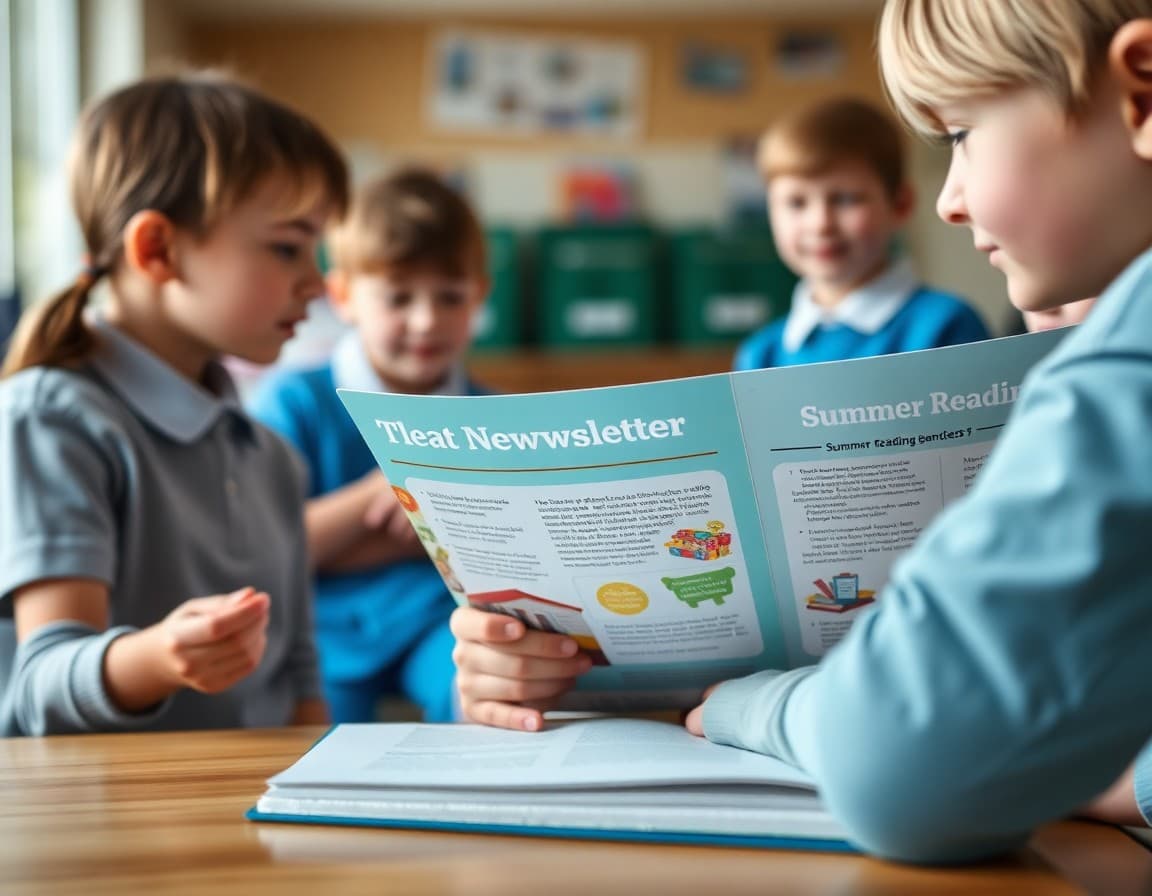
The summer kickoff newsletter is the most important single issue of the school year. It is the last impression a school makes on families until September. If it is warm, useful, and well-organized, families carry a positive feeling about the school into the summer. If it is a rushed bullet list of last-minute logistics, that is the feeling they carry into September. Here is how to write one that earns a strong close to the year.
Opening with the Year's Best Moments
The principal's message in the summer kickoff edition should be the most personal message of the year. Pick three specific moments from the school year that genuinely moved you or impressed you and write about them directly. Not "students showed incredible growth and resilience" but "I watched Marcus Chen win first place at the regional science fair and immediately hug his 3rd grade teacher, who had helped him love science two years earlier." Specificity in this message does more for parent loyalty and community connection than any amount of polished boilerplate.
The School Year in Numbers
A brief "year in numbers" infographic or list creates a memorable overview of what happened. Consider including: number of school days completed, number of field trips taken, books read through the school reading challenge, volunteers who gave hours this year, new books added to the library, meals served by the cafeteria, and any fundraising total with what it will fund. "Our school community served 89,420 meals, completed 12 field trips, and raised $14,350 for the new playground, which breaks ground in August." These numbers tell a story of a functioning, active school community in a way that prose descriptions cannot match.
Summer Resources Block
Include a dedicated summer resources section with practical links and information. The most universally useful items are:
- Public library summer reading program registration and start date
- Free and reduced summer meal sites for families who rely on school nutrition programs (USDA summer meal locator: summerfood.fns.usda.gov)
- School supply list for the next grade level if available
- Required immunizations for students entering specific grade levels in the fall
- Summer school enrollment status and contact if applicable
- School office hours for the summer months and how to reach someone for emergency records requests
This block is worth including even if it takes a bit of research, because the families who need it most are often the least resourced to find it on their own.
Acknowledging Staff Transitions
If any teachers or staff members are leaving the school at the end of the year, acknowledge them in the summer newsletter. "Ms. Rivera is retiring after 24 years at Lincoln Elementary. Students she taught in kindergarten now have their own children at our school. We are grateful beyond measure for her dedication." This recognition honors the departing staff member, closes a chapter cleanly for families, and signals that the school takes community and continuity seriously.
A Preview of Next Year
Two or three sentences about what to expect in the fall give families something to look forward to and signal that the school is already thinking about next year. "In September, we will open our renovated science lab, welcome three new staff members, and launch a new after-school robotics program for grades 3-5." This forward-looking content transforms the last newsletter from a farewell into a see-you-soon. It also gives parents who move over the summer a reason to stay connected and recommend the school to neighbors.
The Final Line
The last sentence of the last newsletter is the one families remember longest. Make it count. Avoid clichés ("have a wonderful summer!") in favor of something specific and genuine. "Thank you for every morning you trusted us with the most important people in your lives. We will be ready for them again in September." That closing is honest, grateful, and forward-looking in one sentence. It is the kind of ending that makes parents feel they chose the right school for their child.
Get one newsletter idea every week.
Free. For teachers. No spam.
Frequently asked questions
When should the summer kickoff newsletter be sent?
On the last day of school or within 24 hours before. Sending it the week before the last day means it competes with final school events. Sending it after school is out means families have already begun their summer routines and are less likely to open it. The day before or the morning of the last day of school is the optimal window. Parents are emotionally engaged with the school year ending and are actively thinking about their children's experience. Open rates for last-day newsletters are typically 10 to 15 percent higher than regular school-year issues.
What should the summer kickoff newsletter contain?
A heartfelt year-end message from the principal, a brief highlight of the school year's accomplishments with specific examples, summer resources (library programs, community camps, reading lists, meal sites for food-insecure families), the date school resumes in September, and a warm invitation to follow the school's social media or website over the summer for any updates. Avoid heavy operational content; this is a celebration newsletter, not an administrative one. The one exception is any critical summer deadline families genuinely need to know about, like immunization requirements for the following year.
Should the summer newsletter be different from the regular weekly format?
Yes. The summer kickoff newsletter can be slightly longer, more visual, and more narrative than a regular weekly issue. Include a class photo or a photo collage from the year's highlights. Write in a warmer, more reflective tone. This is the one issue where going slightly above the regular word count is justified because families want to mark the end of the year as a meaningful moment. Think of it as the school's equivalent of a year-in-review edition, which tends to be longer and more engaging than standard issues.
How do you bridge the summer newsletter into fall communication?
Include a brief note about when to expect the first fall newsletter and how to update contact information over the summer. 'Our first fall newsletter will go out the week before school starts in September. If your email address changes over the summer, update your contact information at [LINK] so you do not miss it.' This note keeps the email list healthy over summer and sets the expectation that the newsletter will continue in fall without requiring families to re-subscribe.
Does Daystage help with year-end newsletter design for the summer kickoff edition?
Yes. Daystage has a summer newsletter template with bright, celebratory colors and a layout that accommodates photo galleries, year-end highlights, and summer resource blocks. Schools that use the summer template often include a photo from each grade level, which parents love and frequently share with family members. The template can be saved and used as the starting point for the first fall newsletter of the new year, creating visual continuity across summer.

Adi Ackerman
Author
Adi Ackerman is a former classroom teacher and curriculum writer with 8 years in K-8 schools. She writes about school communication, parent engagement, and what actually works in real classrooms.
More for Guides
Ready to send your first newsletter?
3 newsletters free. No credit card. First one ready in under 5 minutes.
Get started free