

How to Write the Athletics Section of Your School Newsletter
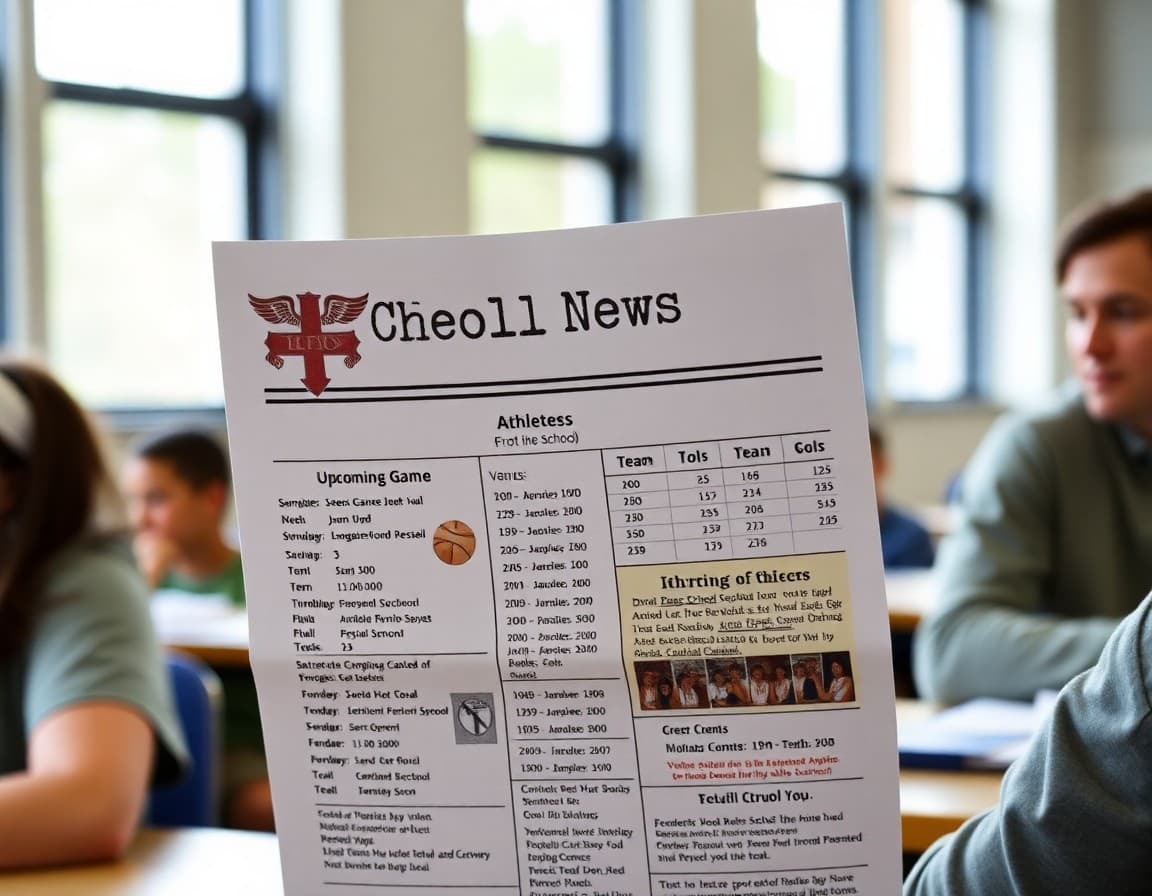
The athletics section is one of the few parts of the school newsletter that student athletes actually ask their parents to read. Done well, it builds school pride, drives game attendance, and gives sports families a consistent information source they trust. Done poorly, it is a list of scores that gets skipped. Here is how to write one worth reading.
Getting Content from Coaches
The athletic director cannot write the section alone. Set up a simple weekly submission system: a Google Form shared with all coaches, due by Monday noon, with four fields: sport and team level, results from last week's games (including final scores), upcoming schedule for the next two weeks, and one highlight or recognition worth noting. Coaches who know the form takes three minutes are far more reliable contributors than those who receive a general "please send athletics updates" request by email each week. Follow up with coaches who miss two consecutive deadlines.
Upcoming Schedule Format
List games in a consistent format. Date, day of week, sport, opponent name, home or away, and start time. Example:
Tue Apr 15 , Boys soccer vs. Jefferson Prep (Away), 4:00 PM
Wed Apr 16 , Girls volleyball vs. Roosevelt MS (Home), 5:30 PM
Sat Apr 19 , Swim meet, Eastside Aquatic Center, 9:00 AM (multiple teams)
For home games, add the location if parents may not know the address. For championship or playoff games, note the venue even if parents know the school. Families who want to attend need enough information to find the event without additional research.
Writing Game Results That Go Beyond the Score
Score reporting alone gives parents no reason to read the section. Add one sentence of context per result. "Girls cross country placed 2nd of 12 teams at Saturday's invitational. Sophomore Maya Torres set a new personal record with a time of 22:14 for the 5K course." That takes 20 more seconds to write and gives families a reason to care about the result even if their child is not on the team. Specific times, scores, and names (with coach-verified permission) make the section worth reading for the broader parent community, not just the families of athletes.
Recognizing Individual Athletes
Include one individual athlete recognition per issue. Coordinate with coaches for nominations. The recognition does not have to be the top performer on the team; character, improvement, and leadership are often more interesting to read about than the highest-scoring player. "Freshman goalkeeper David Park did not allow a single shot in Wednesday's game" is as compelling as "David Park scored the winning goal" but highlights different qualities. Vary the recognition type across the year and across different sports so the section does not feel like a feature vehicle for one or two prominent programs.
Ticket and Admission Information
High school sports in particular often charge admission. Include ticket prices, where to purchase (online, at the door, or from the athletic office), and whether students in uniform or with school IDs receive discounts. If your district uses GoFan, HomeTown Tickets, or another digital ticketing platform, include the direct link and remind parents that digital tickets must be purchased before arriving at the gate. Parents who showed up without cash and discovered the game requires digital tickets only become a customer service problem for the athletic department; the newsletter prevents that conversation.
Booster Club and Volunteer Information
Athletics programs often rely on parent volunteers for concessions, timing, score-keeping, and transportation. The newsletter is the right place for a brief booster club note each month. Include the next booster meeting date and time, the current most-needed volunteer role, and a contact for families interested in getting involved. Keep this to three lines maximum; sports parents who want to volunteer already know where to find more information. The newsletter mention is a reminder and an invitation, not a detailed recruitment pitch.
Eligibility and Academic Reminders
Include a brief eligibility reminder at the start of each sports season and before progress report periods. "Student athletes must maintain a 2.0 GPA and no failing grades to remain eligible. Progress reports go home March 12. Coaches check eligibility the following week." This reminder is useful for student athletes, their families, and classroom teachers who may not know eligibility standards. It also signals to the broader parent community that athletic participation at your school comes with academic accountability, which is a positive message worth communicating.
Get one newsletter idea every week.
Free. For teachers. No spam.
Frequently asked questions
Should the athletics section be in every school newsletter or a separate sports update?
For elementary schools, the athletics section belongs in the main newsletter since sports involve most of the student body and parent audience is broad. For middle and high schools with multiple sports seasons running simultaneously, a dedicated athletic newsletter or a robust athletics section with clear sport-by-sport organization works better. The key question is whether the newsletter's primary parent audience overlaps significantly with the sports program audience. When most newsletter readers care about athletics, keep it integrated. When they are largely different audiences, consider a separate communication.
What information belongs in a school newsletter athletics section?
Upcoming game dates, times, locations, and whether the event is home or away. Recent results with final scores. Team highlights and individual recognitions (with permission). Ticket and admission information for paid events. Volunteer opportunities for sports parents. Booster club news. Eligibility reminders for student athletes (grade requirements, physical deadlines). What does not belong: detailed play-by-play accounts, injury details beyond a general note that a player is out, personal criticism of coaching decisions, or any information shared in confidence by a coach or athletic director.
How do you write about a team that is having a losing season?
Focus on effort, growth, and individual accomplishments rather than win-loss records. 'The volleyball team dropped its third consecutive match on Tuesday but showed significant improvement in serves, with a 15 percent increase in aces compared to last month' is honest without being demoralizing. Never write 'despite another tough loss' or similar framing that emphasizes failure. Student athletes and their families read these newsletters; the tone should respect their effort regardless of the scoreboard.
How do you handle athletic section content for schools without strong sports programs?
Expand the definition of athletics to include physical education achievements, intramural competitions, fitness challenges, and recreational activities. Many elementary schools without traditional sports teams have jump rope competitions, field day events, and running clubs that deserve coverage. A school newsletter that reduces 'athletics' to varsity sports and ignores PE accomplishments sends a message that only competitive athletes matter. PE teachers are often eager to contribute content when asked directly.
Does Daystage support scheduling athletic events with RSVP from the newsletter?
Yes. Daystage's event block lets you list game dates with the option for parents to indicate they plan to attend. This is useful for schools that want to coordinate parent carpools, organize fan sections, or simply track which games will have strong parent turnout. The athletic director can add game events to the newsletter directly and track RSVPs without a separate sign-up tool.

Adi Ackerman
Author
Adi Ackerman is a former classroom teacher and curriculum writer with 8 years in K-8 schools. She writes about school communication, parent engagement, and what actually works in real classrooms.
More for Guides
Ready to send your first newsletter?
3 newsletters free. No credit card. First one ready in under 5 minutes.
Get started free