

How to Write the Arts Section of Your School Newsletter
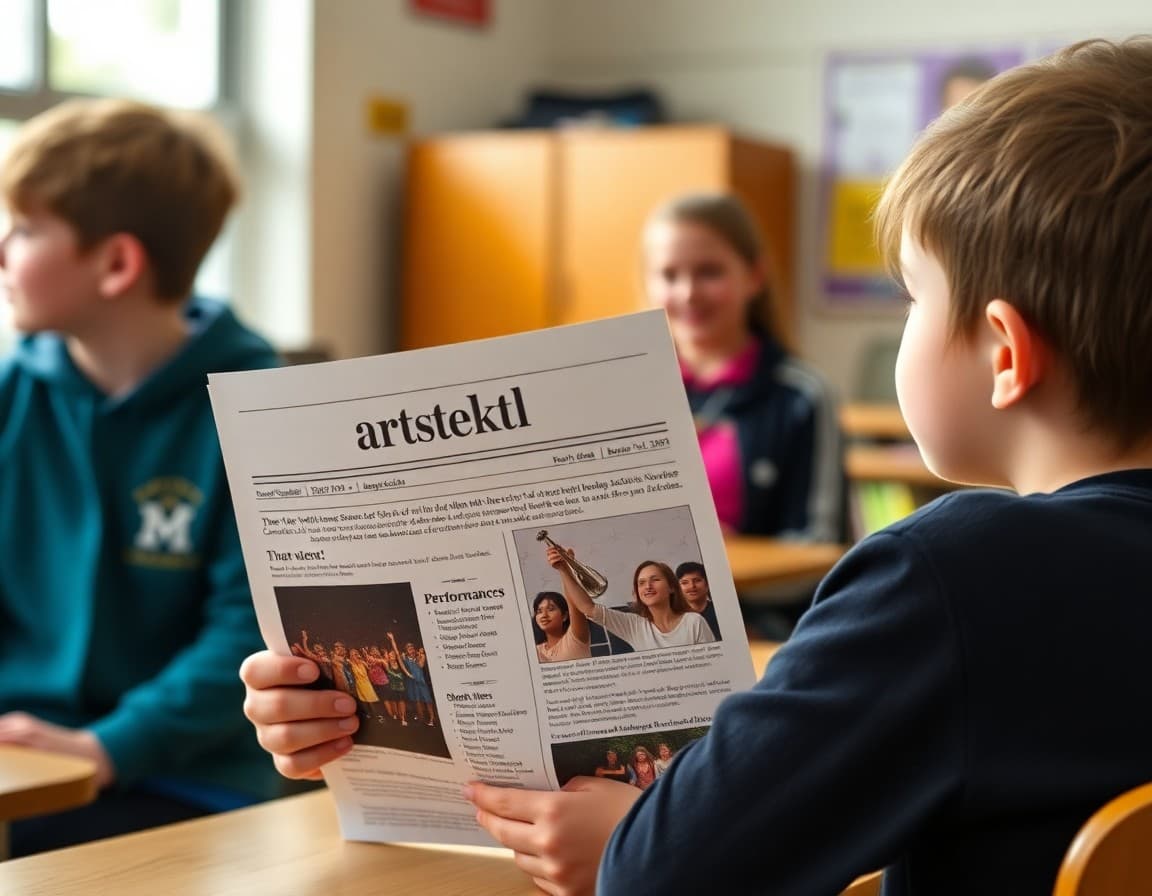
Arts programs in schools often struggle for visibility. Parents who attend every soccer game may have no idea that their child's school has a jazz band that placed in a regional competition or a ceramics class producing museum-quality work. The newsletter is the most reliable way to close that gap. Here is how to write an arts section that builds program pride and drives performance attendance.
Covering What Is Actually Happening in the Classroom
The arts section should not be only about performances and exhibits. What students are learning in the art room week to week is equally worth covering. "Band students are currently working on a Sousa march that they will perform at the spring concert. The piece requires all four sections to play independently before combining, which is the hardest thing 6th grade band has attempted this year." That kind of content tells parents what their child is working on, establishes the difficulty level, and creates anticipation for the performance, all in three sentences.
Performance Promotion That Drives Attendance
Give performance announcements everything a parent needs to attend: the show name, the date, the time (include both start time and expected end time so parents can arrange pickup), the location within the school building, ticket information and prices, and whether children other than performers are welcome. "School Musical: Into the Woods Jr., performed May 14, 15, and 16 at 7 PM, doors open at 6:30 PM, Main Auditorium. Tickets are $5 for students, $8 for adults. Children are welcome. Approximate run time: 90 minutes, no intermission." That entry replaces three phone calls from parents who needed to know the end time before buying tickets.
Showcasing Student Artwork in the Newsletter
A single student artwork image in the newsletter generates more clicks and shares than almost any other content type. Work with the art teacher to select one piece per issue that represents what the class is currently working on. Caption it with the student's first name, grade, and the medium or technique used. Example: "Watercolor landscape by Sofia, 4th grade, inspired by the Hudson River School paintings students studied this month." The caption adds educational context and tells parents what their child might be learning even if their own child was not selected this issue.
A Template for the Arts Section
Here is a reusable arts section format:
Arts Update: [Month]
In the Music Room: [Two sentences on what band, chorus, or orchestra students are working on.]
In the Art Room: [Two sentences on the current project or technique, with one student artwork image.]
Coming Up: [Performance or exhibit with full logistical details.]
Arts Achievement: [One student recognition, one sentence, with first name and grade only unless a media release authorizes more.]
This format takes the arts teacher 10 minutes to fill in and produces a consistently useful newsletter section with no additional editing needed.
Covering Regional and National Arts Recognition
When students win regional or state arts competitions, get named to an all-state ensemble, or have work selected for a district exhibit, cover it in the arts section with the same specificity as an athletic championship. "Seventh grader Marcus Torres was selected for the state youth symphony orchestra following a competitive audition process. He is one of only 12 students from our district to earn a spot and will perform at the state capital in April." Arts families want to see this kind of coverage with the same prominence and detail that athletic achievements receive.
Building Arts Program Community
Include one volunteer or support opportunity in each arts section. Booster clubs for music programs often need help with performance setup, costume construction, and set painting. The art department may need donated materials (fabric scraps, cardboard, egg cartons). Mention specific needs with a contact. "The drama department is looking for three parent volunteers to help with costume alterations before the May 14 show. Sewing skills helpful but not required. Contact Ms. Park at mpark@schoolname.org." That kind of specific ask gets far more response than a general "volunteers needed."
Making the Arts Section Shareable
Parents who see their child mentioned or pictured in the arts section share the newsletter far more than any other content type. Make sharing easy by including the public newsletter link in a prominent location on the arts section page. If the newsletter platform allows it, add a social share button specifically for the arts section content. Arts program parents are among the most engaged and vocal school community members. Give them content worth sharing and they will expand your newsletter's reach to grandparents, alumni, and community members who become the arts program's biggest supporters over time.
Get one newsletter idea every week.
Free. For teachers. No spam.
Frequently asked questions
What types of arts programs should be covered in a school newsletter?
Visual arts (painting, drawing, sculpture, ceramics, digital art), music (band, chorus, orchestra, guitar, music appreciation), theater and drama, dance, creative writing, and film or media arts. If your school has a maker space or design technology program, this also falls under the arts umbrella. The arts section should also cover national programs that involve your students, like Reflections (the PTA's arts competition), Young Composers programs, regional science illustration contests, and literary magazines. Anything that involves student creative work deserves mention.
How do you write about art without being vague or overly flowery?
Describe the work specifically. 'Students spent three weeks studying Renaissance perspective techniques and applied them to their own city-planning drawings' is better than 'students created beautiful artwork inspired by great masters.' Name the technique, the medium, and the outcome. For performances, give the show's name, a one-sentence plot description, the cast size, and how long students have been rehearsing. Specific details tell parents more about what their child is actually learning than any amount of praise about the program's value.
Should the arts section run in every newsletter issue or seasonally?
A brief mention in every newsletter is better than one large arts feature per semester. Arts programs have activity year-round: auditions in September, rehearsals through the fall, winter concerts, spring musicals, art shows, and end-of-year exhibits. Regular newsletter coverage keeps families aware of what is happening between big performance events and builds ongoing appreciation for the program. If the newsletter is short, a two-line arts note every week is better than a full section every six weeks.
How do you get arts teachers to contribute newsletter content consistently?
Give arts teachers a specific format to fill out, not a blank page. A three-field submission form works well: what are students working on this week, is there an upcoming performance or exhibit families should know about, and is there one student achievement worth a brief spotlight. Most arts teachers can complete this in three minutes. The challenge is visibility; arts teachers are often not included in the default communication workflows of the front office. Add them explicitly to your weekly newsletter submission reminder.
Can Daystage display student artwork in the newsletter arts section?
Yes. Daystage supports image blocks where you can upload student artwork directly. This is one of the most-clicked sections of any newsletter that includes it; parents and grandparents love seeing their child's creative work. Always confirm the school has media release authorization before publishing student artwork that could be linked to a specific student. Group shots of artwork walls or gallery installations are a lower-risk alternative when releases are uncertain.

Adi Ackerman
Author
Adi Ackerman is a former classroom teacher and curriculum writer with 8 years in K-8 schools. She writes about school communication, parent engagement, and what actually works in real classrooms.
More for Guides
Ready to send your first newsletter?
3 newsletters free. No credit card. First one ready in under 5 minutes.
Get started free