

School Newsletter Requirements in Kansas: What Principals Need to Know
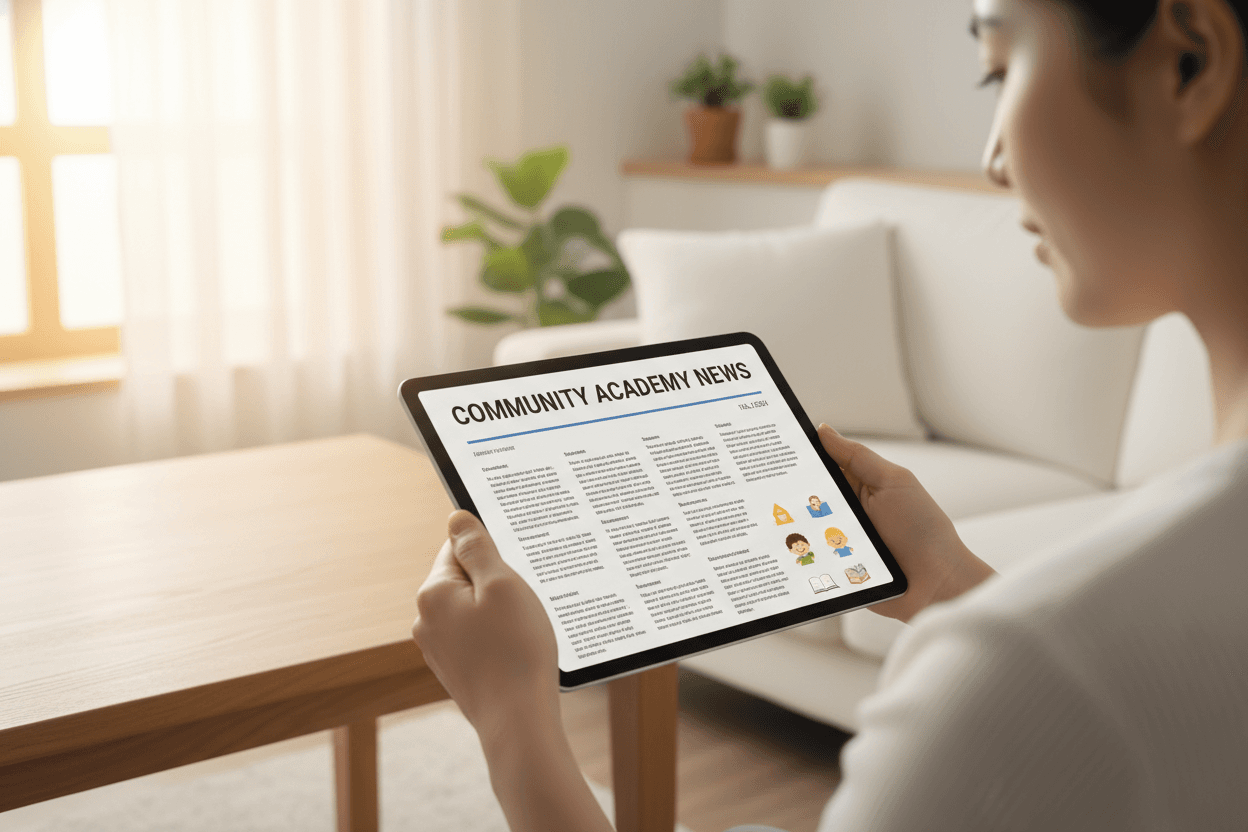
Kansas school principals navigate a communication environment with one sharp regional divide: most of the state has standard parent communication challenges, while southwest Kansas districts in Garden City, Liberal, and Dodge City face some of the highest English Language Learner rates in the country, driven by decades of meatpacking industry workforce.
This guide covers what Kansas law requires for all schools, what the state's assessment calendar demands, and why bilingual communication is not optional in specific Kansas communities.
What Kansas parents expect from school newsletters
Kansas parent expectations vary by community. In Wichita, Overland Park, and Kansas City suburbs, parents are digitally active and expect consistent email communication with clear dates and action items. In rural Kansas, where schools serve as community anchors, the newsletter carries community significance beyond just school updates. In Garden City, Liberal, and Dodge City, a significant portion of families are Spanish-speaking and will not engage with English-only newsletters.
Across all communities, the core is the same: parents want to know what their child is learning, what dates matter, and what they need to do. Lead with that. Everything else is supplementary.
Kansas education law communication requirements
Kansas has several specific legal communication requirements that principals must understand:
- Parent access to records (K.S.A. 72-6214): Kansas law grants parents the right to access student records. Schools must provide written notice of this right, typically included in annual back-to-school materials. Reference this in your fall newsletter.
- Assessment program (K.S.A. 72-3715): Kansas's assessment statute requires KAP results to be reported to parents and the community. Individual score reports go home from the state, but a principal's explanation of what the scores mean adds critical context.
- FERPA annual notification: All Kansas schools must notify parents annually of FERPA rights. Include a reference in your fall newsletter with information on how to access records.
- Title I Family Engagement Plan: Title I schools must maintain a written Family Engagement Plan and share it with parents annually. Your newsletter practices need to align with the commitments in that plan.
- Federal language access (Title VI): Schools with significant LEP populations must communicate meaningfully with those families. In southwest Kansas, this is among the most urgent compliance obligations a principal faces.
KAP and KACT: building your communication calendar
Kansas's 186-day minimum school year is longer than most states, and the KAP testing window from late March through May means testing occupies a significant chunk of the second semester. Communication planning around KAP should start in February.
In early March, send a newsletter explaining the KAP testing window for your school, which grades are tested, what subjects are covered, and what the testing experience looks like for students. Be specific about dates. If your school tests grades 5 and 7 in the first week of April, say so. Parents who know the specific dates can adjust family schedules accordingly.
For high schools, communicate the KACT (Kansas ACT for grade 11) separately from the KAP. The KACT is a different assessment experience and a different communication audience. Eleventh graders and their families care about how KACT scores relate to college readiness, which is a different conversation from elementary assessment communication.
When results come back, typically in late summer, send a school-wide communication in early September explaining your school's performance. Kansas uses a four-level proficiency scale (Level 1 through 4). Many parents are not familiar with what Level 2 or Level 3 means for their child. A newsletter that explains the scale and puts your school's results in context prevents a flood of confused parent calls.
High-ELL districts: bilingual communication is not optional
Garden City, Liberal, and Dodge City present a communication challenge unlike most Kansas districts. These southwest Kansas cities built their economies around meatpacking plants, and the workforce includes large Spanish-speaking communities that have been in Kansas for generations, as well as more recent arrivals. Some schools in these districts have ELL rates above 40 percent.
Federal Title VI is unambiguous: schools that receive federal funding must take reasonable steps to ensure that parents with limited English proficiency can meaningfully participate in school programs. For a school where 40 percent of families are Spanish-speaking, an English-only newsletter is not reasonable. It is a civil rights compliance problem.
The practical standard in these districts: send Spanish and English versions of every key communication simultaneously. For newsletters, this means either a bilingual layout (English section followed immediately by Spanish section) or two separate emails. Most principals in these communities find the bilingual layout more manageable and easier to archive.
Many southwest Kansas districts have bilingual staff, district translation coordinators, or community liaisons who can review communications before they go out. Build translation review into your production timeline, not as a last step.
Best practices for Kansas school newsletters
Kansas's longer school year (186 days minimum) gives you more opportunities to build parent relationships through newsletters than most states. Use that time.
Weekly newsletters outperform monthly ones in parent engagement. Monthly newsletters try to do too much, run long, and arrive too infrequently to keep parents current on the events and deadlines that matter in a given week.
Use inline email delivery. Kansas parents check email on phones, often in short windows between work and family obligations. A newsletter that arrives as a formatted email gets read. A newsletter that requires clicking a link and loading a separate page loses parents at every step.
In southwest Kansas high-ELL districts, include Spanish content from the beginning of the year, not just for key events. Families who receive consistent bilingual communication trust the school more than families who only get Spanish when something important happens.
School newsletter calendar for Kansas principals
Build your annual newsletter calendar around these Kansas-specific anchor points:
- August: Back-to-school welcome, parent rights notice, annual FERPA reference, communication schedule
- September/October: KAP results from prior year explained, fall parent-teacher conferences
- November: Thanksgiving break schedule, first quarter or first trimester results
- February/March: KAP and KACT preparation communication, testing window dates
- April/May: Active testing period reminders, spring events, end-of-year schedule
- May/June: End-of-year summaries, summer programs, next year enrollment
Building a newsletter system for Kansas schools
The goal is a system that handles your K.S.A. 72-3715 and K.S.A. 72-6214 obligations without requiring you to think about compliance every week. Set up a template with your annual parent rights section in the fall, your KAP communication section in the spring, and your bilingual layout if you are in a high-ELL district. Update the content each week. The compliance pieces are already there.
Daystage helps Kansas schools build that template and maintain it consistently. Schools in Garden City and Liberal use Daystage to send bilingual newsletters that meet both parent engagement goals and federal language access requirements from the same platform. Start with the free plan and build from there.
Get one newsletter idea every week.
Free. For teachers. No spam.
Frequently asked questions
What does Kansas law require schools to communicate to parents each year?
K.S.A. 72-6214 gives parents the right to access student records and requires schools to provide written notice of that right. K.S.A. 72-3715 governs the Kansas Assessment Program and requires KAP results to be reported to parents and the community. Schools must also provide annual FERPA notification and comply with their district's board policies on parent communication. Title I schools must maintain a Family Engagement Plan with specific communication commitments.
What is the KAP and when should principals communicate about it?
The Kansas Assessment Program (KAP) tests grades 3 through 8 in English Language Arts and Mathematics, with science tested at specific grade levels. Grade 11 students take the KACT (Kansas ACT). The KAP testing window runs late March through May. Principals should send a dedicated newsletter in early March explaining what KAP tests, which grades are assessed, and what families can do to support their students. When results come back in summer or fall, communicate what the score levels mean in plain language.
How should Kansas principals handle communication in high-ELL districts like Garden City, Liberal, or Dodge City?
Schools in Garden City, Liberal, and Dodge City serve some of the highest ELL rates in Kansas, driven by the meatpacking industry workforce. Federal Title VI creates a clear obligation to communicate meaningfully with LEP families. In practice, this means sending Spanish translations of all key school communications including newsletters, assessment notices, and event announcements. These schools should treat bilingual communication as a baseline operational requirement, not a special accommodation. Many of these districts have bilingual staff or translation services built into their communication workflows.
Does Kansas require schools to communicate in languages other than English?
Kansas does not have a standalone state language access law, but federal Title VI of the Civil Rights Act requires schools that receive federal funding to communicate meaningfully with parents who have limited English proficiency. In Kansas districts with high ELL rates, particularly in southwest Kansas meatpacking communities, this creates a practical and legal obligation to translate key communications. Schools that fail to do this face federal civil rights compliance risk, not just a gap in parent engagement.
What is the best newsletter tool for Kansas schools?
Daystage is used by schools across Kansas to send professional newsletters that deliver directly in parent email inboxes. Kansas schools in high-ELL districts use Daystage to send bilingual newsletters with Spanish and English content in the same email, meeting both parent engagement goals and federal language access obligations. The free plan includes school-specific templates and no credit card is required.

Adi Ackerman
Author
Adi Ackerman is a former classroom teacher and curriculum writer with 8 years in K-8 schools. She writes about school communication, parent engagement, and what actually works in real classrooms.
More for Guides
Ready to send your first newsletter?
3 newsletters free. No credit card. First one ready in under 5 minutes.
Get started free