

School Newsletter Requirements in Iowa: What Principals Need to Know
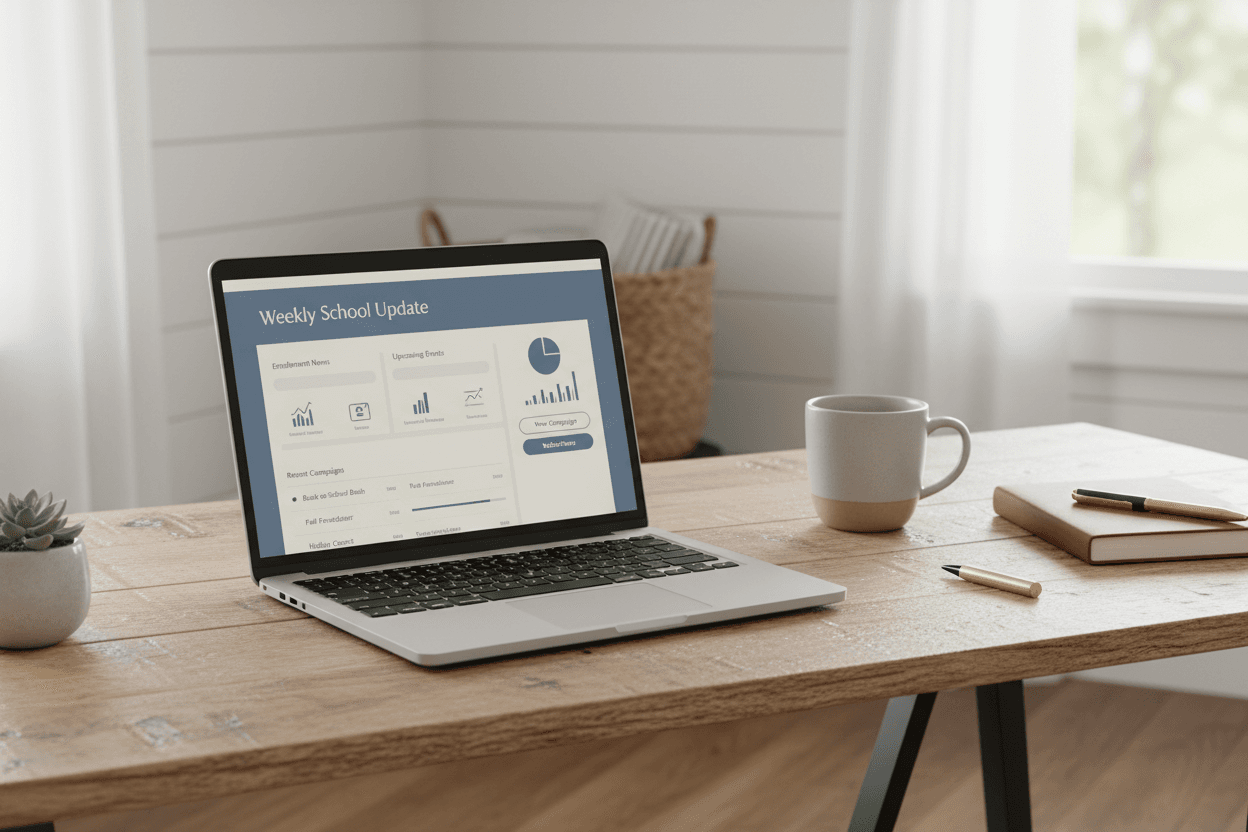
Iowa's school communication environment is shaped by two realities that rarely appear together in other states. First, Iowa has a long tradition of locally controlled schools, which means communication requirements come as much from your district's board policies as from state code. Second, Iowa's rural districts often function as genuine community centers, giving school newsletters a cultural weight that goes far beyond compliance.
This guide covers what Iowa law actually requires, what the state's unique context demands, and how to build a newsletter system that serves both compliance and community.
What Iowa parents expect from school newsletters
Iowa parent expectations differ significantly by community. In Des Moines or Iowa City, parents are digitally active and expect timely, organized digital communication. In rural districts, the newsletter may arrive by email and still get printed and posted on the refrigerator. In Marshalltown, Storm Lake, or Perry, your parent community includes families from Mexico and Guatemala who may be navigating the US school system for the first time. In Sioux City, you may have families from the Somali diaspora.
What these groups share: they want to know what their child is doing, what is coming up, and what they need to do. Lead with the concrete. Families in rural Iowa who find out about the school's harvest festival in the newsletter will show up. Families in Marshalltown who get a Spanish-language version of the newsletter for the first time will share it with their neighbors.
Iowa education law communication requirements
Iowa's communication requirements blend state code, local board policy, and federal requirements:
- Parent notification (Iowa Code 279.68): Iowa law requires school boards to establish and communicate parent notification policies. Your district's specific policies may require more than state minimums. Review your district's 700-series board policies for family engagement requirements.
- State Board standards (Iowa Code 256.7): The State Board of Education sets standards for student assessment reporting. Schools must communicate ISASP results to parents in a form that is understandable and useful.
- FERPA annual notification: All Iowa schools must notify parents annually of their rights under FERPA. This is typically included in the student handbook but should be referenced in your fall newsletter.
- Title I Family Engagement Plan: Title I schools must maintain a written plan that specifies communication commitments. Your newsletter cadence and content should align with your plan's promises.
- Federal language access (Title VI): Iowa schools that serve significant populations of limited English proficient families are federally required to communicate meaningfully with those families. This applies most acutely in Marshalltown, Storm Lake, Perry, and Sioux City.
ISASP: what principals need to communicate and when
The Iowa Statewide Assessment of Student Progress replaced the longstanding Iowa Assessments in 2019. Some Iowa parents are still adjusting to the new name and new score scale. This creates a communication opportunity.
In late March, send a newsletter section explaining that ISASP testing occurs in late April and May, which grades are tested, and what subjects are covered (reading, mathematics, science). Explain what families can do: make sure students sleep well, eat breakfast, and arrive on time during the testing window. Avoid scheduling family trips or medical appointments during test days if possible.
In late August or September, when ISASP results come back from the state, send a school-wide communication explaining the score scale (Iowa has moved to a different proficiency scale than the old Iowa Assessments used), how your school performed overall, and where parents can get more information about their individual child's results.
Iowa's local control tradition: why your district policy matters
Iowa's school governance gives local boards significant authority. This means communication requirements that would be set at the state level in other states may be set in your district's board policy manual in Iowa. A board policy requiring monthly written communication to families, for example, is as legally binding as a state code provision.
Most Iowa districts have policies in the 700 series (Home-School-Community Relations) that specify parent notification expectations. Pull these policies before school starts each year and make sure your newsletter cadence and content align with them. If you are a new principal in an Iowa district, reading the 700-series policies is as important as reading state code.
Rural Iowa newsletters: community communication beyond compliance
In Iowa's rural districts, the school newsletter carries weight that urban principals rarely experience. When the Woodward-Granger school newsletter mentions that sixth graders won the county spelling bee, families print it and share it. When the newsletter runs a photo of the FFA students at the state fair, it circulates on Facebook. The newsletter is a community document, not just a school document.
Iowa rural principals who understand this build newsletters that include community connections alongside academic updates. A newsletter that mentions the local harvest festival and the school's float in the parade builds more community trust than ten newsletters that only discuss test scores. This is not fluff. It is relationship capital that shows up as community support for the school budget and bond referendums.
Multilingual communication in Iowa's growing communities
Iowa's Spanish-speaking communities in Marshalltown, Storm Lake, and Perry developed largely through the meatpacking industry. These are long-established communities with high rates of US-born children of immigrant parents. Sending Spanish translations of your newsletter is not a novelty in these communities. It is baseline respect.
Sioux City's Somali community is newer, and many families are refugees who came through formal resettlement programs. These families often have limited formal education and may need more than a translated newsletter. Visual communication, personal outreach from bilingual community liaisons, and phone calls supplement written communication in these communities. Your newsletter is the starting point, not the whole system.
Building a newsletter system for Iowa schools
Iowa's 180-day minimum school year and April through May ISASP testing window create the anchor points for your communication calendar. Build your template around those dates and fill in the rest with community, classroom, and compliance content.
Weekly newsletters outperform monthly ones in Iowa parent engagement, including in rural districts. The common assumption that rural parents prefer less frequent communication is not supported by what actually happens when rural schools send weekly newsletters. Families engage more, not less, when they hear from the school consistently.
Daystage helps Iowa schools build a newsletter system that serves compliance, community, and multilingual families from a single platform. Iowa schools using Daystage set up their template once, including ISASP communication sections and translated content workflows, then update the content each week. Start with the free plan and adjust from there.
Get one newsletter idea every week.
Free. For teachers. No spam.
Frequently asked questions
What does Iowa law require schools to communicate to parents each year?
Iowa Code 279.68 requires school boards to establish parent notification policies and communicate them to families. Schools must notify parents about student assessment results under Iowa Code 256.7, share school improvement plans, and provide annual FERPA notification. Title I schools must maintain an approved Family Engagement Plan with specific communication commitments. Iowa's tradition of local control means many communication requirements are set at the district level rather than state level, so your district's policy manual is as important as state code.
What is the ISASP and when should principals communicate about it?
The Iowa Statewide Assessment of Student Progress (ISASP) replaced the Iowa Assessments in 2019. ISASP tests grades 3 through 11 in reading, mathematics, and science during a late April through May window. Principals should send a communication in late March explaining what ISASP tests, which grades are assessed, and what the testing window looks like for families. When results come back in late summer, send a plain-language summary explaining the score scale and how your school performed.
How does Iowa's local control tradition affect school newsletter requirements?
Iowa's school governance structure gives local school boards significant authority over communication policies. This means your district's board policy on parent notification may be more specific than state code, and you need to know both. Check your district's board policy manual, particularly policies under the 700 series (Home-School-Community Relations), for communication requirements specific to your district. In Iowa, a principal who follows state code but misses a local board policy is still out of compliance.
How should Iowa principals communicate with rural families and multilingual communities?
Rural Iowa schools often serve as genuine community centers, and newsletters carry social weight beyond school updates. In these communities, the newsletter that mentions a student's accomplishment, a community event, or a local connection gets read, shared, and talked about. For Iowa communities with significant Spanish, Somali, or other language-speaking populations, particularly in Marshalltown, Storm Lake, Perry, and Sioux City, federal Title VI creates an obligation to communicate meaningfully with LEP families. Most Iowa districts in these communities have translation services or bilingual staff who should be part of your newsletter production process.
What is the best newsletter tool for Iowa schools?
Daystage is used by schools across Iowa to send consistent, professional newsletters that deliver directly in parent email inboxes. Iowa schools using Daystage, including rural districts where the newsletter carries community weight, set up their ISASP communication templates once and update content each cycle. The free plan includes school-specific templates and no credit card is required to start.

Adi Ackerman
Author
Adi Ackerman is a former classroom teacher and curriculum writer with 8 years in K-8 schools. She writes about school communication, parent engagement, and what actually works in real classrooms.
More for Guides
Ready to send your first newsletter?
3 newsletters free. No credit card. First one ready in under 5 minutes.
Get started free