

How to Write Your School Newsletter in 30 Minutes or Less
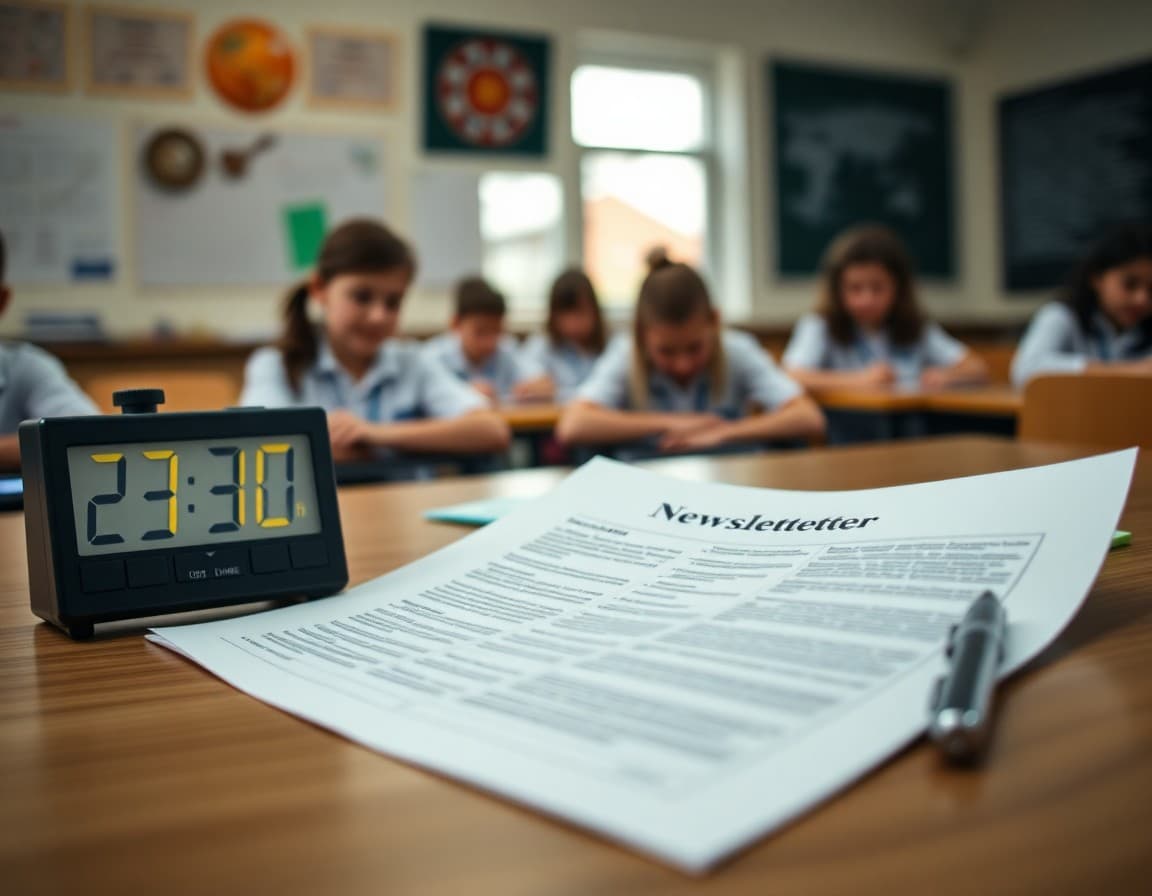
You have 12 minutes before your next class, a staff meeting at lunch, and the newsletter was supposed to go out this morning. Sound familiar? Writing the school newsletter does not have to be the task that always gets pushed to Friday afternoon. With the right setup, you can write a quality newsletter in 30 minutes or less, every single week.
The Real Reason Newsletters Take Too Long
Most newsletters take a long time not because there is too much to write, but because the writer starts from scratch every time. No structure, no saved content, no clear stopping point. The blank page problem is a systems problem, not a writing problem. Fix the system and the writing gets easy.
Build a Template You Never Change
A fixed template is the single biggest time saver in newsletter writing. Decide on your recurring sections once: a welcome line, this week in class, upcoming dates, and a closing note. Every week, you fill in the same buckets. Parents learn what to expect. You stop reinventing the format. A simple structure like this works well:
"This week we started our unit on fractions. Students practiced with pattern blocks and will move to number lines next week. Upcoming: picture day Thursday, read-a-thon kickoff Friday. Questions? Reply to this email."
Collect Content as You Go
The hardest part of writing quickly is remembering what happened. Keep a running list during the week, not during newsletter time. A note in your phone, a sticky on your monitor, or a two-line email draft all work. By Thursday, you have raw material to pull from instead of a memory exercise.
Write in One Sitting, Not Three
Fragmented writing is slow writing. Every time you pick the newsletter back up after stepping away, you spend two or three minutes re-reading what you wrote to find your place. Block 30 minutes, close your email, silence your phone, and finish the draft in one pass. Imperfect and done beats perfect and perpetually in progress.
Reuse Last Week's Shell
Open last week's newsletter and update it. The greeting format, section headers, sign-off, and contact information are identical every week. You are only replacing the middle content. This alone can save 10 minutes compared to starting fresh.
Set a Word Limit and Hold It
Newsletters that drag on take longer to write and get read less. Aim for 150 to 250 words for a weekly classroom newsletter. If something needs more space, link to a separate document. Knowing you have a word limit forces you to prioritize. You stop over-explaining and start choosing the three things that actually matter this week.
Proofread Once, Send
Read the finished newsletter once out loud. This catches the typos and the sentences that made sense when you wrote them but fall apart when spoken. Do not read it three times hoping it gets better. If the facts are right and the tone is warm, send it. A newsletter that goes out on time with one small imperfection is always better than a polished one that arrives two days late.
The Right Tool Cuts Time in Half
Platform choice matters. If you are writing newsletters in a general email tool or a word processor, you are spending time on formatting that should be invisible. Daystage gives teachers a structured template where sections are already laid out, dates auto-format, and sending to your entire parent list takes one click. The tool does the scaffolding so you can spend your 30 minutes on the writing.
Get one newsletter idea every week.
Free. For teachers. No spam.
Frequently asked questions
How long should it take to write a school newsletter?
For most teachers and principals, 30 to 45 minutes is a realistic target once you have a repeating template and a content list ready. The first few newsletters usually take longer because you are building the habit. After three or four cycles, you will know exactly what goes in each section and the writing becomes mechanical in the best way.
What is the fastest way to gather content for a newsletter?
Keep a running note on your phone or a sticky note on your desk. Any time something newsletter-worthy happens during the week, write it down immediately. By the time you sit down to write, you have a raw list to pull from instead of staring at a blank page trying to remember what happened.
Should I write the newsletter all at once or in pieces?
Writing in one focused session is almost always faster than spreading it over several days. Fragmented writing means you spend time re-reading what you already wrote to pick up where you left off. Block 30 minutes, close distractions, and finish in one pass.
Can I reuse sections from previous newsletters?
Yes, and you should. Standing sections like reminders, the calendar, and contact information can be copied and updated in seconds. The only parts that need fresh writing each week are the current stories and announcements. Treating boilerplate as boilerplate frees you to focus on the new content.
What tool helps teachers write newsletters faster?
Daystage is built for exactly this workflow. It gives you a reusable template with pre-built sections so you never start from scratch, an event block that auto-populates dates, and a one-click send to every family on your list. Teachers who switch from email or word processors typically cut their newsletter time in half within the first month.

Adi Ackerman
Author
Adi Ackerman is a former classroom teacher and curriculum writer with 8 years in K-8 schools. She writes about school communication, parent engagement, and what actually works in real classrooms.
More for Guides
Ready to send your first newsletter?
3 newsletters free. No credit card. First one ready in under 5 minutes.
Get started free