

Delaware Elementary School Newsletter Guide for Teachers
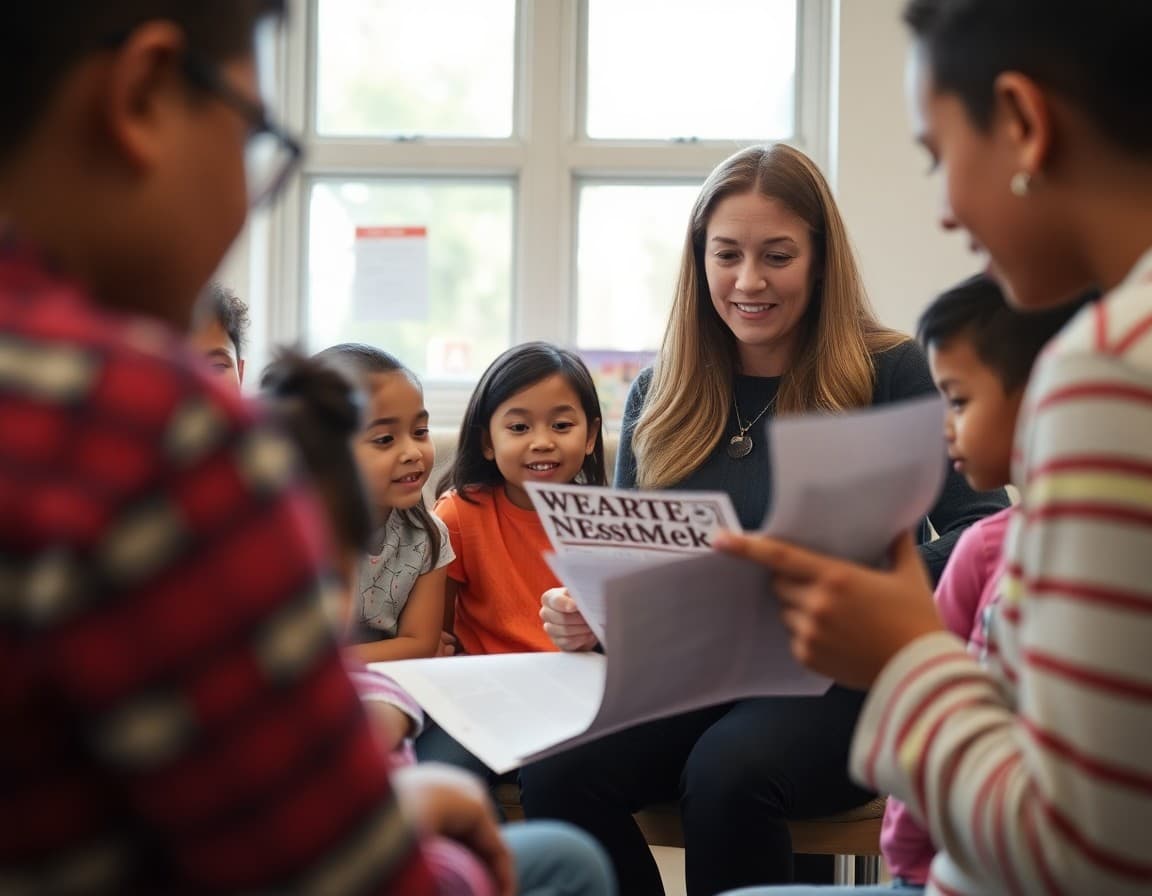
Delaware is the smallest state by area but has significant regional diversity between Wilmington's urban communities, the Dover area's military and government families, and Sussex County's agricultural and coastal communities. Each community has different communication needs, and a newsletter that reflects your specific school context will reach more families than a generic Delaware template.
Communicate DCAS Testing Information
Delaware's DCAS assessments measure ELA and math proficiency in grades 3-8. Before the spring testing window, your newsletter should explain what DCAS covers, what the five performance levels mean (Beginning, Developing, Approaching, Meeting, Exceeding), and what families can do to support their student. A note that adequate sleep and regular breakfast are the most research-supported test preparation strategies for elementary students is both accurate and actionable for families who want to help.
Cover Delaware's Early Literacy Focus
Delaware's emphasis on early literacy in grades K-3 means elementary teachers communicate frequently about reading development. Your newsletter should explain which screener your school uses to identify students who need reading support, what the screener measures, and what "significant reading deficiency" means in Delaware's context. For families whose students receive additional reading support, a newsletter that describes the specific intervention -- what it is, how often it happens, what skills it targets -- turns an abstract program name into something families understand and can reinforce at home.
Reach Delaware's Sussex County Latino Community
Georgetown and surrounding Sussex County communities have large Mexican and Central American families connected to the poultry industry. This community is similar in profile to Spanish-speaking agricultural communities in other Southern states: irregular work schedules, limited transportation, and often limited formal education background. Newsletters for these families should be written at a lower reading level, include activities that work without internet access, and connect families to adult ESL resources available through Delaware Technical Community College in Georgetown. The Multicultural Community Center and La Esperanza in Milford are community organizations that can amplify school communication in these communities.
A Weekly Delaware Elementary Template
Week of [Date] -- [Teacher]'s Class
What we're learning: [ELA and math focus]
Reading note: [Current book or skill]
Try at home: [One specific activity]
DCAS note: [If testing approaching]
Upcoming dates: [Events]
Contact: [Email and response time]
Address Delaware Military Family Communication
Dover Air Force Base brings significant military family populations to the Dover area and Kent County. Military families have unique communication needs: frequent moves that require quick school transitions, deployment-related family stress, and potential EFMP (Exceptional Family Member Program) connections for students with disabilities. A newsletter that acknowledges the military community context -- mentioning EFMP resources, school liaison officer contact information, and credit transfer procedures for students who transfer during the year -- builds connection with these families who might otherwise feel invisible in school communication.
Connect Learning to Delaware's Standards
Delaware uses Common Core-aligned standards for ELA and math. Translate these into home activities in your newsletter: "We are working on understanding multiplication as groups of equal objects -- ask your child to show you three groups of four apples and tell you how many total." This translation makes the standard actionable without requiring families to read the Delaware Academic Standards document.
Communicate Attendance Expectations Clearly
Delaware has invested significantly in addressing chronic absenteeism. A newsletter that explains what chronic absenteeism means (missing 10 percent or more of school days) and how it affects a student's learning and reading development gives families factual context without a punitive tone. Include the school's attendance support resources so families who are experiencing housing, health, or transportation challenges know the school can help rather than only penalize.
Archive Newsletters
Post all newsletters to your class website or parent portal. Delaware's family engagement policies in most districts include documentation requirements for regular communication. An archive satisfies these requirements and allows families who missed issues to catch up. For Title I schools, the newsletter archive also supports the annual family engagement review that is part of Delaware's Title I program monitoring process.
Get one newsletter idea every week.
Free. For teachers. No spam.
Frequently asked questions
What assessments should Delaware elementary newsletters cover?
Delaware uses DCAS (Delaware Comprehensive Assessment System) for ELA and math in grades 3-8 and the Dynamic Learning Maps (DLM) alternate assessment for students with significant cognitive disabilities. Before DCAS testing windows, your newsletter should explain what the assessment covers, what the performance levels mean, and how families can support their student. Delaware's testing window runs from late March through early May.
What are Delaware's early literacy requirements relevant to elementary newsletters?
Delaware implemented the Early Success Initiative with a focus on early literacy in grades K-3. Schools use state-approved screeners to identify students who need reading support. Elementary teachers, particularly in grades K-3, should communicate clearly about reading development progress, what the school's screener shows, and what supports are available for students identified as needing additional help.
What is Delaware's family engagement requirement?
Delaware's Title I schools are required to develop and implement parent engagement policies and school-parent compacts. Delaware's Department of Education also supports family engagement through its Family and Community Engagement office. While newsletters are not individually mandated at the state level, they are the most common tool for meeting regular written communication requirements in most Delaware districts.
How should Delaware elementary teachers reach Spanish-speaking families?
Delaware's Spanish-speaking population has grown significantly, particularly in the Wilmington area, Georgetown in Sussex County (which has a large Mexican community), and the Dover area. Sussex County's poultry industry has brought significant Spanish-speaking families to rural Delaware communities. Translation resources vary by district; many Sussex County schools have bilingual staff given the size of their Spanish-speaking communities.
Does Daystage work for Delaware elementary school newsletters?
Yes. Daystage lets Delaware elementary teachers send formatted newsletters to families. The platform supports consistent weekly or monthly communication and works on any device, which matters for teachers who prepare newsletters outside of school hours.

Adi Ackerman
Author
Adi Ackerman is a former classroom teacher and curriculum writer with 8 years in K-8 schools. She writes about school communication, parent engagement, and what actually works in real classrooms.
More for Guides
Ready to send your first newsletter?
3 newsletters free. No credit card. First one ready in under 5 minutes.
Get started free