

School Newsletter Requirements in Alabama: What Principals Must Know
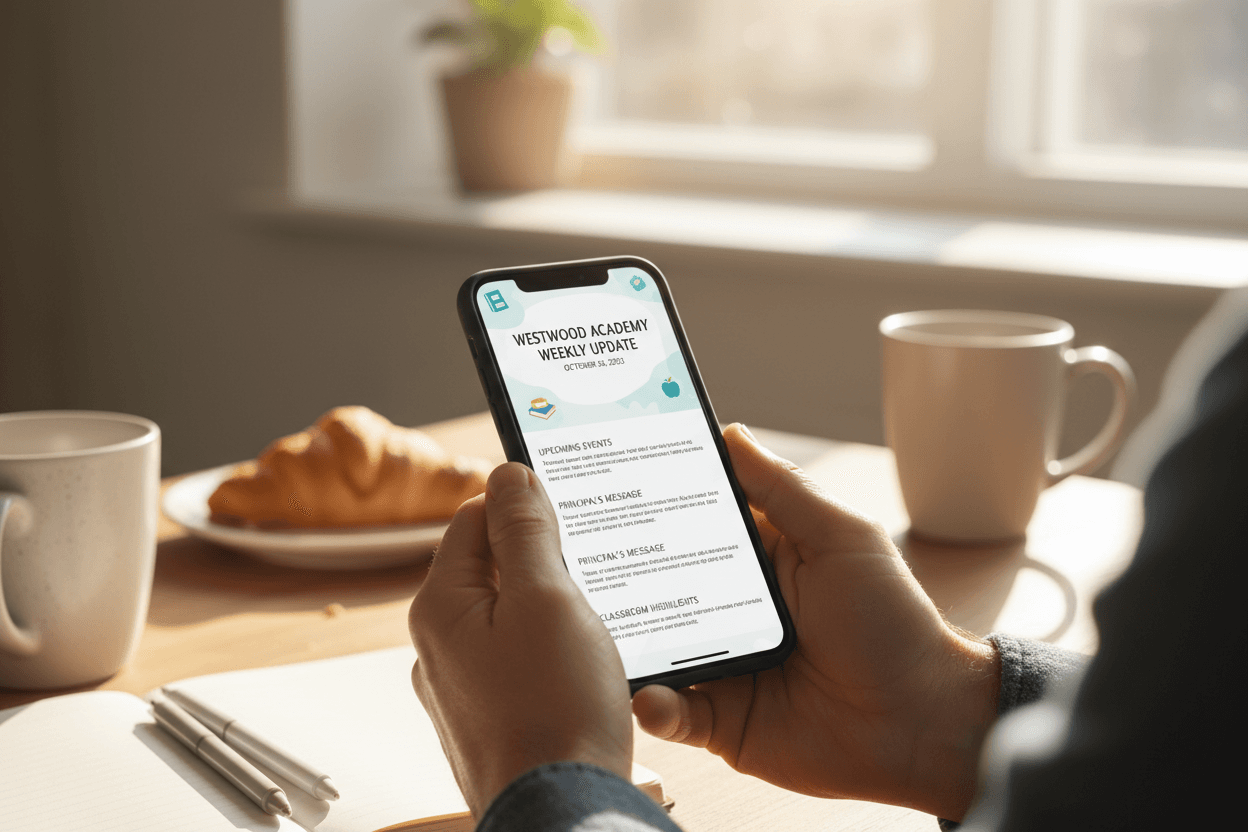
Alabama principals operate under a clear but often underestimated set of communication obligations. Between state law, ALSDE requirements, and federal Title I rules, there is quite a bit that must go home to families each year. What often gets lost is that these requirements are not just compliance checkboxes. They are the floor, not the ceiling, of what strong family communication looks like.
This guide covers what Alabama law and ALSDE policy actually require, what best practices look like for the state's specific context, and how to build a newsletter rhythm that keeps your school compliant and your parent community informed.
What Alabama law requires schools to communicate
Alabama Code § 16-11-17 is the cornerstone statute for principal communication obligations. It places responsibility on the principal to keep the community and parents informed about school operations, discipline policies, and student progress. While the statute does not specify a newsletter format or frequency, it creates a legal duty that courts and ALSDE have interpreted broadly.
Beyond § 16-11-17, Alabama schools must:
- Distribute ALSDE annual report cards: The Alabama State Department of Education requires schools to make their annual report cards accessible to families. Principals should actively communicate report card results, not just post them on a website.
- Notify parents of ACT Aspire testing: For grades 3-8, advance notice of the ACT Aspire testing window (typically April-May) is expected. Parents should know when their child will test, what the assessment covers, and how to support their child at home.
- Communicate about the Alabama High School Graduation Exam: High school principals must ensure parents understand graduation requirements tied to this assessment well before students face it.
- Title I Family Engagement Policy: Title I schools must write, share, and update a Family Engagement Policy each year. This policy should describe how the school will communicate with families throughout the year, including newsletters.
Alabama State Department of Education reporting and what it means for newsletters
ALSDE's annual report card system gives parents standardized information about school performance, but raw data without explanation does not serve families well. When the ALSDE report card data is released, principals who send a newsletter that contextualizes the numbers, explains what the ratings mean, and describes what the school is doing about any gaps build far more parent trust than schools that let the data speak without interpretation.
A practical approach: when ALSDE report card data comes out, dedicate one newsletter issue to explaining it. Use plain language. Answer the question parents are actually asking: is this school doing well, and what does that mean for my child?
ACT Aspire communication for Alabama grades 3-8
Alabama uses ACT Aspire for grades 3-8 in English, math, reading, and science, with testing typically running in April and May. For parents who are unfamiliar with the assessment, the name alone does not explain much. Effective ACT Aspire communication includes:
- A pre-testing newsletter in March explaining what ACT Aspire measures and why it matters for students
- Practical tips for supporting students during testing (sleep, breakfast, no unusual activities)
- A post-results newsletter in June explaining score categories and what they indicate about readiness
- A fall newsletter connecting prior year results to the current year's academic goals
This four-touchpoint approach means parents are never surprised by ACT Aspire results and have context to ask useful questions at parent-teacher conferences.
Alabama's growing Spanish-speaking communities and language access
Birmingham, Huntsville, and Mobile have seen significant growth in Spanish-speaking families over the past decade. For principals in these cities and the surrounding counties, language access is both a legal requirement under Title VI and a practical necessity for meaningful family engagement.
Schools that wait for parents to request translation miss families who do not know they can ask. Build Spanish translation into your standard newsletter workflow. Even a brief Spanish summary attached to an English newsletter signals to families that the school sees them and is making an effort to include them. Many Alabama schools in high-growth areas now send fully bilingual newsletters as their default.
Alabama school calendar events that need newsletter coverage
Alabama's 180-day minimum school calendar creates predictable communication needs throughout the year:
- Back-to-school registration and supply list distribution (August)
- ACT Aspire testing window (April-May) with advance notice beginning in March
- Alabama High School Graduation Exam dates for applicable grades
- ALSDE report card release (fall) with principal interpretation
- Parent-teacher conference scheduling and sign-up logistics
- School emergency and safety plan updates, required under Alabama law
- End-of-year promotion and retention decisions and the communication timeline around them
How Alabama principals build effective newsletter systems
The most common failure pattern in Alabama school newsletters is inconsistency. A strong August newsletter, a decent September one, then months go by. The school calendar fills up, testing pressure hits, and newsletters stop. By January, parents are calling the office for information that should have come home in a newsletter.
The fix is a template that carries your compliance requirements in permanent sections and needs only the current-week content updated. Assign one staff member to coordinate newsletter content collection from teachers each week. Set a publishing day and stick to it. Thursday afternoon newsletters, for example, give families the weekend to read and respond to any requests for the following week.
Schools using Daystage in Alabama set up their template once with the required sections for ALSDE report card language, ACT Aspire communication, and parent rights information, then update the variable content each week. The whole process takes under 30 minutes once the system is running.
What strong Alabama school newsletters include
The best Alabama school newsletters share a few characteristics. They are specific about dates (not "next week" but "Thursday, April 17"). They explain state assessments in plain language rather than assuming parents know what ACT Aspire or the graduation exam means. They acknowledge the school's Spanish-speaking families with translated content. And they are consistent enough that parents have come to expect them and actually look for them.
If you are building a newsletter system from scratch or rebuilding one that has become inconsistent, Daystage offers a free plan that includes school-specific templates and lets you send your first newsletters at no cost. No credit card required.
Get one newsletter idea every week.
Free. For teachers. No spam.
Frequently asked questions
What does Alabama law require schools to communicate to parents each year?
Alabama Code § 16-11-17 requires principals to keep parents informed about school operations, policies, and student progress. Beyond that baseline, schools must send home annual report cards from the Alabama State Department of Education (ALSDE), communicate ACT Aspire results for grades 3-8, and provide advance notice of the Alabama High School Graduation Exam. Title I schools must also maintain a written Family Engagement Policy and share it with parents at the start of each school year.
Does Alabama have a specific law about how often schools must contact parents?
Alabama Code § 16-11-17 establishes the principal's duty to keep parents informed but does not prescribe a specific newsletter frequency. However, ALSDE's Title I compliance requirements and the state's annual report card mandate create natural communication checkpoints throughout the year. Most Alabama districts set their own policies requiring at minimum monthly contact with families.
What language access requirements apply to school newsletters in Alabama?
Alabama schools are subject to Title VI of the Civil Rights Act, which requires meaningful access to school communications for families with limited English proficiency. In Birmingham, Huntsville, and Mobile, where Spanish-speaking populations have grown significantly, principals should provide Spanish translations of key communications. ALSDE guidance recommends identifying LEP families at enrollment and building translation into standard workflows rather than waiting for requests.
How should Alabama principals communicate ACT Aspire results to parents?
ACT Aspire results for grades 3-8 typically arrive in June. Principals should send a newsletter explaining what the score levels mean (Ready, Close, In Need of Support), how the school's performance compares to state benchmarks, and what support is available for students who did not meet expectations. A follow-up in August before the new school year begins gives families context before they see report cards.
What is the best newsletter tool for Alabama schools?
Daystage is used by schools across Alabama to send consistent, professional newsletters that reach parents directly in their email inboxes. It includes school-specific templates, supports bilingual communication for Alabama's growing Spanish-speaking communities, and the AI writing tool helps staff generate content in minutes. Schools using Daystage typically cut newsletter production time by more than half.

Adi Ackerman
Author
Adi Ackerman is a former classroom teacher and curriculum writer with 8 years in K-8 schools. She writes about school communication, parent engagement, and what actually works in real classrooms.
More for Guides
Ready to send your first newsletter?
3 newsletters free. No credit card. First one ready in under 5 minutes.
Get started free