

Delaware ELL School Newsletter: Reaching Multilingual Families
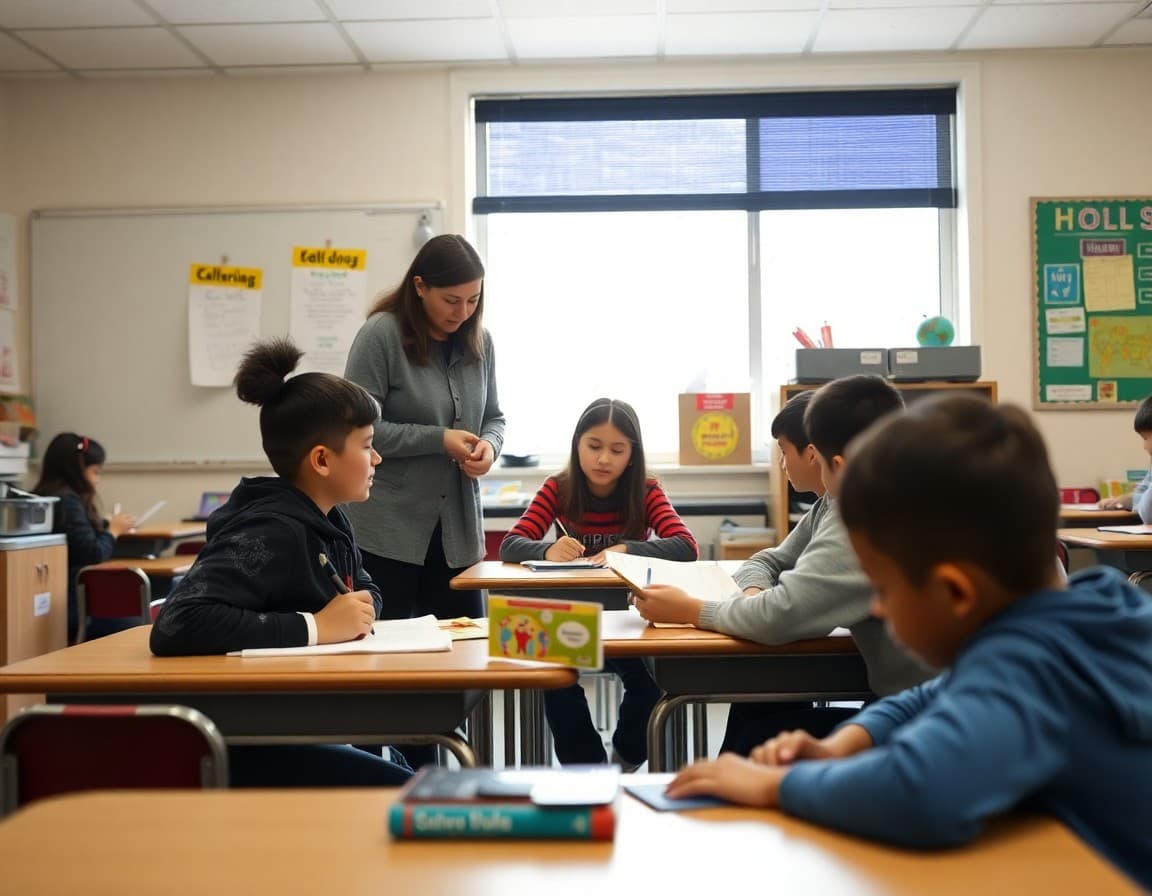
Delaware's ELL population reflects two distinct regional contexts: northern Delaware's diverse urban communities in and around Wilmington, and Sussex County's largely Spanish-speaking agricultural communities. A newsletter strategy that serves both requires understanding what is different about each context, not applying a single statewide template.
Understand Delaware's Regional ELL Differences
Wilmington and Newark ELL students come from diverse backgrounds including Spanish-speaking families, Haitian Creole speakers, Burmese refugees, and growing Arabic-speaking communities. Sussex County ELL students are predominantly Spanish speakers from Mexico and Central America, concentrated in the poultry processing corridor. Each community has different literacy levels, different relationships with formal education, and different community resources available. Review your school's home language survey data every fall and adjust your translation priorities based on who is actually in your classroom that year.
Communicate WIDA ACCESS Results Clearly
Delaware uses WIDA ACCESS as its annual ELP assessment. After results arrive, send a newsletter that translates scores into plain language. "Your student scored 3.8 Overall. The threshold for exiting ELL services in our district is 4.5 Overall with no domain below 3.5. Your student is strongest in Listening (4.2) and working toward the standard in Writing (3.1). We will focus on academic writing over the next semester." This specificity gives families a concrete understanding of where their student stands and what the program is targeting, which builds trust and engagement.
Reach Sussex County Families Through Community Channels
Many Sussex County Spanish-speaking families access school information through community channels rather than school portals or email. La Esperanza, Catholic Charities of Delaware in Georgetown, local churches with Spanish-language services, and word-of-mouth through family networks are more reliable distribution channels for newsletters than email alone. Partnering with these community organizations to distribute physical newsletters expands your reach significantly in communities where digital access is limited and trust in formal institutions requires building through community relationships first.
A Delaware ELL Family Newsletter Template
ELL Program Update -- [Month]
Your student is working on: [Academic language skill in plain language]
ACCESS update: [Test date or score translation if applicable]
Home activity: [Specific practice in home language]
Community resource: [One relevant Delaware resource]
Important dates: [Events with interpreter availability noted]
Contact: [ELL coordinator name, phone]
Support Wilmington's Haitian Creole Community
Wilmington has a growing Haitian Creole-speaking community that is distinct from the city's Spanish-speaking families in both language and cultural context. Haitian families in Delaware often arrived through multiple migration steps -- Haiti to Florida or New York, then to Delaware -- and may have complex educational histories. Haitian Creole is a distinct language from French, and translations into French do not serve these families. Working with Catholic Charities of Delaware or community organizations connected to the Haitian community to identify translators and liaisons for Haitian Creole-speaking families ensures they receive the same quality of communication as Spanish-speaking families.
Include Delaware-Specific Resources for Immigrant Families
Delaware has several organizations that support immigrant families: the Latin American Community Center in Wilmington, La Esperanza in Milford, Catholic Charities of Delaware, the Delaware Center for Justice, and community health centers in Georgetown and Wilmington that provide interpreter services. Including one of these resources in each quarterly newsletter positions the school as a connector to the broader support network and builds the trust that increases family engagement in ELL programs. Families who know the school sees them as complete people -- not just as parents of students -- show up more consistently for conferences and parent advisory meetings.
Maintain Home Language and Build English Together
A brief explanation of additive bilingualism research belongs in every annual ELL newsletter. "Students who read Spanish at home develop stronger academic English vocabulary. We encourage families to read and discuss books, news, and stories in Spanish or any home language." This message is particularly important for Delaware families who have received incorrect advice from well-meaning community members or previous schools that speaking English only at home will help their child learn English faster. Correcting this misconception through the newsletter benefits the student's language development directly.
Build Two-Way Communication
Delaware ELL families who feel that the school genuinely wants their input are more engaged throughout the year. Include a response mechanism in every newsletter: a phone number for questions in Spanish or the relevant home language, a note about interpreter availability for upcoming conferences, or a QR code linking to a brief multilingual form where families can ask questions. The school's ELL advisory committee -- if your district has one -- should be mentioned with meeting dates and an explicit welcome for ELL parent participation. Families who know they can shape the program through formal channels participate in those channels, which improves program quality for all ELL students.
Get one newsletter idea every week.
Free. For teachers. No spam.
Frequently asked questions
What ELP assessment does Delaware use?
Delaware uses WIDA ACCESS for ELLs as its annual English language proficiency assessment. ACCESS measures listening, speaking, reading, and writing on a 1-6 scale. Delaware's exit threshold is an overall composite score of 4.5 with no domain below 3.5. Your newsletter before testing should explain what ACCESS measures, and your post-results newsletter should translate scores into plain language that families can act on.
What language communities make up Delaware's ELL population?
Spanish is the home language for the large majority of Delaware ELL students. Delaware has significant Spanish-speaking communities in Wilmington, Newark, Dover, and Sussex County -- with Sussex County's Mexican and Central American community concentrated in Georgetown, Seaford, and Milford. Delaware also has growing Haitian Creole, Burmese, and Arabic-speaking communities in Wilmington and Newark. The specific language profile varies significantly between northern Delaware and Sussex County.
How should Delaware ELL newsletters reach Sussex County's Spanish-speaking families?
Sussex County's Spanish-speaking families are largely connected to the poultry and agricultural industries, with work schedules that make traditional school communication channels difficult to access. Newsletters that work in print, are written at a lower reading level, include specific bilingual content, and connect families to La Esperanza and the Multicultural Community Center in Milford reach more families than digital-only communication. Adult ESL resources through Delaware Technical Community College in Georgetown are also worth including.
What Delaware-specific ELL resources are available for families?
La Esperanza in Milford provides services to the Latino community in Sussex County. The Latin American Community Center (LACC) in Wilmington serves New Castle County's Spanish-speaking families. Catholic Charities of Delaware provides immigrant family services in multiple locations. The Delaware Department of Education's Language Minority Student Services office provides resources and support for ELL programs statewide.
Does Daystage support Delaware ELL newsletters?
Yes. Daystage lets ELL teachers send newsletters to families in multiple language versions. For Delaware teachers serving both Wilmington's diverse urban communities and Sussex County's primarily Spanish-speaking agricultural communities, the platform makes it practical to maintain different communication approaches for different school communities.

Adi Ackerman
Author
Adi Ackerman is a former classroom teacher and curriculum writer with 8 years in K-8 schools. She writes about school communication, parent engagement, and what actually works in real classrooms.
More for ELL & ESL
Ready to send your first newsletter?
3 newsletters free. No credit card. First one ready in under 5 minutes.
Get started free