
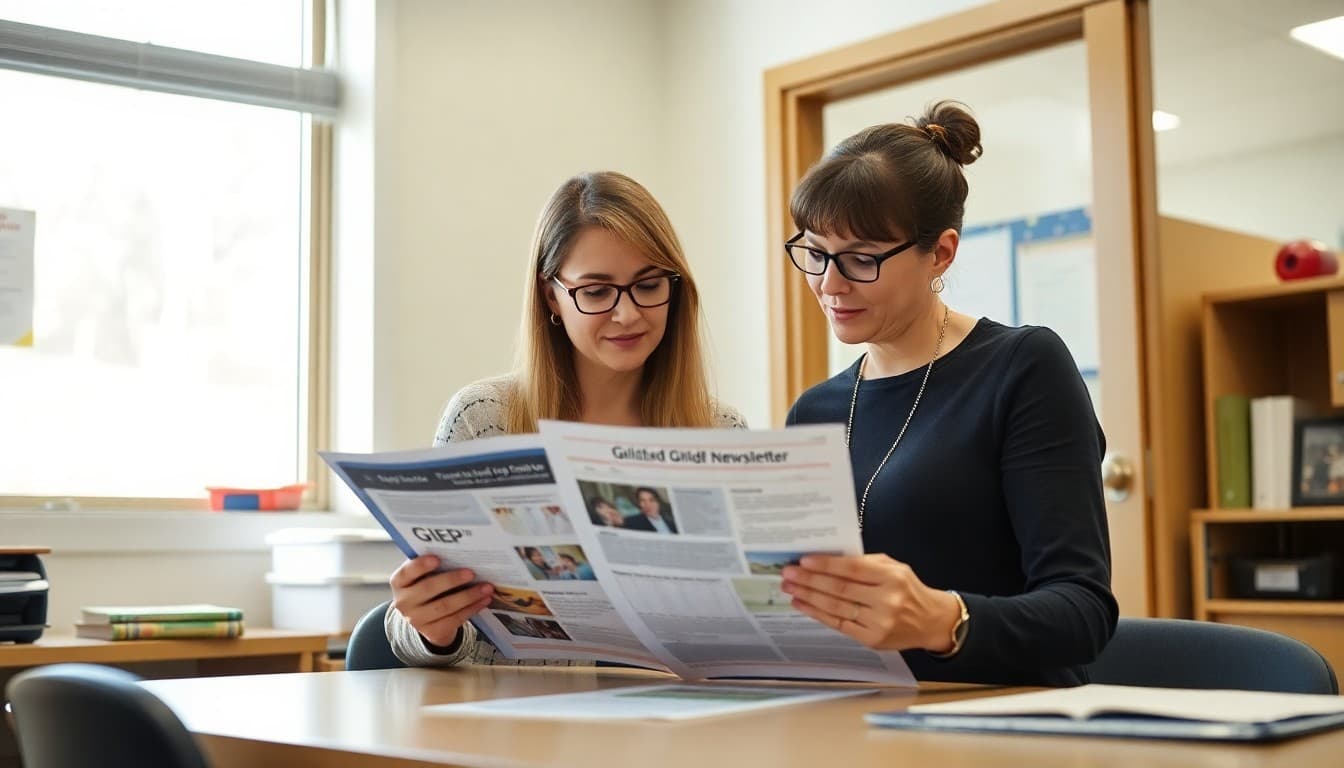
Pennsylvania Gifted Program Newsletter Guide for Coordinators

Pennsylvania's Chapter 16 framework gives gifted families legal rights that few states match. The GIEP requirement, the formal evaluation process, and the procedural safeguards mean that Pennsylvania gifted education operates more like special education than the informal enrichment models in many states. Your newsletter communicates within that formal context and should reflect the seriousness with which Pennsylvania takes its commitment to gifted students.
Pennsylvania's Chapter 16 Framework
Chapter 16 of the Pennsylvania Code requires that school districts identify and provide appropriate education to mentally gifted students. Gifted students are treated as students with exceptionalities, which means the procedural protections of special education law apply. Families have the right to independent educational evaluations, to participate in GIEP development, and to dispute decisions through due process. Your newsletter should explain this framework to new families each fall. Families who understand their legal rights engage more constructively with the process and are less likely to be surprised when they exercise them.
Gifted Evaluation and Identification
Pennsylvania requires a multifactored evaluation for gifted identification. The evaluation typically includes an IQ or cognitive ability test, with a general guideline of 130 or above for mental giftedness, though other factors including academic aptitude and creativity are also considered. Walk families through the evaluation process in your fall newsletter: how referrals are initiated, what the multifactored evaluation involves, who conducts it, and the timeline from request to written report and eligibility determination. Pennsylvania families have the right to request an evaluation, and many do not know this.
GIEP Development and Annual Review
The GIEP is Pennsylvania's central document for gifted education. It requires a multidisciplinary team including the family, documents the student's present levels of performance and annual goals, describes the gifted support services provided, and explains the rationale for those services. Your newsletter should explain the GIEP process before each review cycle, what families are expected to contribute, and what a strong GIEP looks like. Families who arrive at GIEP meetings prepared to discuss specific goals, related services, and challenges they are observing at home produce better plans than those who arrive uncertain of their role.
Science Olympiad Pennsylvania and Competition Calendar
Pennsylvania Science Olympiad is one of the largest state programs in the country, with regional invitationals, regional competition, and a state tournament at Penn State. MATHCOUNTS PA chapter and state competitions are well-organized with strong participation from gifted programs. Pennsylvania Junior Academy of Science presents research at regional and state symposia. Academic Decathlon, Future Problem Solving, and National History Day PA all have strong state programs. Include registration deadlines and preparation expectations for each competition you feature in your newsletter.
Penn State, Pitt, and University Enrichment
Penn State University's programs for gifted youth, University of Pittsburgh's enrichment programs, and programs at Temple, Villanova, Drexel, and other Pennsylvania universities serve advanced learners across the state. Duke TIP, Johns Hopkins CTY, and Iowa's Belin-Blank Center all serve Pennsylvania students. For gifted families in western Pennsylvania, Carnegie Mellon University's enrichment and precollege programs are particularly notable. Your spring newsletter should feature these options with application timelines and financial assistance information.
A Sample Pennsylvania Newsletter Section
Here is language that works: "GIEP Reviews Begin October 14: You will receive a meeting invitation from your child's GIEP team this week. Please come prepared to share three things: what you are observing about challenge level at home, what your child is pursuing independently with their time, and any goals you want to discuss for the second semester. Your input is part of the formal record and shapes what we write into the plan." Daystage makes sending that kind of procedurally clear, family-directed communication to your entire parent list professional and efficient.
Parent Rights Under Chapter 16
Pennsylvania gifted parents have robust procedural rights including the right to participate in GIEP development, receive copies of all evaluation reports, request an independent educational evaluation at district expense if they disagree with the district's evaluation, and pursue due process hearings. Include a brief, plain-language summary of these rights in your fall newsletter each year. Families who know their rights use them more constructively. Families who discover their rights in the middle of a conflict use them more adversarially. The difference is often your newsletter.
Get one newsletter idea every week.
Free. For teachers. No spam.
Frequently asked questions
What makes Pennsylvania's gifted education framework distinctive?
Pennsylvania is one of the few states that legally requires gifted education services under Chapter 16 of the Pennsylvania Code, which treats gifted students as students with exceptionalities similar to students with disabilities. Each identified gifted student must have a Gifted Individualized Education Plan (GIEP), and families have procedural rights comparable to those in special education. This is one of the strongest gifted education legal frameworks in the country.
What is Pennsylvania's GIEP and how should coordinators explain it?
The GIEP is Pennsylvania's Gifted Individualized Education Plan, required for every student identified as mentally gifted. Like an IEP in structure but focused on enrichment and acceleration rather than remediation, the GIEP documents the student's present levels of performance, annual goals, the services to be provided, and the rationale for those services. It is developed with family participation and reviewed annually. Your newsletter should explain the GIEP process before each review cycle.
How does Pennsylvania's gifted identification work?
Pennsylvania defines mentally gifted as having outstanding intellectual and creative ability, and requires a multifactored evaluation that typically includes IQ testing (the threshold is generally an IQ of 130 or above, or 2 standard deviations above the mean). The evaluation also considers academic aptitude, creative thinking, and other relevant information. Your newsletter should explain the evaluation process, timeline, and what families can do if they believe their child may qualify.
What academic competitions are active in Pennsylvania?
Pennsylvania has very active competition programs. Science Olympiad PA runs state competition at Penn State. MATHCOUNTS PA chapter and state competitions draw strong participation. Pennsylvania Junior Academy of Science, Pennsylvania Academic Decathlon, and Future Problem Solving all have state-level events. National History Day PA competition is well-organized. Penn State, Pitt, and multiple Pennsylvania universities run enrichment programs for gifted youth.
What newsletter platform works for Pennsylvania gifted coordinators?
Daystage works well for Pennsylvania coordinators managing GIEP communication alongside enrichment updates and competition calendars. The platform handles scheduling, photo embedding, and list management without IT involvement. Pennsylvania coordinators managing large programs in suburban Philadelphia and Pittsburgh districts appreciate being able to send a consistently professional newsletter to hundreds of families efficiently.

Adi Ackerman
Author
Adi Ackerman is a former classroom teacher and curriculum writer with 8 years in K-8 schools. She writes about school communication, parent engagement, and what actually works in real classrooms.
More for Gifted & Advanced
Ready to send your first newsletter?
3 newsletters free. No credit card. First one ready in under 5 minutes.
Get started free