
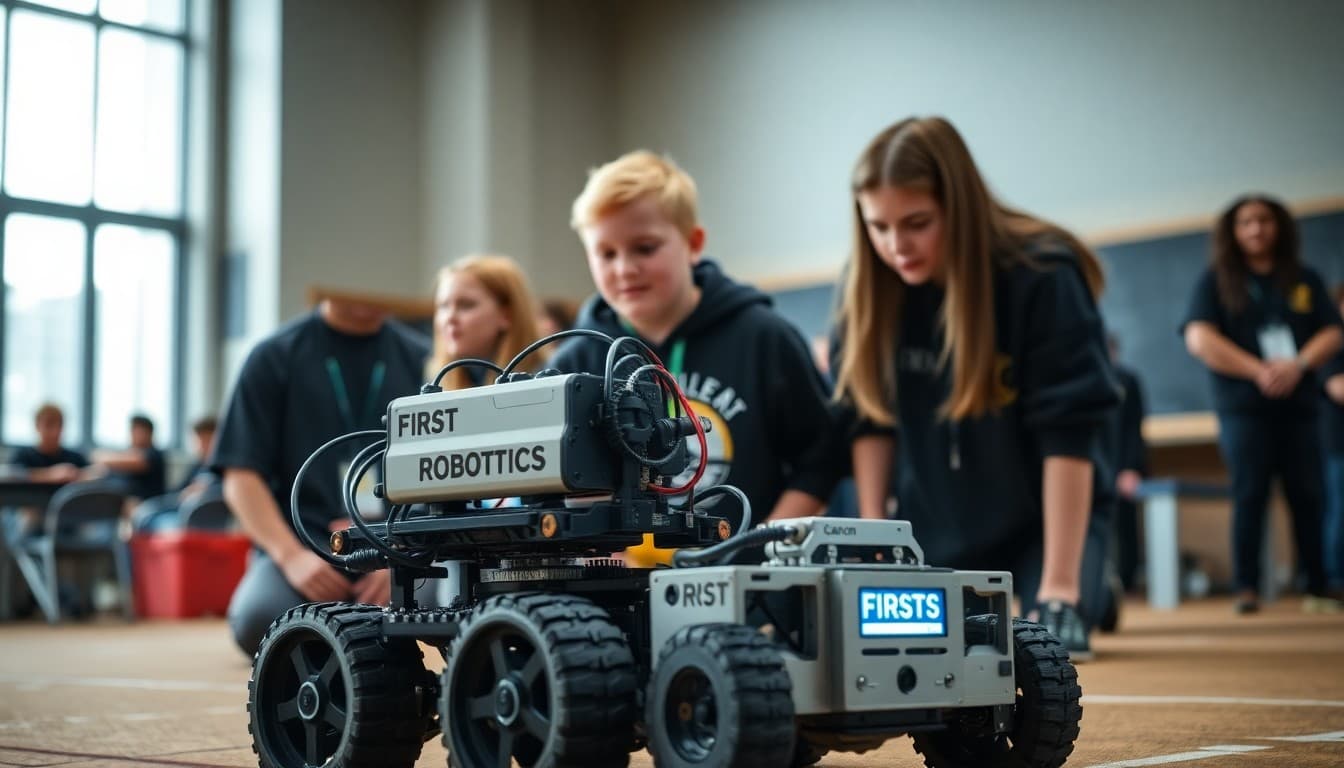
School Robotics Competition Newsletter: FIRST and VEX Events
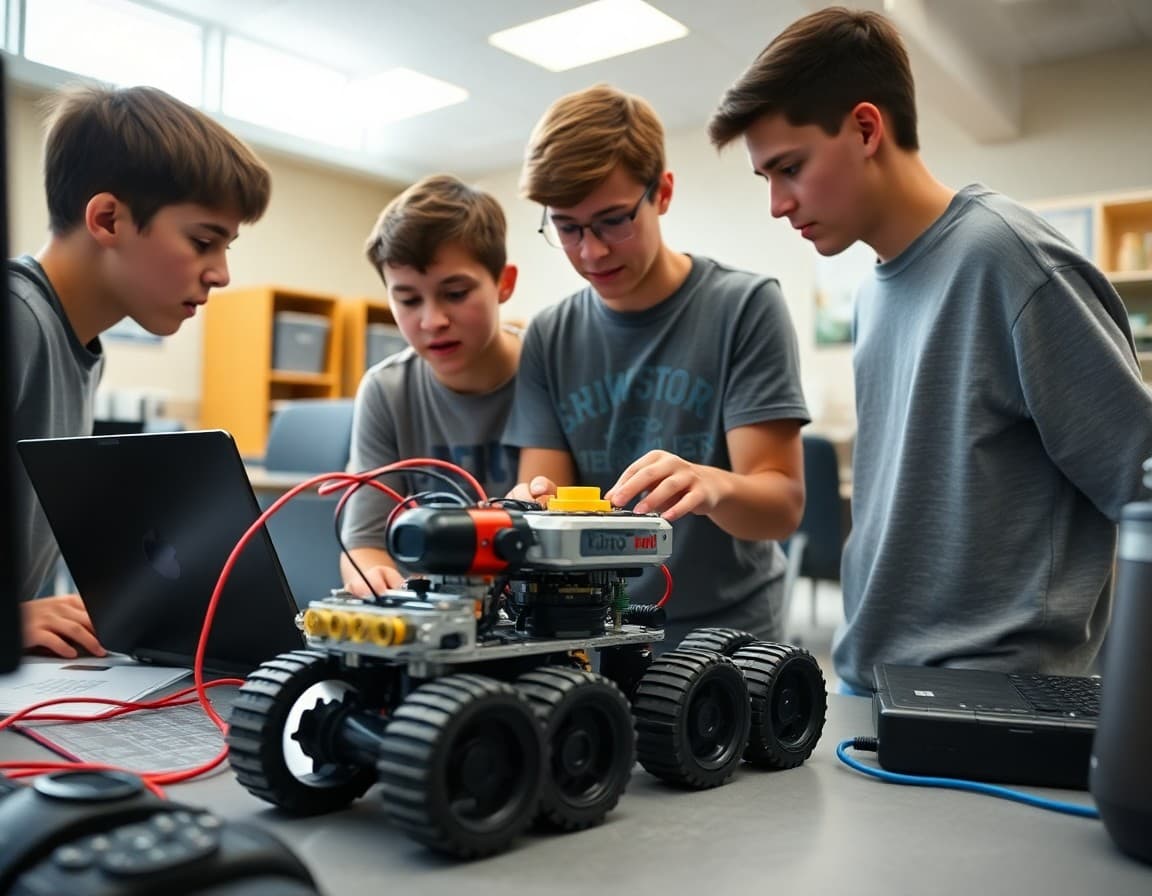
Robotics competitions are among the most complex events in a school calendar to communicate around. FIRST Robotics, VEX IQ, VEX EDR, and FIRST Tech Challenge each have their own event formats, team structures, and award systems that families outside the robotics community do not automatically understand. The newsletter's job is to close that gap so families show up as informed, enthusiastic supporters rather than confused spectators.
Explain the competition before the logistics
For many school families, robotics competitions are completely new. Before you get to the date and location, give a brief paragraph on how the event works. For a FIRST Robotics Competition: "Teams of 15-40 students compete with robots they designed and built in six weeks. During matches, three robots from different teams work together as an alliance on a 27-by-54-foot field. Matches run about two and a half minutes. Teams are judged on robot performance and on how they demonstrate FIRST's gracious professionalism values."
That paragraph turns a day at a noisy gymnasium into a story families want to see unfold.
Tell the story of the build season
Every FIRST Robotics team has a build-season story. The game challenge was announced in January. The team had six weeks to design, build, program, and test a robot. What did they make? What problem did the challenge require them to solve?
A sentence like "This year's game challenge requires teams to score by launching game pieces into elevated targets from across the field. Our team's robot, which they named 'Archimedes,' uses a flywheel launcher the students designed and built from scratch in week four" gives families specific context for what they are about to see.
Name the team members and mentors
The competition newsletter is a natural place to list the team roster and the adult mentors who gave their time and expertise. Some teams have 8 students, others have 40. Some have industry engineer mentors who contribute real professional-level knowledge. Naming these people builds community pride in the program and helps families connect faces to roles.
Give spectator logistics clearly
Robotics competitions at host sites can be confusing to navigate. Specify the venue name and address, the competition schedule (when matches begin, when breaks occur, approximate end time), whether admission requires a ticket or is free, where to find the school's pit location, and what to bring (ear protection is genuinely helpful at FIRST events, which can run 90+ decibels).
For regional and district competitions held at a convention center or university gym rather than the school, include parking information. Families who drive 45 minutes to cheer and then cannot find parking remember that experience.
Acknowledge the fundraising required
FIRST Robotics registration fees can run $5,000-$6,000 per team per regional, not counting travel and parts costs. If the team fundraised to cover these costs, acknowledge it: "Our team raised $8,200 this season through the sponsorships and events that made this competition possible. Thank you to the families, local businesses, and mentors who contributed."
Families who understand the cost of the program are more motivated to support fundraising efforts in future years.
Template: competition preview section
Here is a starting template:
"Team 4821 competes at the FIRST Robotics Competition Northeast Regional on March 14-16 at Springfield Technical High School. Qualification matches begin Friday at 10:00 a.m. and continue Saturday. Alliance selections and eliminations take place Saturday afternoon. The event is free to attend. Our team's robot, Archimedes, has been tested and is ready. Come cheer and bring ear protection."
Write a season recap that covers more than the ranking
FIRST competitions give awards in categories including Design, Control Systems, Woodie Flowers Finalist (mentor recognition), and the Chairman's Award for community impact. If your team won any award, name it and explain what it means. A team that finishes 18th in the rankings but wins the Engineering Inspiration Award is having an excellent season by FIRST's own standards.
Close the season recap with what comes next: whether the team qualified for the district championship, regionals, or the FIRST Championship in Houston. Families who followed the season will want to know if the story continues.
Get one newsletter idea every week.
Free. For teachers. No spam.
Frequently asked questions
What should a robotics competition newsletter include?
Cover the competition name (FIRST Robotics, VEX IQ, VEX EDR, or FIRST Tech Challenge), the date, venue, and event format. For families new to robotics competitions, a brief explanation of how the competition works builds understanding and appreciation. Include the team's robot name if they have one, the season's challenge name, and what the team has been working toward. Spectator logistics and whether admission is free or ticketed matter for driving attendance.
How do you explain a FIRST Robotics competition to families who have never attended?
FIRST competitions are loud, energetic, and technical all at once. Describe the match format: teams of three robots compete together on a field, matches last two to three minutes, and the competition includes both autonomous and driver-controlled periods. Note the pit area where teams repair and adjust robots between matches. Families who arrive with an understanding of what they are watching enjoy it far more than families who show up confused.
How should the newsletter communicate the team's preparation and what it cost?
Share the number of build-season hours, any fundraising the team did to cover registration and travel costs, and mentor contributions. FIRST Robotics in particular involves a six-week build season and significant team effort. Families and community members who understand what goes into the competition are more likely to show up and support the team in future years.
What should a post-competition robotics newsletter include?
Report the final ranking, any awards won (gracious professionalism, design, innovation awards matter in FIRST alongside competitive ranking), and the team's advancement status if they qualified for regionals or worlds. FIRST competitions award for values and team spirit, not just winning, and the newsletter should reflect that. A quote from the team captain about the season is a natural closer.
How does Daystage support robotics program communication throughout the season?
Daystage lets you build a newsletter series across the robotics season: a kickoff announcement, a build-season update, a competition preview, and a post-season recap. All four go to the same family list and give the robotics program consistent visibility in the school community beyond just the team members' families.

Adi Ackerman
Author
Adi Ackerman is a former classroom teacher and curriculum writer with 8 years in K-8 schools. She writes about school communication, parent engagement, and what actually works in real classrooms.
More for School Events
Ready to send your first newsletter?
3 newsletters free. No credit card. First one ready in under 5 minutes.
Get started free