
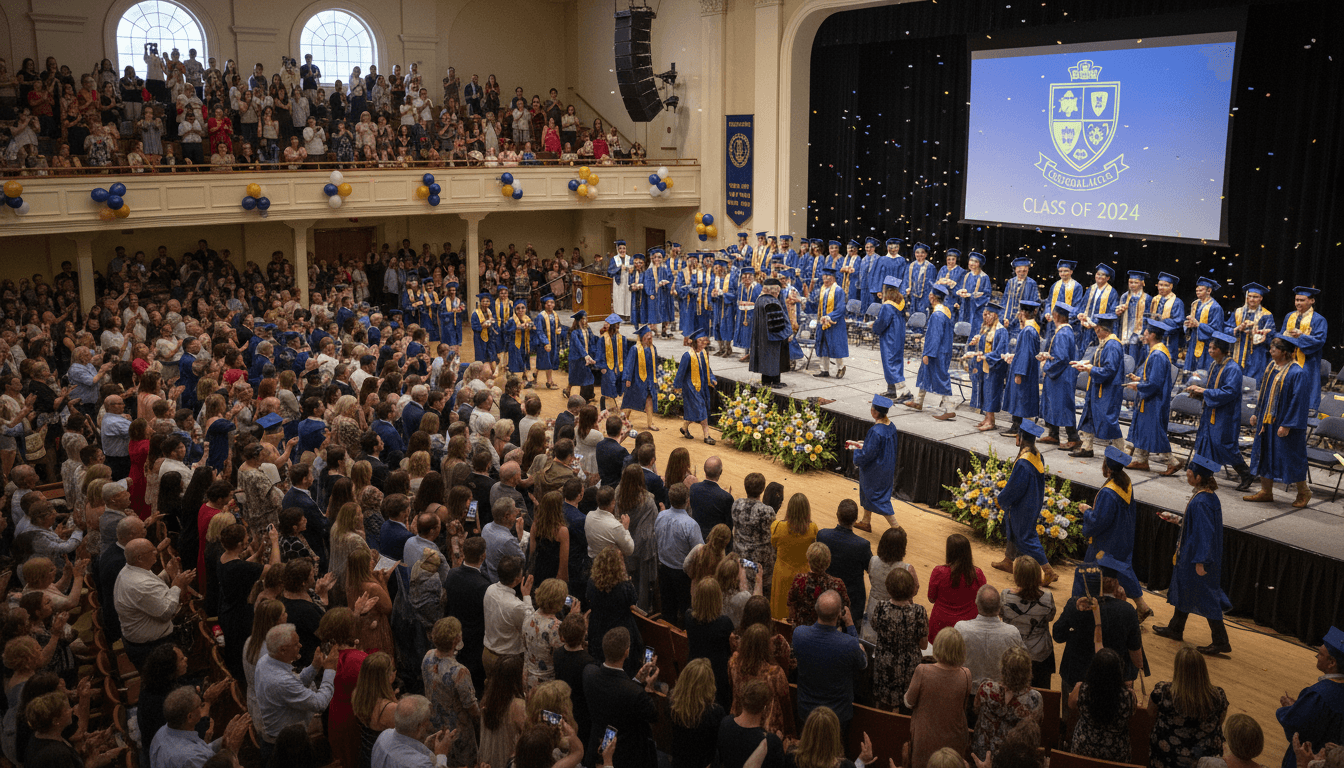
Graduation Ceremony Newsletter: Communicating the Details Families Actually Need
Graduation ceremonies mark one of the most emotionally significant transitions in a student's school experience. Whether it is a preschool class moving to kindergarten, a fifth-grade promotion to middle school, an eighth-grade ceremony, or a high school commencement, families approach these events with high expectations and limited tolerance for confusion.
A graduation newsletter that handles logistics clearly and warmly sets the tone for the event before families arrive. A newsletter that leaves key information out generates anxiety, questions, and avoidable frustrations on one of the most memorable days of the school year.
Start communication early: three weeks before
Graduation communication should begin three weeks before the ceremony. Many families need to request time off work, arrange travel for extended family, or coordinate childcare for non-graduating siblings. The earlier the full logistics are communicated, the more families can actually attend.
The three-week newsletter is the comprehensive one. The one-week reminder covers only what families might have forgotten. The day-before note is three to four lines.
Core logistics every graduation newsletter must include
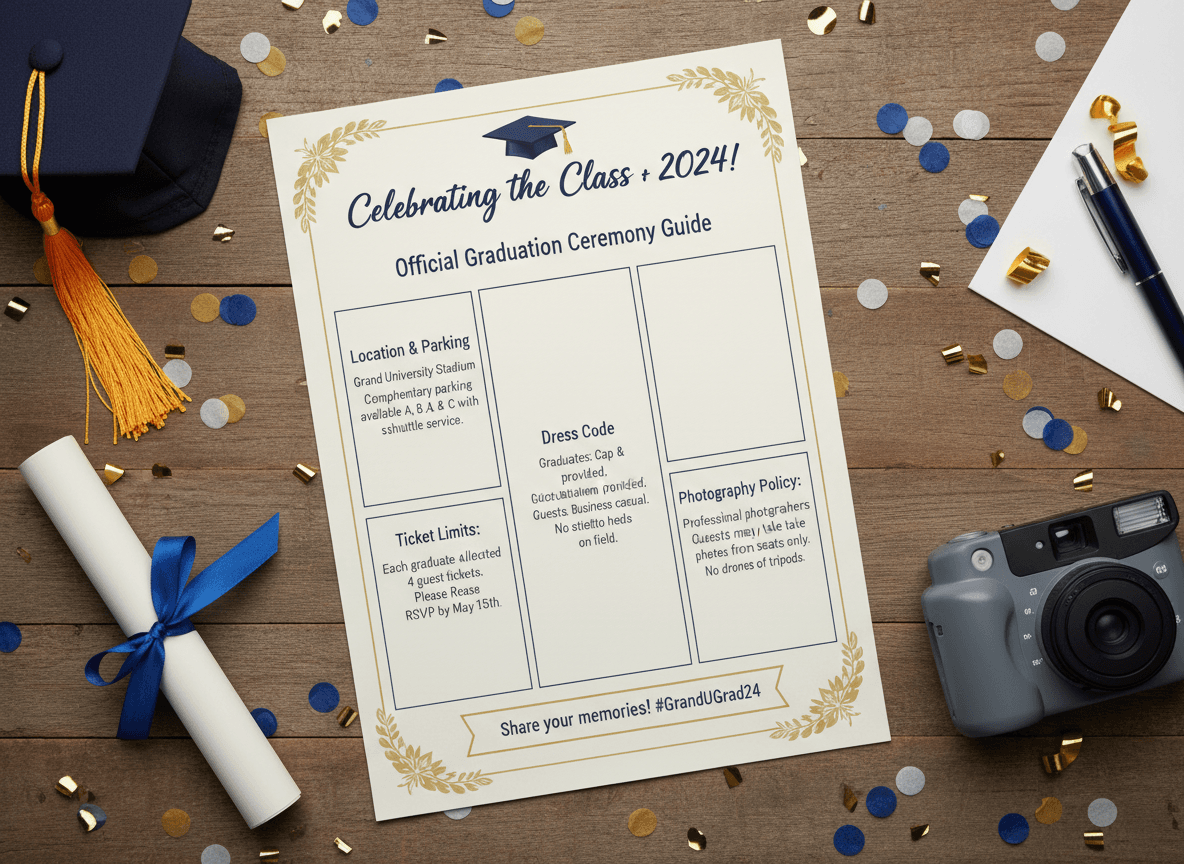
- Date, time, and exact location: If the ceremony is in the auditorium, gymnasium, or an off-site venue, specify the building name and address. Families who have never been to your school's ceremony venue need directions or a parking map.
- Graduate arrival time: When should students who are graduating arrive, and where should they go? This is almost always earlier than the ceremony start time and is often the most-missed detail in graduation newsletters.
- Ticket limits: If seating is limited and families are given a specific number of tickets, state that clearly along with how additional tickets can be requested if available.
- Dress code: For the graduates (cap and gown details, what to wear under the gown, shoe recommendations) and for families (casual, business casual, or formal?).
- Parking: Where to park, whether there is accessible parking, and if traffic is typically heavy how early families should plan to arrive.
- After-event logistics: Where can families meet the graduate after the ceremony? Is there a reception? Can students leave with their family immediately or is there a class photo or other activity first?
Photography policy
Graduation ceremonies generate more photography-related conflict than almost any other school event. Standing up during the ceremony, blocking the aisle, approaching the stage. Your newsletter should state the photography policy clearly: what is permitted, what is not, and where the best vantage points are for families who want photos.
If a professional photographer is documenting the ceremony and photos will be available for purchase, include that information and timeline in the newsletter. Families who know professional photos are coming are more likely to stay seated during the ceremony.
Adjusting for different graduation contexts
Preschool graduations are brief, joyful, and often held in the classroom or on the school lawn. High school commencements are multi-hour formal ceremonies with hundreds of graduates. The newsletter for each requires a different level of logistical detail.
For preschool graduation: keep the newsletter warm and accessible. Explain what will happen, where families should sit, and how long it will run. Many families have never been to a preschool graduation and do not know what to expect.
For fifth-grade or eighth-grade promotion ceremonies: communicate ticket limits, the dress code for students, and whether there is a reception afterward. The middle-of-the-road ceremony that feels formal to some families and casual to others needs clear framing from the school.
For high school graduation: communicate the full detail. The ceremony is typically held off-site, families drive significant distances, and the logistics are complex. Err on the side of too much information rather than too little.
The day-before communication
The day before the ceremony, send a short note with: the time, location, and graduate arrival time. Include a single sentence about where to park and the photography policy reminder. Nothing else. Families have the full information. They need a reference card for the morning.
After the ceremony: the celebration newsletter
Send a post-ceremony newsletter within two days. Congratulate the graduates and their families. If photos are available or will be made available, share that timeline. Include a brief reflection on what the class accomplished and what comes next. This newsletter closes out the ceremony communication and gives families something to share with relatives who could not attend.
In Daystage, you can build the three-week, one-week, day-before, and post-ceremony newsletters as a scheduled sequence before the ceremony month begins. The subscriber list stays consistent, and the open-rate data helps identify families who have not yet seen the critical logistics.
Graduation communication reflects the school
Families will remember this event for years. The newsletter is often one of the first impressions they have of how organized and thoughtful the school's communication is. Clear, warm, complete graduation communication does not just inform families. It sets the emotional tone for an event that genuinely matters to everyone attending.
Get one newsletter idea every week.
Free. For teachers. No spam.
Frequently asked questions
When should schools send a graduation ceremony newsletter?
Send the first graduation newsletter three weeks before the ceremony so families can book travel, arrange childcare, and request time off work. A one-week reminder and a day-before logistics note complete the sequence.
What should a graduation ceremony newsletter include?
Cover the ceremony date, time, venue address, parking information, seating policy, and expected duration. Include graduate arrival time and location, ticket distribution details if applicable, and the school's photography and recording policy.
How far in advance should schools send graduation ceremony communications to families?
Three weeks before is the standard starting point for graduation communication. Families attending from out of town need even more lead time, so consider a save-the-date four to six weeks out for ceremonies with significant travel expectations.
What are common mistakes in graduation ceremony newsletter communication?
Sending only one newsletter too close to the event is the most common problem, leaving families scrambling for logistics. Other mistakes include omitting the photography policy, not clarifying ticket limits, and forgetting to communicate graduate arrival times separately from general audience arrival.
What is the best tool to send a graduation ceremony newsletter?
Daystage is built for school event communication and lets you schedule a multi-touch graduation sequence weeks in advance. You can separate communications for graduating families versus general audience families, and the scheduling tools ensure nothing goes out late.

Adi Ackerman
Author
Adi Ackerman is a former classroom teacher and curriculum writer with 8 years in K-8 schools. She writes about school communication, parent engagement, and what actually works in real classrooms.
More for School Events
Ready to send your first newsletter?
3 newsletters free. No credit card. First one ready in under 5 minutes.
Get started free