
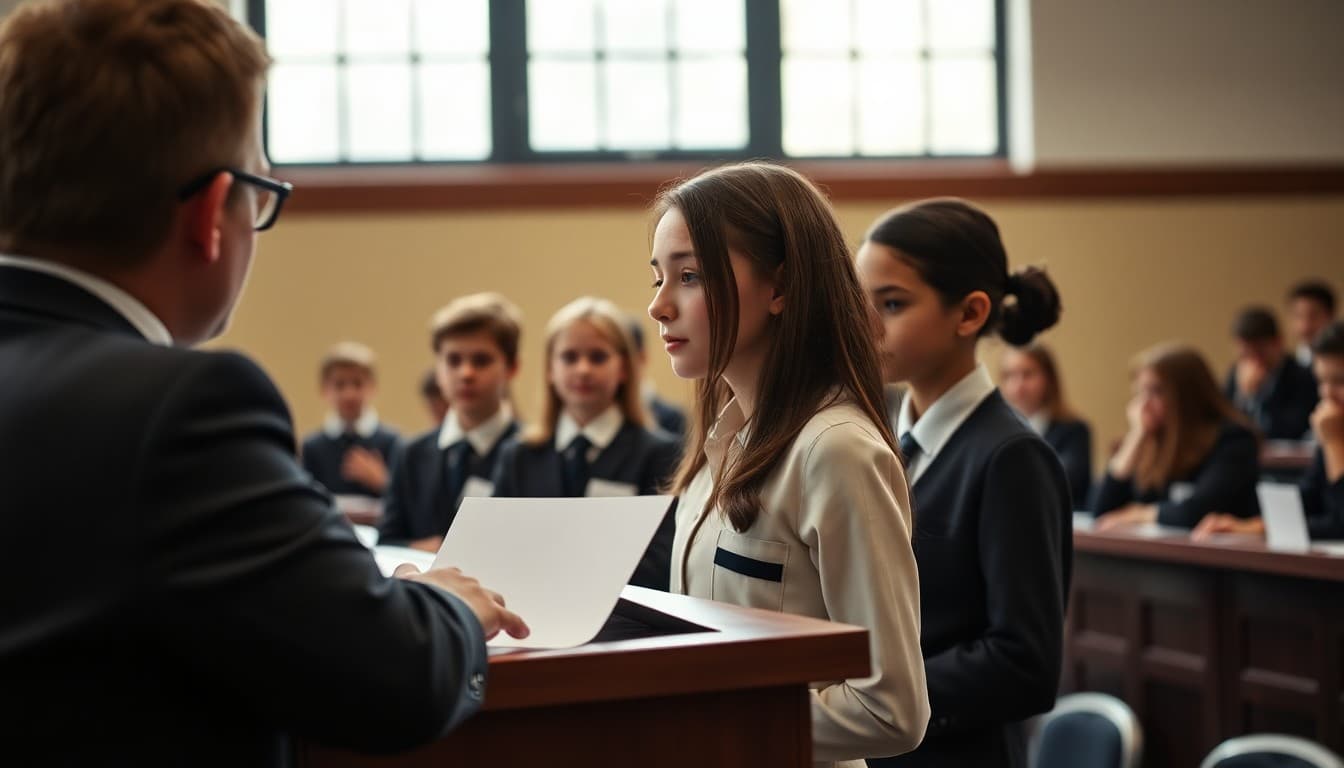
School Debate Tournament Newsletter: Competition Communication

Competitive debate is one of the most academically demanding extracurricular activities in secondary school, and one of the most underexplained to the families of non-debaters. The debate team newsletter has to do two things at once: give the debaters and their families the specific logistics they need, and help the general school community understand why this activity deserves their attention and support.
Explain the debate format before anything else
For general families, "debate tournament" covers everything from a casual in-class exercise to a nationally competitive circuit. Be specific about the format your team competes in and give a brief explanation:
- Public Forum: two-person teams arguing both sides of a current events topic, each team speaks for a total of 13 minutes, judged by community volunteers
- Lincoln-Douglas: one-on-one value debate on a philosophical topic released each season
- Policy: two-person teams, highly technical, evidence-heavy, focused on policy analysis
- Congressional: simulates a legislative body, students advocate for or against bills
Two sentences is enough. Families who know what format they are watching understand why the student speaks quickly, cites sources, and argues a side they may not personally believe.
Give debaters a tournament preparation checklist
The week before the tournament, the team newsletter should include:
- Tournament schedule including round times and breaks
- Attire expectations (business formal is standard at most invitational tournaments)
- Transportation logistics if off campus
- What to bring: evidence files, laptop or evidence binders, water, snacks for a full-day tournament
- Contact information for the coach at the tournament site
A student who arrives to a tournament without their evidence binder because no one communicated the checklist will remember that failure longer than their win-loss record.
Address the "arguing positions you disagree with" question
In most debate formats, students argue both sides of the topic across rounds. A family who sees their student preparing to argue the affirmative case for a policy the family opposes will sometimes call the school in confusion. A single sentence in the newsletter prevents that: "In competitive debate, students argue whichever side they are assigned. This is intentional. The ability to construct strong arguments for a position regardless of personal opinion is a core skill the activity develops."
Invite the community to watch if the tournament is at school
If your school is hosting, parents and students can often observe rounds. This is worth noting because debate rounds are educational even for spectators. Families who have never seen a formal debate round often leave impressed by the skill level their peers have reached.
Give spectators some guidance: "Observers are welcome to watch rounds in progress. Enter quietly, sit in the back, and wait for a break in the round before leaving. Applause is not standard in most debate formats."
Template: hosted tournament welcome section
Here is a template for the school hosting the tournament:
"Washington High School is hosting the Central Valley Public Forum Invitational this Saturday, November 8. Twenty-two teams from nine schools will compete in six rounds beginning at 8:30 a.m. in classrooms throughout the building. Finals take place in the library at 4:00 p.m. If you are in the building, please keep hallway noise low near classrooms marked 'Round in Progress.' Our debate team serves as host and will be competing. Come cheer for them in Finals."
Report results specifically in the recap
Debate tournament results have nuance. A 4-2 record that puts a team in the top 20% of a 30-team tournament is a strong result even without a trophy. Explain what the record means: "Our four competing teams went a combined 14-10 in preliminary rounds. Jaylen Morris and Priya Patel advanced to octofinals, where they fell to the eventual tournament champions from Eastside High. Jaylen was recognized with a fourth-place speaker award."
That level of specificity rewards families who followed the season and gives new families context for what the results mean.
Connect debate skills to academic outcomes
A brief sentence in the wrap-up newsletter connects the activity to the school's academic goals: "Competitive debate builds research skills, argumentation, listening comprehension, and public speaking confidence. Our debaters are developing skills they will use in every class and every career." Families who see the academic connection support the program more actively than families who see it as one more extracurricular.
Get one newsletter idea every week.
Free. For teachers. No spam.
Frequently asked questions
What should a school debate tournament newsletter include?
Cover the tournament format (Policy, Lincoln-Douglas, Public Forum, Congressional, or parliamentary), the date and location, number of rounds, approximate schedule, and what debaters should wear. For families unfamiliar with competitive debate, a brief explanation of how rounds work and how winners are determined prevents confusion. If the tournament is hosted at your school, include information for families of visiting teams who will be arriving.
How do you explain competitive debate formats to general school families?
Public Forum debate is the most accessible to explain: two teams of two argue opposing sides of a current events topic, with structured speaking times and a judge's decision. Lincoln-Douglas is a one-on-one value debate. Policy involves teams of two and detailed evidence-based case construction. A two-sentence explanation of the format gives families enough context to watch intelligently without overwhelming them with debate theory.
What preparation information should the debate team newsletter include?
Debaters need the tournament schedule with round times, the topic they will be arguing, whether they debate both sides, attire expectations (most competitive debate requires business formal), and transportation details if the tournament is off campus. Coaches should also remind families that debaters sometimes argue positions they personally disagree with, which is worth noting so families are not confused when their student advocates for a position the family opposes.
How do you write a post-tournament debate recap?
Report the team's overall win-loss record, any speaker awards earned, and whether any debaters advanced to elimination rounds. Name specific debaters who had strong individual performances. For a hosted tournament, report total participating teams and any logistical notes about how the hosting went. The recap should be specific enough that families who did not attend understand what happened.
Can Daystage help manage debate tournament communication for both hosts and visiting schools?
Yes. If your school is hosting the tournament, Daystage lets you send a hosting logistics newsletter to your own school community and a separate welcome newsletter to visiting team families with parking, schedule, and hospitality information. Both go from the same platform with targeted distribution.

Adi Ackerman
Author
Adi Ackerman is a former classroom teacher and curriculum writer with 8 years in K-8 schools. She writes about school communication, parent engagement, and what actually works in real classrooms.
More for School Events
Ready to send your first newsletter?
3 newsletters free. No credit card. First one ready in under 5 minutes.
Get started free