
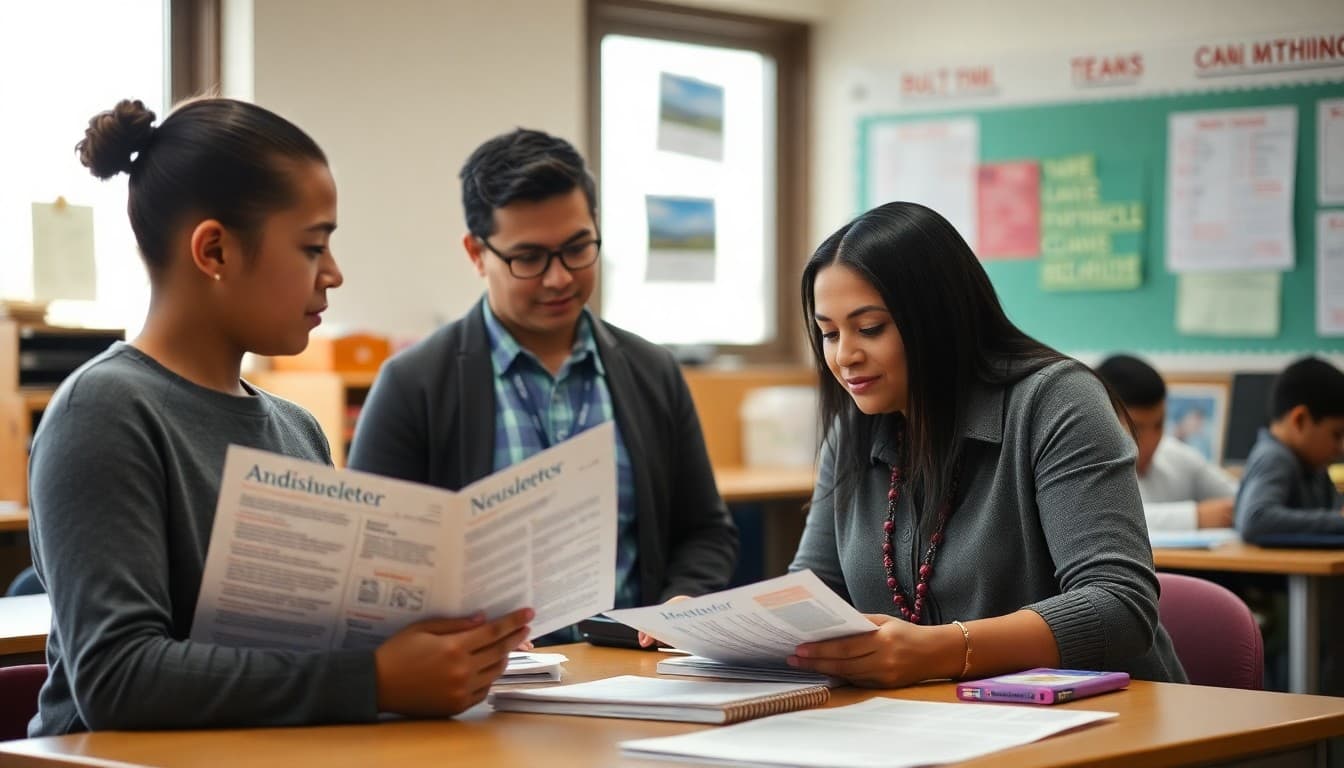
Utah ELL Program Newsletter: Guide for ESL Teachers and Coordinators

Utah's ELL programs serve a state with some surprises. The Wasatch Front has large Spanish-speaking communities, a significant Somali refugee population in Salt Lake City, and -- unlike most other Mountain West states -- a large Pacific Islander community. Tongan and Samoan families have been in Utah for generations, drawn by LDS Church connections and community networks. An ELL program newsletter that serves Utah's communities has to account for that Pacific Islander presence, not just the more familiar Spanish language need.
Utah's Title III Communication Requirements
Utah follows federal Title III and ESSA language access standards: essential communications for families with limited English proficiency must be translated, annual WIDA results must be explained, and conferences must be accessible to families who do not read English. The Utah State Board of Education reviews compliance through the Title III consolidated application. Your ELL program newsletter is the most visible, consistent communication your program sends throughout the school year. Programs that maintain regular translated newsletters build family trust and engagement that formal compliance documents do not create on their own.
Explain WIDA ACCESS Results Every Year
Utah uses WIDA ACCESS to measure English language proficiency. Families receive score reports each spring that require plain-language explanation. Your newsletter during the testing window should explain what ACCESS measures, what the 1-6 proficiency scale means, and what your district requires for reclassification. For Spanish-speaking families, publish in Spanish. For Tongan-speaking families, work with a community liaison to provide the explanation in Tongan. A parent who understands what the ACCESS score means can ask specific questions at the parent-teacher conference and set goals with their child at home.
Serve Utah's Tongan and Pacific Islander Community
Utah has one of the largest Tongan communities in the continental United States, concentrated in West Valley City and other Salt Lake County communities. These families have been in Utah for decades, with LDS Church affiliation as a major factor in community formation. Many Tongan families are now second or third generation and are comfortable in English. But newly arrived family members and grandparents who moved to help with childcare may have limited English proficiency and need Tongan-language communication. Pacific Islander-specific organizations in the Salt Lake area can help identify reviewers for Tongan translations and serve as distribution partners for reaching families through trusted channels.
A Monthly Utah ELL Program Newsletter Template
This format works for most Utah ELL programs:
ELL Program Update -- [Month] [Year]
Your student is working on: [Language skill area]
What this looks like at school: [Brief description]
How to support at home: [Activity in the home language]
Coming up:
- [Date]: WIDA ACCESS testing
- [Date]: Parent conference (interpreter available)
Contact: [ELL coordinator name, phone, email]
Address Salt Lake City's Refugee Community
Salt Lake City has received significant refugee resettlement through organizations like the International Rescue Committee Salt Lake City and the Utah Division of Refugee Services. Somali, Congolese, Afghan, Iraqi, and other families have settled in Salt Lake County. These families often arrive with significant educational gaps and limited familiarity with American school systems. Your newsletter for newly arrived refugee families should cover orientation basics before moving to program-specific information. Established refugee families who have been in Utah for five or more years need program-specific updates, not orientation basics. Calibrating the content to the length of time families have been in the community is an important communication skill.
Connect Utah Families to Community Resources
Utah has community resources for ELL families. International Rescue Committee Salt Lake City serves refugee families with resettlement and ESL support. Catholic Community Services of Utah provides immigration and family services. Comunidades Unidas serves Spanish-speaking families in Utah with advocacy and education programs. Utah Legal Services provides civil legal aid. Utah Valley University and Salt Lake Community College offer adult ESL programs across the Wasatch Front. One resource mention per newsletter issue builds cumulative awareness that families use when they face language barriers outside the school context.
Use Daystage to Reach Utah ELL Families Directly
Utah ELL coordinators managing newsletters for Spanish, Tongan, Somali, and other language-speaking families need tools that simplify multilingual delivery. Daystage lets coordinators create one newsletter structure and send separate language versions to the right families simultaneously. A Tongan family in West Valley City receives the Tongan version. A Spanish-speaking family in Ogden receives the Spanish version. A Somali family in South Salt Lake receives the English version with an interpreter availability note. Programs that maintain consistent, multilingual communication throughout the year build the family engagement that Utah's ELL accountability framework expects to see and that Utah's diverse multilingual communities deserve from the schools responsible for their children.
Get one newsletter idea every week.
Free. For teachers. No spam.
Frequently asked questions
What are Utah's requirements for communicating with ELL families?
Utah follows federal Title III and ESSA language access requirements. Schools must translate essential communications for families with limited English proficiency, including ELL identification notices, annual WIDA assessment results, placement letters, and conference invitations. The Utah State Board of Education oversees compliance through the Title III consolidated application and provides language access guidance through its Education Support and Innovation office.
What assessment does Utah use for English language proficiency?
Utah uses WIDA ACCESS for ELLs to measure English language proficiency in grades K-12. The assessment covers Listening, Speaking, Reading, and Writing on a 1-6 scale. Utah's reclassification criteria include WIDA composite and domain score thresholds along with academic performance indicators. Your newsletter should explain what ACCESS measures and what reclassification means for families receiving score reports each spring.
What languages do Utah ELL families most commonly speak?
Spanish is the most common home language in Utah's ELL population, with large communities in Salt Lake City, Ogden, and throughout the Wasatch Front. Utah has a distinctive feature compared to most states: a large Pacific Islander community, particularly Tongan, Samoan, and other Polynesian families, concentrated in Salt Lake County. This community is significant in several Granite School District schools. Utah also serves Somali, Arabic, and other language-speaking refugee families in Salt Lake City.
How should Utah ELL newsletters address the Pacific Islander community?
Utah has one of the largest concentrations of Tongan, Samoan, and other Pacific Islander communities in the United States outside Hawaii and California. Many Pacific Islander families in Utah have been here for a generation or more, drawn by LDS Church affiliation and family networks. Your newsletter for Pacific Islander families should be available in Tongan or Samoan for families with limited English. Unified Pacific Islander Ancestry community organizations in Salt Lake City are trusted resources for outreach.
Can Daystage support Utah ELL programs with multilingual newsletters?
Yes. Daystage lets ELL coordinators create formatted newsletters and send separate language versions to specific family groups. For a Granite School District school with Spanish and Tongan-speaking families, you can manage both language versions through one platform. Daystage handles formatting and delivery so coordinators focus on content quality and community-appropriate translation.

Adi Ackerman
Author
Adi Ackerman is a former classroom teacher and curriculum writer with 8 years in K-8 schools. She writes about school communication, parent engagement, and what actually works in real classrooms.
More for ELL & ESL
Ready to send your first newsletter?
3 newsletters free. No credit card. First one ready in under 5 minutes.
Get started free