

Texas ELL Program Newsletter: Local Resources and Guide
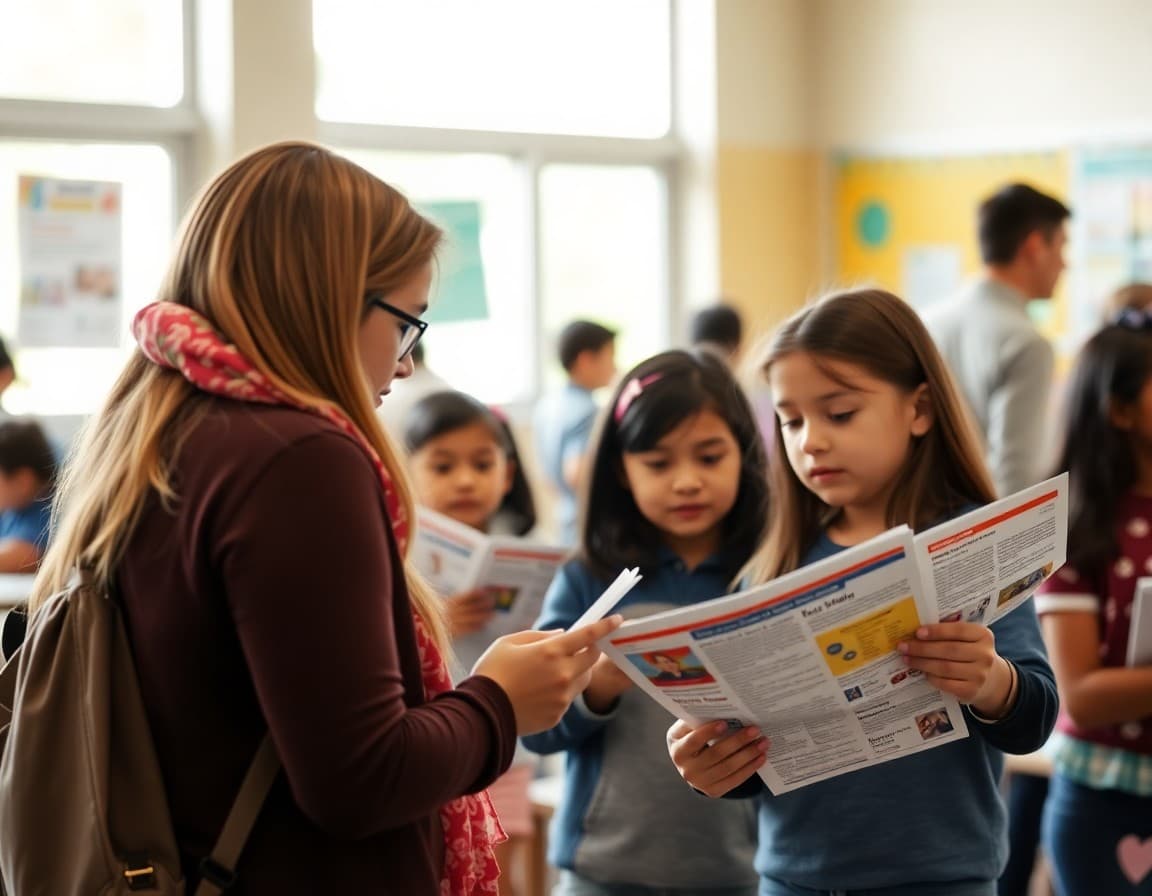
Texas educates the second largest ELL student population in the United States after California, and the state's strong bilingual education tradition -- with deep roots in the Texas-Mexico border region -- gives Texas ELL programs a cultural and legal context that is distinct from most other states. Effective Texas ELL newsletters understand both the legal framework and the specific communities each district serves, which vary enormously from the border region to Houston to the Panhandle.
Texas' Bilingual Education Tradition
Texas has a long bilingual education history, particularly in the South Texas and border region where Spanish and English have coexisted for generations. The state requires bilingual education programs when 20 or more students in the same grade share a home language -- the same threshold as Illinois and New Jersey. This means Spanish-speaking families in large Texas districts have the right to bilingual instruction. ELL newsletters in Texas bilingual programs should explain this right clearly and describe what the program actually looks like for students day-to-day.
Families in Texas border communities -- Laredo, McAllen, El Paso, Eagle Pass -- have an especially deep cultural relationship to Spanish that differs from immigrant ELL families in other states. Spanish is not an immigrant language in the border region; it is a heritage language with roots in the land that predate US statehood.
Houston's Extraordinary Diversity
Houston is one of the most ethnically diverse cities in the United States. Houston ISD serves a student population speaking over 100 different home languages. Spanish-speaking families are the largest ELL group. Vietnamese is second, concentrated in communities in the southwest Houston area. Arabic-speaking families -- from various Middle Eastern and North African countries -- are significant. African communities speaking French, Yoruba, Igbo, and other languages have grown substantially. Houston has also received significant refugee resettlement from Burmese, Iraqi, Afghan, and Congolese communities.
Texas Education Agency Resources
TEA's Division of English Language Acquisition publishes guidance documents, the ELL Handbook, and family resources in Spanish and other languages on the TEA website. TEA administers the TELPAS (Texas English Language Proficiency Assessment System) for annual ELL proficiency testing -- Texas uses TELPAS rather than WIDA ACCESS. ELL newsletters should reference TELPAS rather than ACCESS for Texas families. TELPAS measures listening, speaking, reading, and writing proficiency across four proficiency levels.
Parental Rights in Texas Bilingual Programs
Texas families have specific rights around bilingual program placement. Parents can decline bilingual education and request ESL services instead. This right must be explained in family communication. ELL newsletters should include a clear statement of this right and how families can exercise it if they choose. Families who understand their options are better positioned to make informed decisions about their child's educational program.
Community Organizations by Region
Houston resources include Catholic Charities of Houston which operates refugee resettlement, YMCA International Services, and Interfaith Ministries for Greater Houston. Dallas resources include IRC Dallas, Catholic Charities Dallas, and the Dallas Literacy Center. San Antonio resources include the Catholic Charities Archdiocese of San Antonio. Border region resources include the RAICES organization, Texas RioGrande Legal Aid, and numerous binational community organizations serving families on both sides of the US-Mexico border. Statewide, Texas Civil Rights Project provides advocacy for immigrant families.
Texas Border Community Communication
School districts in the Texas border region -- El Paso, Laredo, McAllen, Brownsville -- serve communities where Spanish is a community language alongside English, not merely an immigrant language. ELL newsletters in these communities should reflect Spanish as a co-equal language, not as a translation of English content. Border community schools have decades of experience with bilingual family communication and have developed sophisticated approaches that can model best practices for districts elsewhere in the state.
Using Daystage for Texas ELL Newsletters
Daystage supports Texas ELL coordinators in creating newsletters with Spanish, Vietnamese, Arabic, and other language sections and delivering them to family groups by language. For Texas bilingual programs, Daystage supports presenting both Spanish and English with equal visual weight -- consistent with the program's bilingual philosophy. For large Texas districts with very large ELL populations, Daystage's delivery infrastructure handles the volume requirements at scale.
Get one newsletter idea every week.
Free. For teachers. No spam.
Frequently asked questions
What program models does Texas offer for ELL students?
Texas offers two primary program models for ELL students: Bilingual Education and English as a Second Language (ESL). Bilingual education programs teach content in both the home language and English and are required when 20 or more students in the same grade level speak the same home language. ESL programs provide English language development through sheltered instruction without home language content instruction. Families have the right to understand which program their child is in and to be informed about the differences. Texas also allows Dual Language programs, which serve both ELL and native English-speaking students together.
What languages are most common among Texas ELL students?
Spanish is overwhelmingly the most common home language among Texas ELL students, reflecting the state's large Mexican-American and Central American communities. Texas has the second largest ELL student population in the United States after California. Vietnamese is the second most common language in Houston. Arabic, Urdu, and other languages are significant in the Houston metro area, which is one of the most ethnically diverse cities in the country. Somali, Burmese, and Amharic communities are present in Dallas, Houston, and other Texas cities through refugee resettlement.
What are Texas ELL family rights under state law?
Texas families have strong ELL rights under state law. Districts must identify ELL students within a specified timeframe using the Home Language Survey and English language proficiency assessment. Families must be notified within a required period and must receive information about the bilingual or ESL program available at their school. Texas has specific parental consent requirements for bilingual education program placement -- parents can decline bilingual program participation and request an ESL program instead. ELL newsletters should explain these rights and what the specific program options at your school are.
What state resources should Texas ELL newsletters reference?
The Texas Education Agency (TEA) oversees ELL programs through its Division of English Language Acquisition and Academic Programs. TEA publishes family guides and program information in multiple languages on the TEA website. Texas also publishes the ELL Handbook which guides districts on legal requirements and program implementation. Large Texas districts like Houston ISD, Dallas ISD, and San Antonio ISD have developed extensive multilingual family communication resources that can model approaches for smaller districts.
How does Daystage support Texas ELL and bilingual program newsletters?
Texas bilingual programs -- which teach content in Spanish and English -- can use Daystage to create newsletters that reflect the bilingual program philosophy with equal visual prominence for both languages. Daystage lets Texas ELL coordinators build newsletters with Spanish, Vietnamese, Arabic, and other language sections and deliver them to family groups by language. For large Texas districts with very large ELL populations, Daystage's delivery infrastructure handles the volume requirements that individual email systems cannot manage reliably.

Adi Ackerman
Author
Adi Ackerman is a former classroom teacher and curriculum writer with 8 years in K-8 schools. She writes about school communication, parent engagement, and what actually works in real classrooms.
More for ELL & ESL
Ready to send your first newsletter?
3 newsletters free. No credit card. First one ready in under 5 minutes.
Get started free