
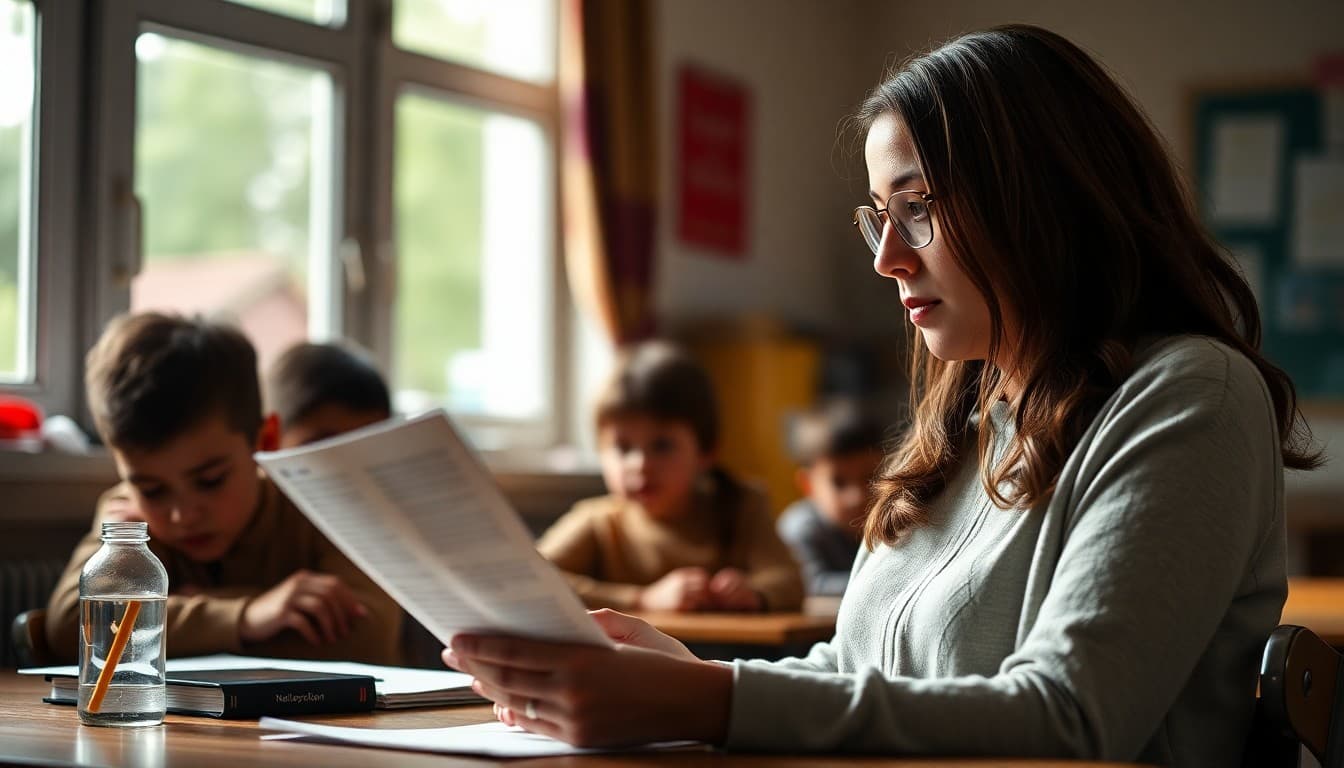
Teacher Newsletter English Support: Updating Families on ELL Progress and Services

Families of English language learners are often simultaneously the most invested in their child's education and the least informed about how the school system is working for them. They may not know what services their child is receiving, what progress looks like, how long the English acquisition process takes, or what they can do at home to help. A clear, consistent newsletter that addresses these questions treats ELL families as full partners rather than passive recipients of services.
What the ELL Program Actually Does
Many ELL families know their child "gets help with English" but have no clear picture of what that looks like. The newsletter is the right place to describe the ELL services your school provides: pull-out English language development sessions, push-in support in the general education classroom, sheltered instruction, or a combination. Explain how often the services occur, who provides them, and what the goal of each type of support is. Families who understand the services are better equipped to support the learning at home and to ask informed questions at conferences.
Explaining Proficiency Levels
English proficiency levels, whether measured by WIDA ACCESS, ELPAC, or another state assessment, are meaningful to teachers but often opaque to families. The newsletter can translate these levels into plain language: a Level 1 (Entering) student is a true beginner who communicates primarily through gestures and single words in English. A Level 4 (Expanding) student can participate in most classroom conversations and read grade-level texts with some support. Giving families this kind of concrete description helps them understand their child's current point in the English development process.
How Long English Development Takes
Research on bilingual language development suggests that conversational English (BICS) typically develops in one to three years, while academic English (CALP) takes five to seven or more years. Many families, and many school staff, do not know this. Families who expect their child to be fully proficient after one year of school in the US often interpret continued ELL status as a failure rather than a normal developmental timeline. Sharing this research context in the newsletter reframes the process and prevents unnecessary anxiety.
Celebrating English Milestones
The newsletter is a good place to celebrate class-wide English language milestones, even if individual student progress details are kept private. Notes like "students in our ELL group are now comfortable asking questions during morning meeting" or "all of our new arrivals this semester can now read independently at a beginning level in English" communicate progress without identifying individuals and give families a sense of what the ELL community is achieving together.
ACCESS Testing Communication
Most states require annual English proficiency testing for ELL students, and families need to know when this happens and what the scores mean. A newsletter issue before the ACCESS testing window should explain when testing occurs, what it measures, and how results will be shared. After results are released, a newsletter follow-up explaining what the scores mean and what they mean for the student's placement and services ensures families receive this information with context rather than just a number.
Reclassification and Exit from ELL Services
When a student reaches the proficiency threshold to exit ELL services, families often have mixed feelings. They may feel proud of the accomplishment but anxious about their child losing support. The newsletter is an appropriate place to explain how reclassification works, what monitoring typically continues after reclassification, and what families should do if they believe their child needs continued support after exiting the program.
Supporting English Development at Home
Give families specific, practical suggestions for supporting English at home: access to English books at the library, English language programming, encouraging their child to read in English independently, and supporting friendships with English-speaking peers. Make clear that these suggestions are in addition to, not instead of, home language maintenance. Daystage makes it easy to send these newsletter updates consistently and in multiple languages so the message reaches every family who needs it.
Get one newsletter idea every week.
Free. For teachers. No spam.
Frequently asked questions
What should a teacher newsletter say about English language support services?
What the ELL program provides, how students are served, what proficiency level determinations mean, how families can monitor progress, and how to communicate with the ELL teacher or coordinator about their child's specific situation.
How do teachers explain ELL proficiency levels to families?
Use accessible language: entering, emerging, developing, expanding, and bridging correspond roughly to beginner through near-fluent. Explain what each level means in terms of what students can do in English, not just where they rank. Connect proficiency levels to the types of support the student is receiving.
How often should ELL teachers or classroom teachers send newsletters to ELL families?
At minimum, ELL families should receive the same newsletter as all other classroom families. ELL program newsletters specifically may go out quarterly or at major transition points: beginning of year, before ACCESS testing, after proficiency results, and at reclassification.
What can families do at home to support English development?
Encourage their child to speak English with friends, support access to English books and media, celebrate each English milestone enthusiastically, and help their child see bilingualism as an achievement rather than a transition to monolingualism. Families should maintain the home language while supporting English, not choose between them.
What tool works best for communicating ELL services to families?
Daystage supports bilingual newsletter distribution, which is essential for ELL family communication. ELL teachers can send program updates in both English and the family's home language from one production workflow.

Adi Ackerman
Author
Adi Ackerman is a former classroom teacher and curriculum writer with 8 years in K-8 schools. She writes about school communication, parent engagement, and what actually works in real classrooms.
More for ELL & ESL
Ready to send your first newsletter?
3 newsletters free. No credit card. First one ready in under 5 minutes.
Get started free