

Pennsylvania ELL School Newsletter: Reaching Multilingual Families
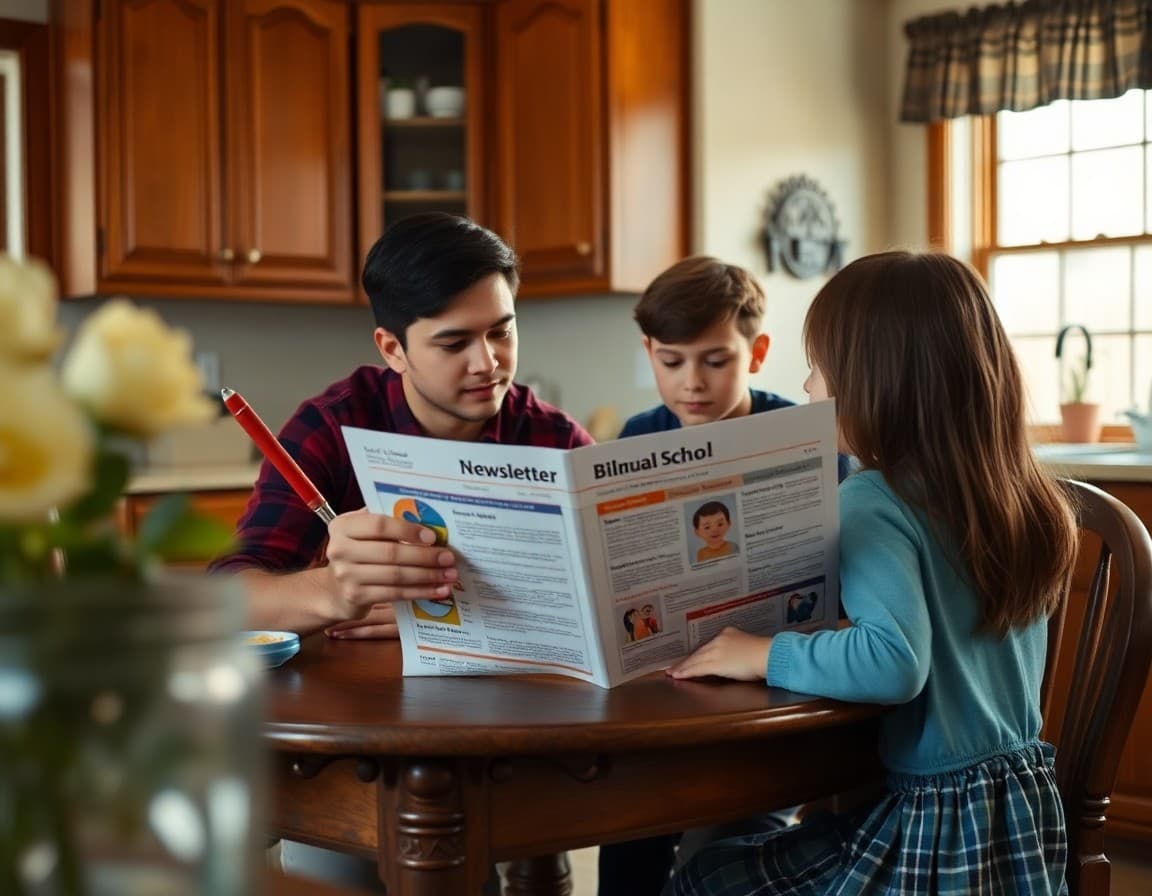
Pennsylvania's ELL landscape is shaped by some unusual demographics. Reading, PA is one of the most Spanish-speaking cities of its size in the country. Allentown's population is roughly half Hispanic. Philadelphia has extraordinary linguistic diversity with over 100 languages represented in its school district. For ELL teachers in Pennsylvania, a newsletter is not optional -- it is often the primary written communication channel for families who are navigating the school system entirely in a language that is not their own.
Pennsylvania's Language Access Requirements
Pennsylvania's PDE language access guidance requires districts to communicate meaningfully with ELL families in their home language. This applies to significant school communications. The School District of Philadelphia has its own specific language access requirements under its Office of Family and Community Engagement (FACE) policies. For most PA ELL programs, the minimum standard is Spanish translation for Spanish-speaking families and interpreter availability for other languages.
Document your translation process and archive translated newsletters. This documentation matters during PDE monitoring visits and Title III compliance reviews.
Language Priorities by PA Region
- Reading: Spanish (primary language of majority of the district's families)
- Allentown: Spanish (large population), some Arabic and other languages
- Philadelphia: Spanish, Vietnamese, Chinese (Traditional/Simplified), Arabic, Portuguese, French (Haitian Creole)
- Lancaster: Spanish (growing community)
- Hazleton: Spanish (significant community)
- Pittsburgh area: Spanish, Arabic, Nepali (smaller populations)
Writing for Reading and Allentown Families
In Reading and Allentown, where Spanish-speaking families are a majority of the school community, a newsletter that is primarily English with a Spanish section is backwards. For these communities, lead with Spanish or use a true bilingual parallel format where both languages are equally prominent. Families in Reading and Allentown have often been in the community for multiple generations and have strong school engagement expectations -- they deserve a newsletter that treats their language as primary, not supplemental.
A Template Excerpt for PA ELL Newsletters
English: ACCESS testing begins January 28. This test measures your child's English language skills. It does not affect their grades or promotion decisions. Students who score 4.5 or higher with minimum scores in each language area may exit the ELL program. Exiting the program is a success -- it means your child's English is strong enough to access grade-level content independently.
Español: Las pruebas ACCESS comienzan el 28 de enero. Esta prueba mide las habilidades de ingles de su hijo. No afecta sus calificaciones ni las decisiones de promocion. Los estudiantes que obtengan 4.5 o mas con puntuaciones minimas en cada area de idioma pueden salir del programa ELL. Salir del programa es un exito -- significa que el ingles de su hijo es suficientemente solido para acceder al contenido de nivel de grado de forma independiente.
Philadelphia's Language Access Infrastructure
The School District of Philadelphia has an Office of Family and Community Engagement (FACE) that provides translation and interpretation services, family workshops, and community liaison support. ELL teachers in SDP schools can request translated materials through the FACE office. For routine monthly newsletters, ask your school's Family Liaison about the fastest route for Spanish translation. For Vietnamese, Chinese, and Arabic content, FACE has community liaisons who support translation workflows.
Philadelphia also has a network of Community Schools and Family Resource Centers that can extend your newsletter reach into communities where families are harder to connect with through school-based channels alone.
PA-Specific Resources for ELL Families
- PA Dual Language Consortium: Resources for families in dual-language programs
- SEAMAAC (Southeast Asian Mutual Assistance Association Coalition): Philadelphia-based resources for Southeast Asian communities
- Ceiba: Latino community organization in Philadelphia with education programs
- PICC (Pennsylvania Immigrant and Citizenship Coalition): Immigration information and rights resources
- PA Department of Labor and Industry: Resources for immigrant workers who are also school parents
Building a Sustainable Translation Workflow for PA ELL Teachers
In Philadelphia, use the FACE office and in-school bilingual staff for translation review. In Reading and Allentown, bilingual staff are typically available within the school building. In smaller PA districts, build a relationship with a bilingual community member who can review newsletters before they go out. Use Daystage's bilingual layout so the formatting is handled automatically -- the only labor is writing the content and getting the translation reviewed. For a newsletter that goes out monthly for 9-10 months, this workflow should take no more than 30-40 minutes of total production time per edition.
Get one newsletter idea every week.
Free. For teachers. No spam.
Frequently asked questions
What are Pennsylvania's language access requirements for ELL family communication?
Under Title III of ESSA and Pennsylvania Department of Education guidance, PA school districts must communicate meaningfully with ELL families in their home language. Pennsylvania's PDE has language access requirements for significant communications including enrollment information, parent conference notices, and program change notifications. The School District of Philadelphia has additional district-level language access requirements through its Office of Family and Community Engagement.
What languages are most important for Pennsylvania ELL newsletters?
Spanish is the most important language for most PA ELL newsletters statewide. Reading, PA has one of the highest concentrations of Spanish-speaking residents of any US city. Allentown, Philadelphia, Lancaster, and Hazleton all have large Spanish-speaking communities. Philadelphia also has significant Vietnamese, Chinese (Traditional and Simplified), Arabic, and Portuguese-speaking populations. The SDP's FACE office provides translation resources for Philadelphia schools.
How does Pennsylvania's ACCESS for ELLs test affect newsletter content?
Pennsylvania uses the WIDA ACCESS assessment annually, typically in January through March. Your January newsletter should explain what ACCESS measures, what proficiency levels mean, and how scores affect ELL service eligibility. Pennsylvania uses a composite score of 4.5 with minimum domain scores for ELL exit. Many PA families do not understand that a high ACCESS score triggers exit from ELL services -- framing exit as a milestone rather than a loss is important.
What is Reading, PA's ELL context and how should newsletters serve those families?
Reading, Pennsylvania has the highest percentage of Spanish-speaking residents of any city over 50,000 in the United States. The Reading School District is predominantly Spanish-speaking and has bilingual educational staff and translation resources. For ELL newsletters in Reading, bilingual Spanish-English content is the standard expectation, not a supplemental offering. Newsletters that are English-only in Reading School District fail the majority of the families they are meant to serve.
What tools help PA ELL teachers produce multilingual newsletters efficiently?
Daystage's bilingual layout is particularly useful for Reading, Allentown, and Philadelphia ELL teachers who need Spanish-English parallel content. For Philadelphia schools with Vietnamese or Chinese-speaking families, the SDP's FACE office translation resources can be used for newsletter content. Pair Daystage's scheduling feature with your translation workflow to ensure newsletters go out on schedule during ACCESS testing season.

Adi Ackerman
Author
Adi Ackerman is a former classroom teacher and curriculum writer with 8 years in K-8 schools. She writes about school communication, parent engagement, and what actually works in real classrooms.
Ready to send your first newsletter?
3 newsletters free. No credit card. First one ready in under 5 minutes.
Get started free