

New York ELL Program Newsletter: Guide for Multilingual Program Educators
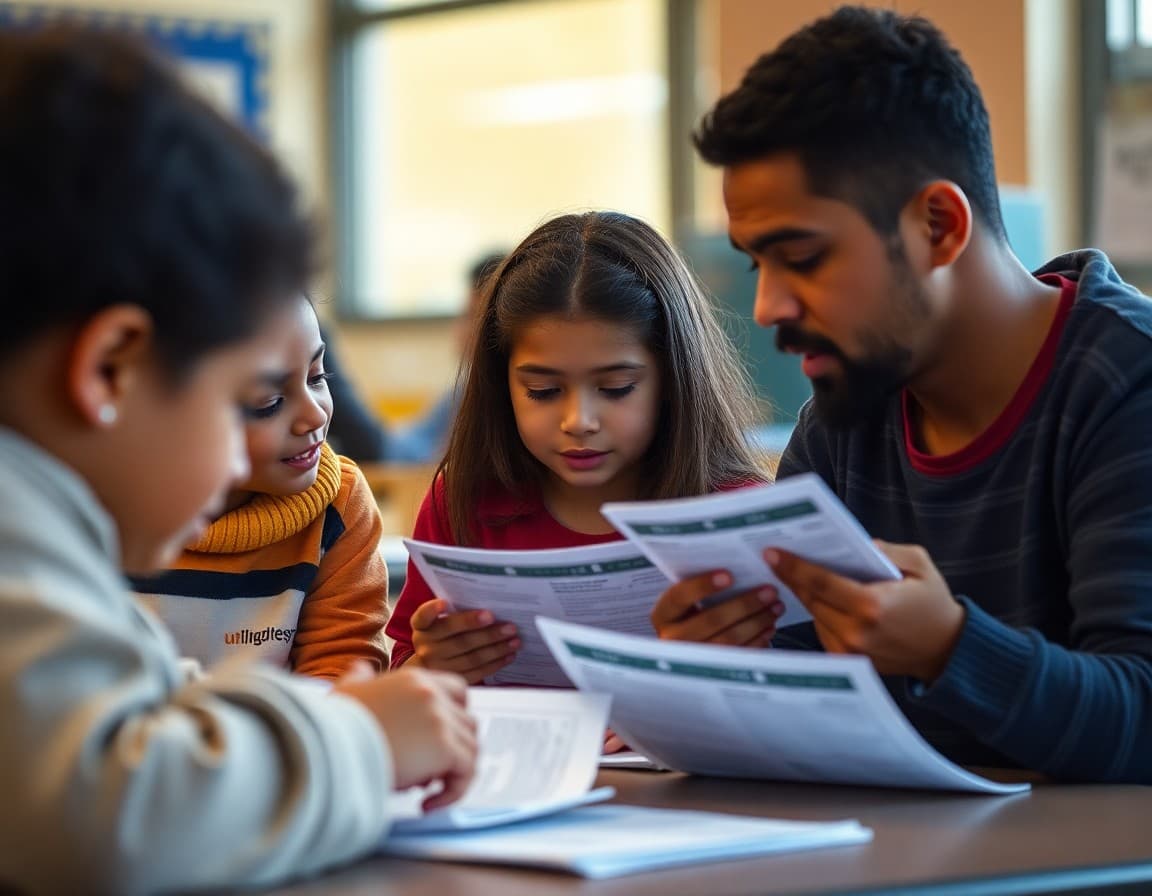
New York State has the second-largest ELL population in the country, and New York City alone serves students speaking over 150 languages. The state's Part 154 regulations, New York City's Chancellor's language access requirements, and the NYSESLAT assessment all create a specific framework that New York ELL program newsletters need to address. This is one of the most complex multilingual communication environments in American education.
New York's Part 154 Creates Specific Communication Obligations
Part 154 of the Commissioner's Regulations requires schools to notify parents within 30 days of identifying a student as a Multilingual Learner (New York's preferred term for ELL students). The notification must explain the student's proficiency level, the instructional program they will receive, the minimum instructional minutes guaranteed under Part 154 based on proficiency level, and the family's right to request a more intensive or different program model. Your ELL program newsletter builds on this notification by explaining in plain language what Part 154 means for your student's daily schedule and language support.
Explain the NYSESLAT Assessment to Families
New York uses the NYSESLAT to measure English language proficiency. Unlike WIDA ACCESS used in most other states, NYSESLAT uses five proficiency levels: Entering, Emerging, Transitioning, Expanding, and Commanding. Families receive NYSESLAT results and often have no idea what the levels mean for their child's services. Your newsletter during the spring testing window and when results release should explain what each level means in practical terms: Entering means the student is at the beginning stages of English development and receives the most intensive ELL support; Commanding means the student has nearly met the criteria to exit ELL services. A parent who understands their child's NYSESLAT level can follow up at conferences with specific, informed questions.
Serve New York City's Extraordinary Linguistic Diversity
New York City schools serve students speaking over 150 languages. The Chancellor's language access regulations require translation into the 10 most common languages districtwide, which include Spanish, Chinese, Bengali, Arabic, Haitian Creole, Russian, Korean, Urdu, French, and Polish. Your school's specific language priorities should come from your school's home language survey data. A Bronx school with a predominantly Spanish and Bengali population needs different translation priorities than a Flushing, Queens school with a Chinese and Korean majority. Knowing your specific community prevents the common mistake of spending translation budget on languages that do not represent your families.
A Monthly New York ELL Program Newsletter Template
This format works across grade levels:
Multilingual Learner Program Update -- [Month] [Year]
Your student's current NYSESLAT level: [Entering/Emerging/Transitioning/Expanding/Commanding]
What this means: [Plain language description of services and goals]
How to support at home: [Activity in the home language]
Coming up:
- [Date]: NYSESLAT testing window
- [Date]: Parent-teacher conference (interpreter available)
Contact: [MLL coordinator name, phone, email]
Address Upstate New York's ELL Communities
New York State's ELL population extends well beyond New York City. Buffalo has a large refugee resettlement population including Burmese, Karen, Nepali, and Somali families. Rochester serves significant Somali, Congolese, and Spanish-speaking communities. Utica has a large Bosnian, Burmese, and Somali community. Your newsletter for upstate New York programs should reflect the specific language communities in your district rather than assuming the New York City language profile. The Mohawk Valley Resource Center for Refugees in Utica, International Institute of Buffalo, and Rochester's ESL programs are key community resources for upstate ELL families.
Connect New York Families to Community Resources
New York has extensive support networks for ELL families. Northern Manhattan Coalition for Immigrant Rights serves Washington Heights and Inwood families. Make the Road New York has offices in multiple boroughs. CAAAV Organizing Asian Communities serves Asian immigrant families in New York City. International Rescue Committee New York serves refugee families citywide. New York Immigration Coalition provides advocacy and legal referrals. New York Public Library has extensive ESL programming across its branches. One resource mention per newsletter issue builds a resource map families use throughout the year.
Use Daystage to Manage New York's Multilingual Newsletter Production
New York ELL coordinators managing newsletters for families speaking five, ten, or more languages need tools that do not compound production effort with each language. Daystage lets coordinators create one newsletter structure and send separate language versions to the right families simultaneously. A Bengali family in Jackson Heights receives the Bengali version. A Spanish-speaking family in the South Bronx receives the Spanish version. An Arabic-speaking family in Bay Ridge receives the Arabic version. All on the same day, from one workflow. Programs that achieve consistent multilingual communication throughout the year build the family engagement that New York State's demanding MLL accountability framework and community expectations both require.
Get one newsletter idea every week.
Free. For teachers. No spam.
Frequently asked questions
What are New York's requirements for communicating with ELL families?
New York has some of the most comprehensive ELL communication requirements of any state. Under Part 154 of the Commissioner's Regulations, schools must notify parents within 30 days of identifying a student as a multilingual learner (MLL), translate essential communications, and provide information about program options. New York City schools must comply with Chancellor's Regulations on language access, which require translations in the 10 most common languages districtwide. The New York State Education Department oversees compliance.
What assessment does New York use for English language proficiency?
New York uses the New York State English as a Second Language Achievement Test (NYSESLAT) to measure English language proficiency for MLLs. The test covers Listening, Speaking, Reading, and Writing. Proficiency levels are Entering, Emerging, Transitioning, Expanding, and Commanding. Your newsletter should explain what NYSESLAT measures and what each proficiency level means for a student's program placement and services.
What languages do New York ELL families most commonly speak?
Spanish is the most common home language in New York's ELL population, with large communities in New York City, Buffalo, and across the state. New York City also has the largest Bangladeshi community in the US, concentrated in Jackson Heights, Queens, making Bengali a significant ELL language. Chinese (Cantonese and Mandarin), Arabic, Haitian Creole, Urdu, Korean, French, Russian, and Polish are all significant languages in New York's ELL population.
What is New York's Part 154 and how does it affect ELL newsletters?
Part 154 of the Commissioner's Regulations governs English language instruction for MLL students in New York schools. It requires that MLL students receive a minimum number of minutes of English language development instruction based on their proficiency level, that teachers of MLL students have appropriate certification, and that parents are notified of their rights under the regulation. Your newsletter should explain what Part 154 means for your students' instructional time and what families can expect from the program.
Can Daystage support New York ELL programs with multilingual newsletters?
Yes. Daystage lets multilingual program coordinators create formatted newsletters and send separate language versions to specific family groups. For a New York City district with Spanish, Bengali, Chinese, and Arabic-speaking families, you can manage multiple language versions through one platform. Daystage handles formatting and delivery so coordinators focus on content quality and translation accuracy across the many languages New York ELL programs serve.

Adi Ackerman
Author
Adi Ackerman is a former classroom teacher and curriculum writer with 8 years in K-8 schools. She writes about school communication, parent engagement, and what actually works in real classrooms.
More for ELL & ESL
Ready to send your first newsletter?
3 newsletters free. No credit card. First one ready in under 5 minutes.
Get started free