

New Mexico ELL Program Newsletter: Guide for Bilingual Educators
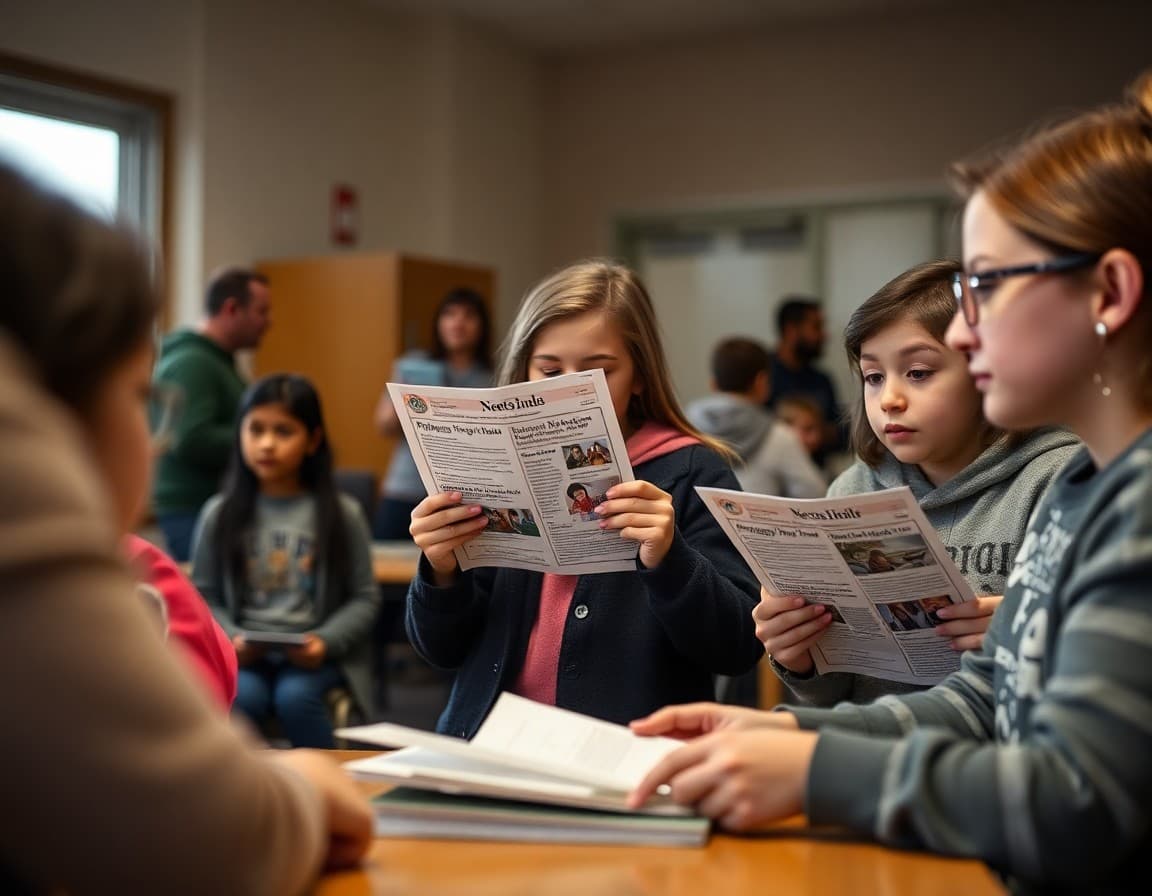
New Mexico is the only state with Spanish as a co-official language alongside English, and its educational law reflects a recognition of its multilingual history that is unique in the country. The Bilingual Multicultural Education Act mandates programs that affirm linguistic and cultural heritage rather than replacing it with English. Indigenous communities add Navajo and Pueblo languages to the mix. An ELL program newsletter in New Mexico operates in one of the country's most complex and historically rich multilingual educational contexts.
New Mexico's Bilingual Multicultural Education Act Creates a Unique Framework
New Mexico's Bilingual Multicultural Education Act requires school districts to provide bilingual multicultural programs that develop students' proficiency in both English and their home language while affirming their cultural identity. This is fundamentally different from the transitional models that most states use, where the home language is a bridge to English rather than a language worth developing in its own right. Your newsletter should explain this distinction to families: the goal is not to move children out of Spanish or Navajo as quickly as possible, but to develop biliteracy and academic competence in both languages.
Explain WIDA ACCESS in Spanish and Navajo Contexts
New Mexico uses WIDA ACCESS to measure English language proficiency. Families receive score reports each spring. For Spanish-speaking families, your newsletter during the testing window should explain what ACCESS measures, what the 1-6 scale means, and what your district requires for reclassification, published in Spanish. For Navajo-speaking families, work with the Navajo Nation Department of Diné Education or local tribal education coordinators to ensure communication is culturally appropriate. WIDA does not measure Navajo proficiency, and your newsletter should be clear about what ACCESS is and is not measuring for Indigenous language-speaking students.
Honor New Mexico's Spanish-Speaking Cultural Heritage
New Mexico's Spanish-speaking community is not primarily an immigrant community in the sense that most other states' Spanish-speaking ELL populations are. Many families in northern New Mexico have been Spanish speakers for generations, descendants of colonial-era settlers. Their relationship with language is different from recently arrived Mexican or Central American families. Your newsletter for northern New Mexico communities should acknowledge this history rather than treating all Spanish-speaking families as recent immigrants. In Albuquerque, the more diverse urban population includes recent immigrants alongside long-established families, and communication should acknowledge both realities.
A Monthly New Mexico ELL Program Newsletter Template
This format works for most New Mexico bilingual and ELL programs:
Bilingual Multicultural Program Update -- [Month] [Year]
Your student is working on: [Language skill in English and Spanish context]
Bilingual learning goal this month: [Both languages noted]
How to support at home: [Activity that values the home language]
Coming up:
- [Date]: WIDA ACCESS testing
- [Date]: Parent-teacher conference (bilingual staff available)
Contact: [Bilingual coordinator name, phone, email]
Serve Indigenous Language Communities Appropriately
The Navajo Nation is the largest Indigenous nation in the United States, and Navajo-speaking students attend New Mexico public schools in significant numbers. Pueblo communities speaking Keres, Zuni, Tiwa, and other languages also enroll students in state schools. For Indigenous language-speaking families, the school newsletter is not the primary communication channel -- tribal community networks, chapter houses, and tribal education departments carry more cultural authority. Your newsletter can serve as a supplementary communication that respects tribal sovereignty and refers families to tribal education resources rather than positioning the school as the primary authority on language and culture.
Connect New Mexico Families to Statewide Resources
New Mexico has resources for ELL and bilingual families. Enlace Comunitario in Albuquerque serves immigrant families with legal and social services. New Mexico Legal Aid provides immigration legal assistance. The New Mexico Coalition of Educational Leaders supports bilingual education advocacy. University of New Mexico's Center for Education Policy Research provides community education resources. Navajo Nation Head Start programs connect families to early childhood bilingual education. One resource mention per newsletter issue builds community resource awareness over the course of a year.
Use Daystage to Deliver New Mexico ELL Newsletters Consistently
New Mexico ELL and bilingual program coordinators serving families across Albuquerque, Santa Fe, Gallup, and rural communities need delivery systems that reach families regardless of geography. Daystage lets coordinators send formatted newsletters in Spanish, English, and other languages directly to family email addresses, bypassing backpack-and-paper unreliability. For a state where some families live on Navajo Nation land with limited mail service, digital delivery that goes directly to a family's smartphone is the most reliable option available. Programs that maintain consistent communication throughout the year demonstrate the language access commitment that New Mexico's Bilingual Multicultural Education Act was designed to support.
Get one newsletter idea every week.
Free. For teachers. No spam.
Frequently asked questions
What are New Mexico's requirements for communicating with ELL families?
New Mexico has specific bilingual education requirements under the New Mexico Bilingual Multicultural Education Act. Districts must provide bilingual multicultural education programs, and essential communications must be available in the family's home language. The New Mexico Public Education Department oversees compliance through Title III and the Bilingual Multicultural Education program review process.
What assessment does New Mexico use for English language proficiency?
New Mexico uses WIDA ACCESS for ELLs to measure English language proficiency in grades K-12. The assessment covers Listening, Speaking, Reading, and Writing on a 1-6 scale. New Mexico's reclassification criteria include WIDA score thresholds and academic performance indicators. Your newsletter should explain what ACCESS measures and what reclassification means for families receiving score reports each spring.
What languages do New Mexico ELL families most commonly speak?
Spanish is by far the most common home language in New Mexico, reflecting the state's deep Spanish-speaking roots that predate statehood. New Mexico also has significant Indigenous language communities, including Navajo (the largest Indigenous language in the US), Keres (spoken by Pueblo peoples), Zuni, and other Pueblo and Apache languages. The state's unique blend of Spanish, English, and Indigenous languages creates one of the most complex multilingual educational contexts in the country.
How does New Mexico's Bilingual Multicultural Education Act affect ELL newsletters?
New Mexico's Bilingual Multicultural Education Act goes beyond federal Title III requirements by mandating bilingual multicultural programs that affirm students' linguistic and cultural heritage. The law reflects New Mexico's recognition of its multilingual history. Your newsletter should acknowledge this legal and cultural framework: explain what the bilingual multicultural program is designed to accomplish, how it differs from simple English instruction, and what research shows about academic outcomes for students who develop biliteracy.
Can Daystage support New Mexico ELL and bilingual programs with newsletters?
Yes. Daystage lets bilingual program coordinators create formatted newsletters and send separate language versions to specific family groups. For a New Mexico district with Spanish and English-dominant families, or one that also needs Navajo-language communication, you can manage multiple language versions through one platform. Daystage handles formatting and delivery so coordinators focus on content quality and culturally appropriate translation.

Adi Ackerman
Author
Adi Ackerman is a former classroom teacher and curriculum writer with 8 years in K-8 schools. She writes about school communication, parent engagement, and what actually works in real classrooms.
More for ELL & ESL
Ready to send your first newsletter?
3 newsletters free. No credit card. First one ready in under 5 minutes.
Get started free