
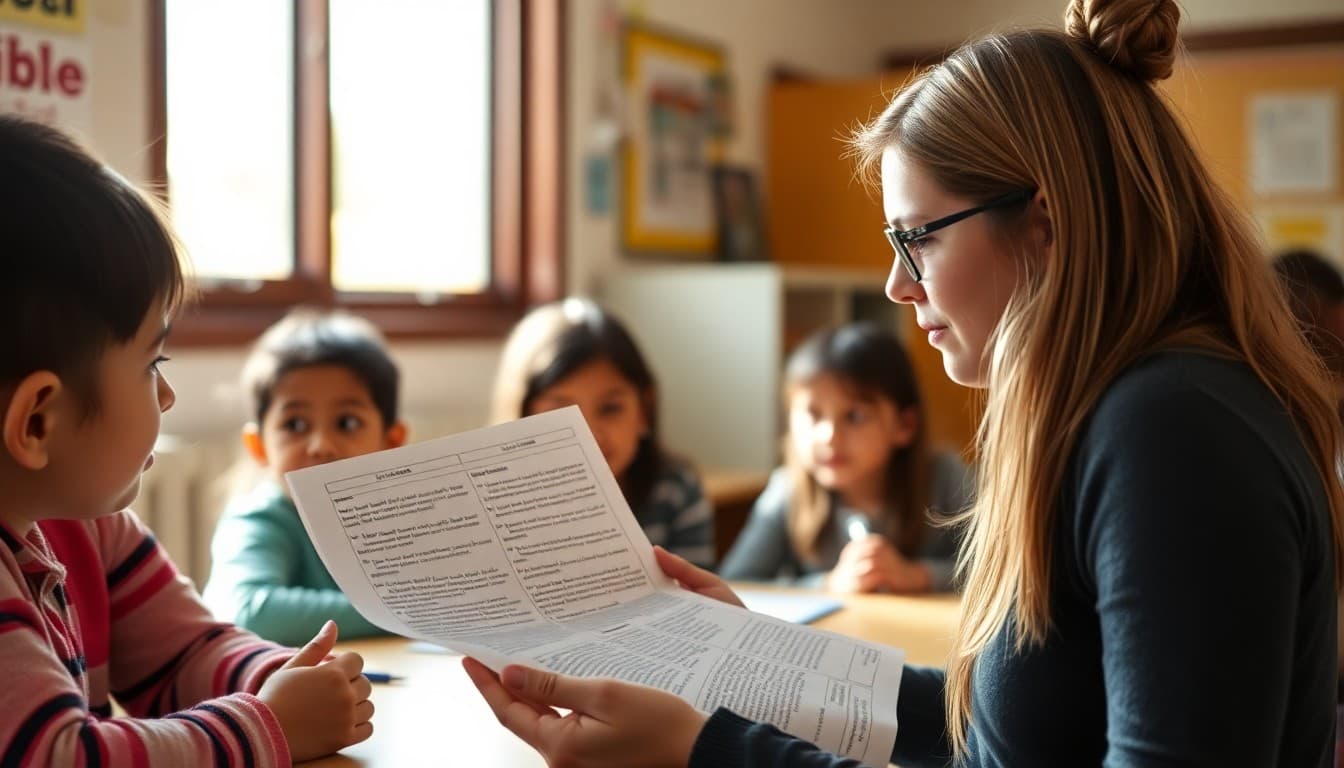
New Mexico ELL School Newsletter: Reaching Multilingual Families

New Mexico is unlike any other state in its relationship to language and education. The state constitution protects bilingual education. Spanish has been spoken in what is now New Mexico for more than 400 years. Navajo, Keres, Tewa, Zuni, and other Indigenous languages are spoken by significant portions of the student population. For ELL teachers in this context, a newsletter is not just a communication tool -- it is a statement about who belongs in the school community.
NM's Unique Legal and Cultural Language Framework
New Mexico is one of three states (with Hawaii and Alaska) that has constitutional language protection for non-English-speaking communities. NM's bilingual education statute (NMSA 22-23) requires districts to provide bilingual programs where student need justifies them. The New Mexico Public Education Department has specific guidance on language access that goes beyond federal Title III minimums.
This means that as an ELL teacher in NM, your obligation to communicate with families in their home language is stronger than in most other states. A Spanish-only newsletter for a Spanish-speaking family is meeting the minimum. A newsletter that also acknowledges Navajo or Pueblo language speakers and provides pathways for them to receive communication they can use is meeting the spirit of NM's bilingual education law.
Understanding Your Specific Community's Language Needs
New Mexico's ELL populations are not uniform. Before setting up your translation workflow, know your community:
- Albuquerque, Las Cruces, and Santa Fe: predominantly Spanish-speaking ELL families
- Gallup and northwestern NM: significant Navajo-speaking population
- Pueblo communities in Rio Arriba and Sandoval counties: Keres, Tewa, or Tiwa speakers alongside Spanish
- Southeastern NM (Roswell, Artesia): Spanish-speaking migrant agricultural worker families
The NMPED publishes district-level home language data. Request your current year's data from your ELL coordinator before the school year starts.
Writing Newsletter Content for NM ELL Families
Many NM ELL families, particularly those from agricultural worker or recent immigrant backgrounds, have limited formal education themselves. Write at an accessible reading level -- aim for sixth-grade English and its Spanish equivalent. Avoid educational jargon. Explain every acronym on first use. Use numbered lists for anything sequential.
Key content that NM ELL families need every year:
- How the school's ELL or bilingual program is structured and how it works
- WIDA ACCESS testing: what it is, when it happens, what the scores mean
- Parent rights under IDEA and Title III (right to request translated materials, right to interpreter at meetings)
- How NM's bilingual education programs support English acquisition while maintaining home language
- Resources for undocumented or mixed-status families (legal aid, DACA renewal, etc.)
A Template Excerpt for NM ELL Newsletters
English: ACCESS testing begins January 20. This test measures your child's English language skills, not their academic knowledge. There is no "passing" or "failing" -- the test helps us understand how much English your child has developed and what services they need next. Students should get a good night's sleep and eat breakfast before the test. Nothing else is required.
Espanol: Las pruebas ACCESS comienzan el 20 de enero. Esta prueba mide las habilidades de ingles de su hijo, no su conocimiento academico. No hay "aprobar" o "reprobar" -- la prueba nos ayuda a entender cuanto ingles ha desarrollado su hijo y que servicios necesita despus. Los estudiantes deben dormir bien y desayunar antes de la prueba.
Indigenous Language Families: What a Newsletter Can and Cannot Do
For families whose primary language is Navajo, Keres, Tewa, or another Indigenous language, a written newsletter is often not the most effective communication channel. These languages have rich oral traditions but fewer fluent readers, and automated translation is essentially unavailable. Your newsletter strategy for these families should include:
- A clear note that an interpreter is available for all school meetings and events
- Contact information for the school's Indian Education coordinator
- An invitation to receive communication through the tribal education department if applicable
- Acknowledgment that the school respects and values their home language
Building Trust Through Consistent Communication
In many NM communities, historical relationships between schools and Indigenous or Hispanic families have been complicated by assimilationist education policies. A newsletter from an ELL teacher that arrives in a family's home language, acknowledges their culture, and provides practical information without requiring them to navigate bureaucratic English signals something different: that this school sees them. That signal, delivered consistently over a school year, builds the trust that makes family engagement possible. Daystage's bilingual layout helps you deliver that signal efficiently without spending your evenings reformatting documents.
Get one newsletter idea every week.
Free. For teachers. No spam.
Frequently asked questions
What are New Mexico's language access requirements for ELL family communication?
New Mexico's constitution explicitly protects bilingual education, and state statute requires districts to communicate with families in a language they can understand. Under Title III of ESSA and NM's bilingual education regulations, districts with significant ELL populations must provide translated materials for key communications. New Mexico is also unique in that some districts serve families whose primary language is Navajo, Keres, Tewa, or other Indigenous languages, which creates translation challenges beyond Spanish.
How do I reach Navajo and other Indigenous language-speaking families in NM?
For families whose primary language is an Indigenous language, automated translation tools do not work -- there are no reliable automated translators for most Navajo dialects or Pueblo languages. Coordinate with your district's Indian Education coordinator or tribal education department to identify bilingual community members who can review key communications. Oral communication through community liaisons is often more effective than written newsletters for these families.
What is the most important ELL newsletter content for NM families?
Explain the state's bilingual education program options and how parents can request a specific program placement. Cover WIDA ACCESS testing, what the scores mean, and how proficiency levels affect ELL services. Include family engagement activities that work in any language. Mention the NM Higher Education Department's resources for undocumented students (DACA and non-DACA) since many NM ELL families include mixed-status households.
How do I write a newsletter that serves both Spanish-dominant and English-dominant ELL families?
A bilingual format -- with English and Spanish content in parallel -- serves both groups without requiring two separate newsletters. Spanish-dominant families read the Spanish sections; English-dominant families read the English sections. Both groups see the same information. This format also models the bilingualism your program is building in students, which reinforces the program's value to families.
What tools help NM ELL teachers produce multilingual newsletters efficiently?
Daystage's bilingual layout lets you place English and Spanish content side by side without manual formatting. For routine monthly content, pair that with a translation tool for a first draft and a bilingual staff member for a quick review. For high-stakes content like ACCESS testing notices or IEP-adjacent communications, require professional translation or a certified bilingual educator review.

Adi Ackerman
Author
Adi Ackerman is a former classroom teacher and curriculum writer with 8 years in K-8 schools. She writes about school communication, parent engagement, and what actually works in real classrooms.
Ready to send your first newsletter?
3 newsletters free. No credit card. First one ready in under 5 minutes.
Get started free