

New Jersey ELL Program Newsletter: Local Resources and Guide
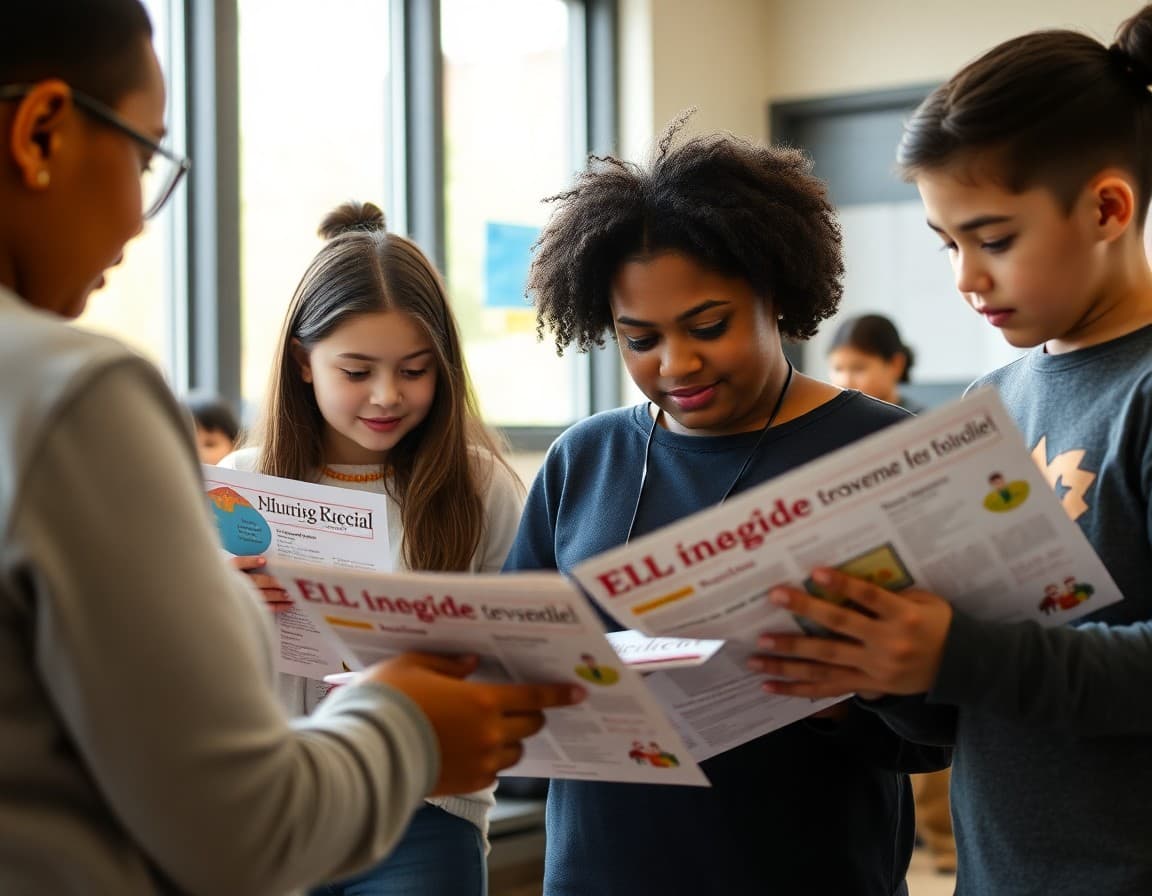
New Jersey has one of the strongest bilingual education mandates in the country and one of the most diverse ELL student populations in the Northeast. Proximity to New York City, major pharmaceutical and technology industries, and a long history of immigrant settlement make New Jersey's ELL landscape extraordinarily varied. Effective New Jersey ELL newsletters understand both the legal rights families have under state law and the specific languages and communities in each district.
New Jersey's Bilingual Education Mandate
When 20 or more students in a New Jersey district speak the same home language, the district must provide a bilingual program in that language. This means that Spanish-speaking families in Newark, Paterson, and other large New Jersey districts have the right to bilingual instruction, not just ESL services. ELL newsletters must explain clearly which program type your school offers -- bilingual or ESL -- and what families' rights are under New Jersey's stronger-than-federal law.
Families who know they have the right to bilingual instruction are better positioned to advocate for appropriate program placement. An ELL newsletter that explains this right is providing information most families have never received clearly.
New Jersey's Spanish-Speaking ELL Communities
New Jersey's Spanish-speaking ELL communities are diverse by national origin. Puerto Rican families have deep roots in Newark and Camden. Dominican families are strongly represented in Paterson. Mexican, Guatemalan, and Honduran families are present in many urban districts. Each of these communities has distinct cultural characteristics and immigration histories, but all share the right to bilingual education where the enrollment threshold is met. Writing in a neutral pan-Latino Spanish register is important for newsletters that will reach multiple Spanish-speaking communities.
New Jersey's South Asian ELL Communities
Central New Jersey has substantial Gujarati, Hindi, Urdu, and Punjabi-speaking communities tied to the pharmaceutical and technology industries. These communities often have more economic resources and educational backgrounds than some other ELL communities, but children who arrive from India, Pakistan, or other South Asian countries as school-age students are genuine ELL students who need language support. ELL newsletters for central New Jersey communities should reflect the specific languages and cultural contexts of these communities.
New Jersey Department of Education Resources
NJDOE's Office of Bilingual and ESL Education provides comprehensive guidance, family rights documents, and program information on the NJDOE website. New Jersey's regional Bilingual/ESL Resource Centers -- affiliated with Montclair State, CUNY, and other universities -- provide professional development and family resources to districts. These resource centers are worth referencing in ELL newsletters as additional sources of support for families.
Community Organizations Across New Jersey
Make the Road New Jersey serves the Latino community with education, legal, and advocacy services in Newark and Elizabeth. CIAM serves South Jersey immigrant communities. Catholic Charities operates across multiple New Jersey dioceses serving immigrant families. IRC Elizabeth serves refugee families in Union County and the surrounding region. Jewish Family Service of MetroWest provides refugee and immigrant resettlement services. Legal Services of New Jersey handles immigration legal aid across the state. Public libraries throughout New Jersey offer multilingual resources and ESL programs.
Portuguese-Speaking Communities in New Jersey
New Jersey has substantial Brazilian Portuguese and Portuguese-speaking communities, particularly in Newark's Ironbound neighborhood and parts of Hudson County. As with other Portuguese-speaking communities, distinguishing between Brazilian Portuguese and European Portuguese is important for communication quality. The Ironbound community in Newark has developed extensive community infrastructure including the Newark Portuguese-American cultural organizations and the community's Catholic parish networks.
Using Daystage for New Jersey ELL Newsletters
Daystage supports New Jersey ELL and bilingual program coordinators in creating newsletters with Spanish, Portuguese, Gujarati, Arabic, and other language sections and delivering them to family groups by language. For New Jersey bilingual programs, presenting both languages with equal prominence in the newsletter format is consistent with the program's legal and pedagogical philosophy -- and Daystage supports that visual presentation.
Get one newsletter idea every week.
Free. For teachers. No spam.
Frequently asked questions
What makes New Jersey's ELL program law notable?
New Jersey has a bilingual education mandate that requires districts to provide bilingual programs when 20 or more students in a district share the same home language other than English. This is similar to Illinois's law and gives ELL families stronger rights than federal law alone provides. Spanish-speaking families in large New Jersey districts have the right to bilingual instruction, not just ESL services. ELL newsletters must accurately describe the bilingual or ESL program offered at their specific school and explain what legal rights families have.
What languages are most common among New Jersey ELL students?
Spanish is by far the most common home language among New Jersey ELL students, with major concentrations in Newark, Paterson, Camden, Elizabeth, Trenton, and communities throughout the state. Portuguese, particularly Brazilian Portuguese, is significant in parts of Hudson County, Essex County, and Newark. Gujarati and Hindi are common in central New Jersey communities tied to the pharmaceutical, technology, and financial industries. Arabic, Haitian Creole, and Chinese (Mandarin and Cantonese) are also significant in various communities. New Jersey's proximity to New York City creates a highly diverse ELL context.
What state resources should New Jersey ELL newsletters reference?
The New Jersey Department of Education (NJDOE) oversees ELL programs through its Office of Bilingual and ESL education. NJDOE administers Title III funding and provides comprehensive guidance on bilingual and ESL program requirements. The NJDOE website has family rights documents and program information in multiple languages. New Jersey also has a rich infrastructure of regional Bilingual/ESL Resource Centers affiliated with New Jersey universities that provide professional development and family resources to districts.
What community resources serve New Jersey ELL families?
New Jersey has a rich nonprofit immigrant services infrastructure. WIND (Workforce Investment Network) and Make the Road New Jersey serve Latino communities in urban areas. CIAM (Center for Immigrant and American Life) serves the South Jersey immigrant community. Jewish Family Service of MetroWest serves refugee and immigrant families. Catholic Charities Diocese of Newark and other Catholic organizations serve immigrant families across the state. Legal Services of New Jersey provides immigration legal aid. The International Rescue Committee's Elizabeth office serves refugee families in Union County.
How does Daystage support New Jersey bilingual and ELL program newsletters?
New Jersey's bilingual education programs -- which teach content in both Spanish and English -- can use Daystage to create newsletters that present both languages with equal visual prominence, reinforcing the program's bilingual philosophy. Daystage supports newsletters in Spanish, Portuguese, Gujarati, Arabic, and other New Jersey home languages with delivery segmented by language group. For large New Jersey urban districts with very large ELL populations, Daystage's delivery infrastructure handles the volume requirements reliably.

Adi Ackerman
Author
Adi Ackerman is a former classroom teacher and curriculum writer with 8 years in K-8 schools. She writes about school communication, parent engagement, and what actually works in real classrooms.
More for ELL & ESL
Ready to send your first newsletter?
3 newsletters free. No credit card. First one ready in under 5 minutes.
Get started free