

North Dakota ELL Program Newsletter: Local Resources and Guide
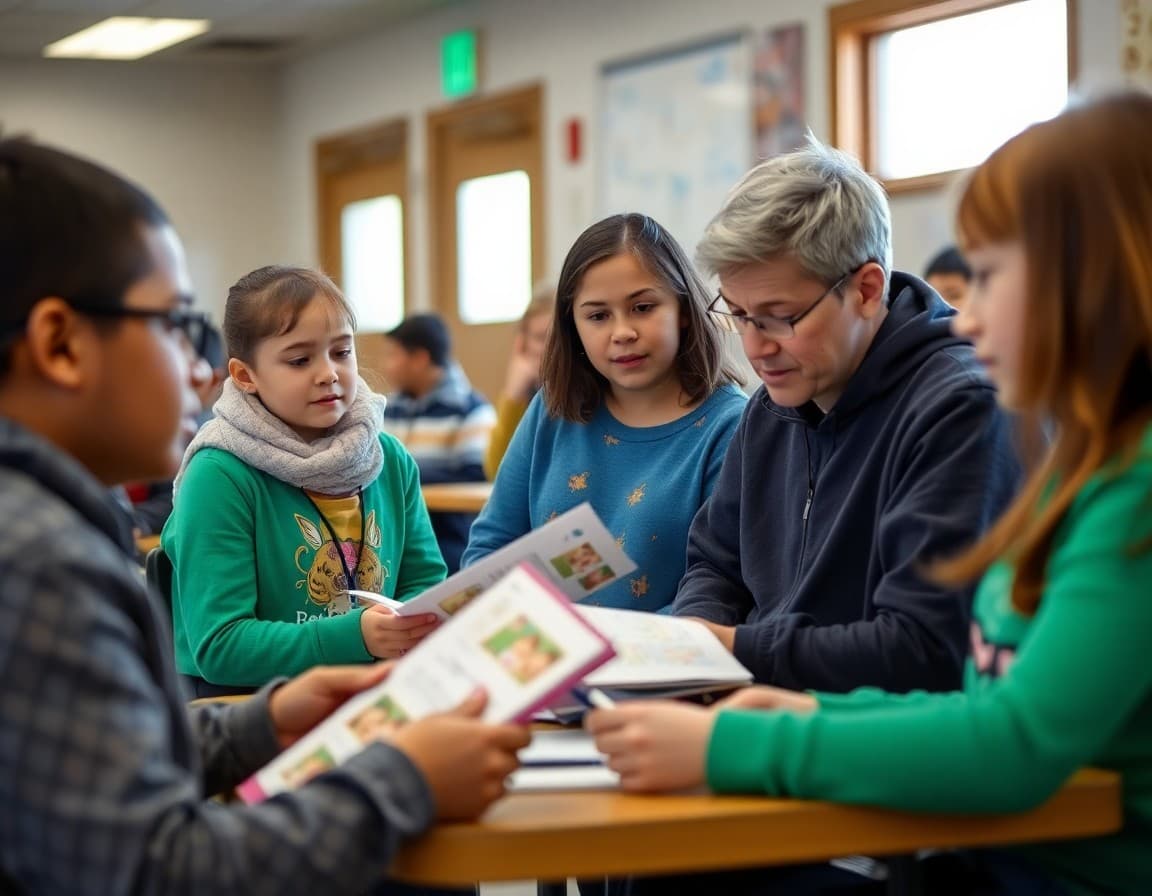
North Dakota is not typically thought of as a destination for refugee resettlement, but Fargo has quietly become one of the more diverse small cities in the upper Midwest. Somali families who have been in Fargo since the late 1990s, Bhutanese Nepali-speaking refugees who arrived in the late 2000s, and ongoing resettlement of families from many countries have created an ELL student population that is surprisingly complex for a state of North Dakota's size. Effective North Dakota ELL newsletters reflect this specific community context.
Fargo's Refugee Resettlement History
Lutheran Social Services of North Dakota has been resettling refugees in Fargo since the late 1990s, beginning with Somali families and continuing through waves of Bosnian, Hmong, Sudanese, Bhutanese, Iraqi, Congolese, and more recently Afghan families. This history has created a Fargo that is more diverse than many North Dakotans outside the city realize. Fargo Public Schools has developed significant multilingual family communication capacity in response.
The Somali community in Fargo has been there long enough to have community organizations, mosque networks, and established community leaders. ELL newsletters for Somali families in Fargo can reference these community institutions rather than treating Somali families as newly arrived strangers.
North Dakota's Native American Language Communities
North Dakota has nine federally recognized tribes, and students from Native American communities may speak Lakota, Dakota, Hidatsa, Mandan, Ojibwe, or other Indigenous languages at home. ELL newsletters for schools serving Native American students should affirm home language maintenance as educationally valuable and connect families to tribal education department resources. The Standing Rock Sioux Tribe, Three Affiliated Tribes, and other North Dakota tribal education departments have family education resources worth referencing for their communities.
What North Dakota ELL Newsletters Should Include
Standard content applies: what ELL services the student receives, what WIDA ACCESS measures and when it occurs, what proficiency levels mean, and how families can support language development at home. For refugee communities, include basic school structure information for newly arrived families and clear information about how to request interpreter services for parent meetings. For Native American language communities, acknowledge the cultural significance of home language maintenance alongside English development.
NDDPI Resources
NDDPI's guidance for ELL programs is available on the DPI website. WIDA ACCESS is North Dakota's ELL assessment, and WIDA's multilingual family resources in Somali, Nepali, Burmese, and many other languages are worth linking to from North Dakota ELL newsletters. North Dakota's small scale means state ELL staff are accessible to district coordinators in ways that are harder in larger states.
Community Resources in North Dakota
Lutheran Social Services of North Dakota is the primary refugee resettlement agency and a key community partner for Fargo schools. The Somali community mosque networks and Somali American Parents Association serve as community communication channels. The Bhutanese Community of North Dakota has developed community organizations in Fargo. Catholic Charities North Dakota serves immigrant families. Fargo Public Library has multilingual collections and ESL programs. For Native American communities, tribal social services and education departments are the primary community resources.
Reaching Families in a Northern Climate
North Dakota's severe winters create practical challenges for school-family communication for some ELL families, particularly those without reliable transportation. Digital newsletter delivery by email is more reliable than family events or paper distribution for reaching families who may have difficulty traveling in winter conditions. When events are planned, confirm accessible transportation options and consider timing relative to weather and prayer times for Muslim families.
Using Daystage for North Dakota ELL Newsletters
Daystage supports North Dakota ELL coordinators in creating newsletters with Somali, Nepali, Burmese, and other language sections and delivering them by email to family groups. The reusable template structure makes consistent monthly communication achievable for coordinators in smaller North Dakota districts who manage ELL communication alongside many other program responsibilities.
Get one newsletter idea every week.
Free. For teachers. No spam.
Frequently asked questions
What languages are most common among North Dakota ELL students?
Somali is the most common home language among ELL students in Fargo, which has received substantial Somali refugee resettlement and has one of the larger Somali communities in the upper Midwest. Nepali, spoken by Bhutanese refugees, is also significant in Fargo. Other refugee languages present include Burmese, Arabic, Karen, and French Congolese. Spanish is present but a smaller proportion of North Dakota's ELL population than in most other states. North Dakota also has Native American students whose home language may be Lakota, Dakota, or other Indigenous languages.
What state agency oversees North Dakota ELL programs?
The North Dakota Department of Public Instruction (NDDPI) oversees ELL programs. North Dakota administers the WIDA ACCESS assessment. NDDPI provides guidance for ELL programs and family resources on the DPI website. North Dakota's ELL population is relatively small by national standards but has grown significantly with refugee resettlement in Fargo, Bismarck, and other cities. The state's small scale means that district coordinators can often access direct guidance from state staff.
What is notable about Fargo's ELL community?
Fargo, North Dakota has become a significant refugee resettlement city with a diverse multilingual population that is disproportionately large relative to the city's size. Somali families have been in Fargo since the late 1990s and early 2000s, making it one of the more established Somali communities in the upper Midwest. Bhutanese Nepali-speaking refugees arrived in large numbers in the late 2000s. Fargo Public Schools has developed multilingual family communication resources reflecting this diversity and is one of the more developed ELL programs in the Northern Plains region.
What community resources serve North Dakota ELL families?
Fargo resources include Lutheran Social Services of North Dakota, which operates refugee resettlement and provides multilingual family services. International Rescue Committee does not have a direct office in North Dakota but Lutheran Social Services is the primary resettlement agency. The Somali American Parents Association in Fargo serves the Somali community. The Bhutanese Community in North Dakota has developed community organizations. Catholic Charities North Dakota serves immigrant families. Fargo Public Library has multilingual resources and ESL programs.
How does Daystage support North Dakota ELL newsletters for refugee communities?
Daystage lets North Dakota ELL coordinators build newsletters with Somali, Nepali, Burmese, and other language sections and deliver them by email to family groups. For Fargo schools serving complex multilingual refugee populations, Daystage's segmented delivery makes reaching different communities with appropriate content practical. The reusable template structure is particularly valuable for North Dakota coordinators who manage ELL communication alongside many other responsibilities in smaller state districts.

Adi Ackerman
Author
Adi Ackerman is a former classroom teacher and curriculum writer with 8 years in K-8 schools. She writes about school communication, parent engagement, and what actually works in real classrooms.
More for ELL & ESL
Ready to send your first newsletter?
3 newsletters free. No credit card. First one ready in under 5 minutes.
Get started free